
Let’s pause for a moment and let the sheer magnitude of this sink in. God, the Almighty who spun galaxies from His fingertips and set and controls the laws of reality in motion, could create anything He desired—worlds, wonders, even lesser beings to serve Him. Yet, what He treasures infinitely above all things is Himself, reflected perfectly in His Son, Jesus Christ. And in an act of unfathomable generosity, He took that very righteousness—the flawless, divine perfection of His Son—and credited it to me. This isn’t a small footnote; it’s the core of who I am now. When God looks at me, He sees Jesus, spotless and exalted at His right hand. My ledger of stumbles and successes? In His eyes, it’s rewritten entirely in the ink of Christ’s unblemished record, without a single smudge. Who am I—or anyone else, for that matter—to argue with the Creator on this point? It’s like telling the sun it shouldn’t shine because you prefer the shade.
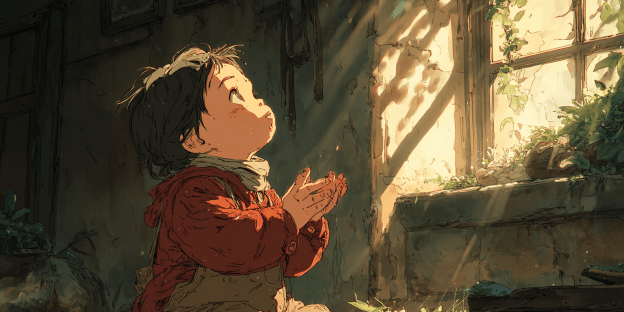
We ought to view our righteousness in Christ as naturally as we regard our own hands—those faithful appendages that type these words without a second thought. Picture a newborn, staring at its tiny fists with wide-eyed curiosity, as if pondering, “What are these things dangling in front of me, and do they really belong to me? If so, how on earth do I make them work?” Tragically, too many who call themselves Christians approach their God-given righteousness in much the same bewildered way, doubting its reality or fumbling with how to apply it. But let’s be clear: God’s sovereignty in bestowing this gift is no less absolute than His hand in crafting and controlling every atom of creation, including those hands of yours. He formed them, sustains them, and directs their every motion, yet on the human level—where He graciously meets us—those hands are yours to command, not His. God isn’t what He creates; He deals with us as commanded beings in the relative realm, not the ultimate causality where He orchestrates all. So yes, those hands belong to you, a gift for your use. In precisely the same manner, God has transferred His Son’s righteousness to your account—it’s yours now, no less inherently than your limbs. To question it is to undermine the very exchange Christ secured on the cross.
As that infant matures, it comes to grasp the truth: those arms and hands are indeed its own, tools to explore, create, and thrive. With time, mastery follows, until using them becomes second nature—no hesitation, no self-doubt. The grown person doesn’t pause mid-task to wonder, “Are these really mine? Might my boss take offense if I wield them to sign this contract?” Yet, how many believers linger in spiritual infancy, perpetually questioning if all this righteousness truly belongs to them? They waver, peering at their divine inheritance like it’s a borrowed trinket, liable to be snatched away at any moment. This isn’t faith; it’s unbelief, doubting God’s word and Jesus’ finished work. Scripture doesn’t mince words here.
Paul declares in Romans 4:20-24 (NIV), Abraham “did not waver through unbelief regarding the promise of God, but was strengthened in his faith and gave glory to God, being fully persuaded that God had power to do what he had promised. This is why ‘it was credited to him as righteousness.’ The words ‘it was credited to him’ were written not for him alone, but also for us, to whom God will credit righteousness—for us who believe in him who raised Jesus our Lord from the dead.” Abraham believed God’s extravagant promises of blessing, and righteousness was imputed to him apart from any law or merit. We, as his spiritual heirs, receive the same—yet some fritter it away with needless skepticism, as if God’s gavel might reverse course. Frankly, it’s like showing up to King’s feast and complaining about the silverware; you miss the King’s love the bounty staring you in the face.
Delving deeper, the Bible introduces imputed righteousness not amid gloom and guilt, but in the radiant context of God’s overflowing favor to Abraham. In Genesis 15:6 (NIV), we read, “Abram believed the Lord, and he credited it to him as righteousness.” What was Abram believing? Not a plea for pardon from sin—that’s nowhere in sight. No, God had just unveiled a cascade of promises: descendants as numerous as the stars, land stretching to the horizons, protection as a shield, and Himself as Abram’s “very great reward” (Genesis 15:1 NIV). It’s a declaration of abundance—health, wealth, legacy, victory—pure, unadulterated blessing. Abram assents, trusting God’s power to deliver all the good things He promised, and bam: righteousness credited, no strings attached. Paul hammers this home in Romans 4, emphasizing it’s “apart from the law” (Romans 3:21 NIV), a free gift for those who believe like Abraham did. This isn’t some secondary perk; it’s foundational, predating Moses by centuries, designed to showcase God’s grace without legal hoops.
Fast-forward to the cross, where this imputation reaches its pinnacle in Christ. As 2 Corinthians 5:21 (NIV) states plainly, “God made him who had no sin to be sin for us, so that in him we might become the righteousness of God.” Here’s the great exchange: our filthy record transferred to Jesus, who bore its penalty in full, while His spotless righteousness floods our account. It’s not a partial swap or a begrudging loan; it’s total, divine, and irrevocable. Romans 5:17-19 (NIV) expands this, contrasting Adam’s legacy of death with Christ’s gift of life: “For if, by the trespass of the one man, death reigned through that one man, how much more will those who receive God’s abundant provision of grace and of the gift of righteousness reign in life through the one man, Jesus Christ! … For just as through the disobedience of the one man the many were made sinners, so also through the obedience of the one man the many will be made righteous.” Notice the “much more”—Christ’s righteousness doesn’t just cancel the debt; it catapults us into reigning status, heirs with Him, empowered to dominate circumstances as He does.
But here’s where the rubber meets the road, and frankly, where too many skid off into the ditch of doubt. If this righteousness is truly yours—as natural as those hands you use daily—then act like it. No more tiptoeing around like a spiritual pauper, begging for scraps when the banquet is yours by right. Remember the baby analogy? Maturity means owning it, wielding it without apology. When temptation whispers, “Look at your track record—you’re still that old mess,” counter with the truth: “No, devil, my record is Christ’s now, flawless and favored.” It’s not arrogance; it’s alignment with God’s verdict. As Vincent Cheung aptly puts it in his essay “The Christian and the Self,” “When you feel so ‘right,’ nothing can stand in your way. When you are so ‘right,’ you cannot conceive of any reason why God would not answer your prayers for success and miracles.” He’s spot on, because it echoes Scripture’s boldness.
In practical terms, this imputed righteousness reshapes everything. Prayer becomes a throne-room decree, not a timid plea, because you approach as one robed in Christ’s perfection. Healing? Claim it—Isaiah 53:5 (NIV) assures, “by his wounds we are healed,” part of the same atoning exchange. Prosperity? Abraham’s blessing flows to us (Galatians 3:14 NIV), crediting abundance where lack once ruled. And sin? It’s dethroned, no longer your master, because you’re not under law but grace (Romans 6:14 NIV). Doubt this, and you’re essentially calling God a liar, which is about as wise as arm-wrestling a hurricane. Instead, let it fuel your faith: meditate on Romans 4 until it’s etched in your soul, rebuking any voice—internal or infernal—that suggests otherwise. God didn’t skimp on this gift; He over-engineered it for your assurance, layering justification apart from the law with forgiveness by the law, all sealed in Christ’s blood.
Wrapping this up, if there’s one takeaway, it’s this: God gave me His Son’s righteousness not as a loan to be repaid, but as my new identity, irrevocable and empowering. It’s me—as real as these hands typing away. To live otherwise is to shortchange the cross and grieve the Spirit. So own it, wield it, and watch mountains move. After all, who are we to disagree with the One who holds the stars? Let’s live like the righteous heirs we are, with a shout of gratitude toward heaven’s Son that made it so.
 Oshea Davis