Tag Archives: Bible

Point The Gun At Satan & Pull The Trigger

No analogy is perfect, but faith to heal is like God giving us a gun. No one says to themselves, “it is my power that blew up this apple, when I shot it.”  Rather, it is painfully obvious to all that the power was the gun powder and bullets. Yet, when a person shoots something or someone, then they are blamed, and rightly so, as “this person destroyed this,” and or “they hurt this other person.” Even though it was not their power, they directed the power to a target. If an Olympian sharpshooter wins gold, the medal is awarded to them and not to their gun.

It is similar when Jesus commanded us to heal the sick, rebuke demons and cast down mountains using His Name and authority. God and creation are not the same, or that is to say, we deny pantheism. Jesus gave us His power and authority. The Spirit was not given to God, to have rivers of life and power flow from His belly, but from ours. Because healing was produced by the stripes on Jesus, in substitutionary atonement for our healing, then it means we do not ask for healing, because it has already been accomplished and given to us.  We do not ask God for forgiveness, but rather, we repent of our sins, because the forgiveness has already been accomplished.  

Adam and Eve, did not beg God for food, because the food was already provided and given. They could beg all they want, but God was not going to grab a pear and shove it down their throats. They had to grab the provided food and eat it themselves. The same is for healing. The atonement provided the healing, it is our responsibility to grab it and partake of it. The way we do this is by faith and then opening our mouths and commanding the sickness to leave and healing to take place. Jesus said “you heal the sick.” He did not say, “ask God to heal them.” He said, “you do it.” Jesus did not tell us to tell God about our mountains, but to use our given authority and power, and then command them to move. Most Christians are in direct and explicit rebellion to Jesus on this doctrine. This is why Peter in Acts 3 says, “what I have, I give to you, in Jesus Name, walk.” Peter did not even pray, or not pray in the usual way. He commanded the healing, just like Jesus told him. We are under the same gospel and the same commandments.

Because the power, authority and healing has been given to us, it is us who pulls the trigger, not God. It is us, who climbs into the driver’s seat and makes things happen, not God. Thus, God is not holding back your healing, you are. God is not the one who is going to heal you and those around you, you are. Jesus said, “You heal them.”

This does not mean that God never works independently of our faith, because a “gift of faith” and or healing is to help us in our weakness. We seek them and gladly use them. However, the bible speak of the gifts in the least amount, as compared to something like normal discipleship faith in God’s promise. Faith is the master key.  And so, the point remains, God is not holding back your healing, because He has commanded that you pull the trigger. The same is for something like the forgiveness of sins. God is sovereign and controls all things. God is sovereign over our faith, but on the demand of faith God always does what He promises, whether forgiveness or healing.

The power and authority has been provided to us to heal, just as much as food was provided for Adam and Eve. God has put the gun in our pocket, but it will not fire itself. It will fire, when we use faith and point it as sickness and command it to leave. God has commanded us to resist the devil and cast him out. His power is already in our bellies and His authority is already stamped upon our tongues.  God is not holding you back from being freed from demonic harassment, because He commands you to point the gun at Satan and pull the trigger. He tells you to command demons to leave. You resist the devil, not God. You command them to leave, not God.  

When we do, we are praised for the results and God is credited as the ultimate power, just like Peter said, “what I have, I give, In Jesus name, walk.” Jesus Christ says the mulberry tree, would not obey “God,” but that it will “obey, you,” when you command it. God will praise us, when we use our faith to use the authority that He has given us. When we pull the trigger, He has nothing but praises. “Your faith has saved you, and it has healed you.”

Many Christians are begging God to heal them, as if Jesus stripes did not already provide healing, and God needs to do something to give the healing. God does not need to re-crucify Jesus, because the atonement is a finished deal. Just like with forgiveness, because it is already done, you simply repent and receive forgiveness and righteousness by faith. God does not need to do something to forgive you, it has already been accomplished, and so you do not ask and beg God to forgive you.

They think prayer is like an Uber Driver, asking the driver (Jesus) to take them to the healing location. But this is wrong. The problem is that Jesus has already provided the healing (location) and the means to get there, which is faith (the car). They must get in the driver’s seat and drive it themselves.  God is not withholding their healing, or righteousness. It is already done.

And yet, they pray asking and begging, as if they expect God to pluck off a pear (healing) and shove it down their throats (faith) and force their jaws to chew.  This is why their prayers go unanswered. The pear tree is looking at them in the face, and they are begging God for a pear. If I saw a person like this, I would think they have a few screws loose in their head and likely be silent, not knowing how to respond to such bizarre behavior. This is one reason why God seems silent when you pray. Many Christians pray as if they are insane and delusional.

Let us obey Jesus’ extreme faith and prayer doctrine. Let us sound like intelligent Children of God. Let us not beg for something that God has already given us.

——–

* I want to give credit to Andrew Wommack for helping me understand some basics of this teaching, “You already Got It.” The example of the food in the garden, and silent prayers I got from him.

Jesus Was the Real Victim in this Story

 He said to his disciples, “Why are you so afraid? Do you still have no faith?” (Mark 4:40 NIV)

Jesus told him, “Don’t be afraid; just believe.” (Mark 5:36 NIV)

The saying is true, you are either in faith or fear. Jesus puts these as opposites. He says, “only believe,” with no mixture of fear. He says in Mark 4 that the disciples had fear and zero faith. They don’t mix well. If you have fear in your heart about a sickness, then you realize you don’t have faith. This is how it works.

Jesus was the real victim in this story. He was asleep with His head on a cushion and was woken up for something He expected the disciples to deal with, without disturbing Him. I am not trying to be funny here. It is no joke being woken up from a good nap from something so minor as a deadly storm, which only a little faith could destroy and remove.

The prayers of many people are like the disciples in this story. They pray as if Jesus is teaching that He likes it, if we cry out in fear for His help over something like deadly weather or sickness. People repeat the disciples fearful cry as a model for prayer, when Jesus rebukes it as how not to pray. Jesus was upset with their fearful cries for help. Think about that. Because God is merciful He might answer some fearfully cries of unbelief, but don’t expect it.

The point that made it a bad prayer was no faith. It is ok to ask for Jesus help if you have faith, but here is Jesus’ point. If they had faith, then they did not need to ask for Jesus’ help. That’s how you know you have faith.

 We do not have every lesson Jesus told the disciples at this point, but Jesus’ reaction gives us enough details that He expected them to use their faith, and deal with the situation, without waking Him up.

This also brings up the issue of where the storm came from. Of course in the ultimate level God causes all things, but the bible mostly deals with the human level. Peter in Acts 10:38 said it was not God, but Satan who was victimizing all the people in Israel with sickness and diseases. When Jesus was casting out diseases He was fighting demons, not God, because the sicknesses came from demons not God. When you have an insider relationship with God He relates to you in blessings. The contract in Jesus’ blood stipulates that God only relates to us in blessings (it could include discipline, but not curses). Thus, whether it is a sickness, or a deadly storm, in human level, it was not from God. When you rebuke it, you are not rebuking God but demons and the curse. Jesus teaches us to not tell God about our mountains, or sickness or deadly storm, but to use our faith and we command it to move and die. Jesus has given us the power and authority to do it, and expects us to do something. Don’t wake Him up and tell Him about a storm, when you have the Staff of God in your mouth. Open your mouth. You divide it. You heal it. You cast it out. You calm it.

Carnally Minded and Sickness

If you believe a doctor’s report over the promise that Jesus has already healed you, then you are the definition of fleshly or carnally minded.  Stop condemning adulterers for being carnal, until you can remove the oak tree of carnality from your own eye.

But you say, the doctor says its stage 4 cancer.  If you are carnally minded then I understand why that seems so serious. The bible says to be carnally minded is death. But we are to be spiritually minded. Spiritual and intellectual are really the same thing. We are intellectual by using the bible as our only starting point for knowledge. The Spirit enables us to believe His promises. This is spiritual minded.  Does the bible say a stage 4 tumor is not included in the stripes of Jesus that healed us? Where?

To be carnal or fleshly has two meanings. One is about sinning according to bodily desires such as adultery or giving into anger. This carnal sinning is a consequent of the other meaning. The other is to center your choices on your sensations rather than the Spirit and the Word. This does not always mean an automatic sin. Just because you slept an extra hour more, because you were tired is not a sin. However, if the bible addresses the same topic and gives a command and gives a promise that contradicts, then it becomes a sin at this point to choose the fleshly desire over the scripture. To be carnal means your source of knowledge is empiricism. Atheism is to be carnally minded. The Christian is defined by their starting point being the Word and being led by the Spirit. This is a contradiction to being carnal.

A doctor is only telling you what they see and hear and feel. This is carnal. They give you knowledge based on carnality. Because the bible addresses sickness and healing, then to choose the so-called knowledge based off the flesh over the scripture is to be carnally minded. Your mind is focused on sensations and feelings and not focused on scripture and the Spirit. This is the definition of a carnal mind. When a person worries, they are replaying knowledge produced by the flesh. They are carnally minded. This carnal focus on empiricism will lead to fleshly sins such as worry, fear, unbelief, anger and then to other behavioral sins such as outburst of anger and drowning out worries with entertainment and lust.

To be carnal is more than just adultery. The foundation of a carnal mind is about knowledge. Where do you get knowledge? If you use your feelings and five senses, then you are the pinnacle of carnality.  To hide behind a doctor, who is carnally minded does not remove your guilt. There is a line drawn in the sand. On one side is the Word and the Spirit, the other is what you can see, feel and touch. The scripture has drawn that line and so you must choose. As Jesus said, if you are not with Him, you are against Him.

My Power My Choice

Acts 3:4-6 NIV

Then Peter said, “Look at us!” 

….what I do have I give you.
In the name of Jesus Christ of Nazareth, walk.

First. Peter said, “look at us.”  I thought we were to direct attention away from us and point to Christ? Why is Peter so focused on himself?

Second. Peter says “what “I,” have, “I,” give to you.” I thought it was, “what God has, He will sovereignly will or choose to give?” I thought it was God’s power, and God’s choice, not Peter’s power and Peter’s choice?

Peter said it was Peter’s power, “what I have,” and it was his choice, “I give.” Peter claims it was his power and his will. Why does Peter pray in a contradictory way as compared to the theologians? Who is right?

The Bible rejects pantheism. God is not what He creates; He absolutely and directly controls all things, but He is not what He controls. God gave his followers the power to heal the sick, and cast out demons. He did not give this power to Himself. Jesus commanded both the apostles and followers to heal the sick. Jesus commanded both is disciples and 77 others to “heal the sick and cast out demons.” Some stop at Matthew 10:7 when Jesus command them to “preach the kingdom of heaven.”  Jesus is commanding them, and us by extension, to preach the gospel. So far, so good. But Jesus continues by saying, “heal the sick, cast out demons, and raise the dead.” Jesus was not going to do this; He was commanding them to do it. If someone was going to get healed, it was up to their power and choice.  Thus to heal the sick and raise the dead is as much as a command as it is to preach the gospel. If it was not clear enough Jesus after His resurrection, commanded them to receive power, Acts 1:8. Most of them were not apostles, because it had nothing to do with the apostles, but Jesus sitting as the right hand of the Power.  Not only did they have the power, it was their will or choice to administer it. It was not up to God’s power and will to heal, it was their power and will.

This is how Jesus spoke on this topic and it was how Peter spoke on it. However if I spoke like Jesus and Peter in most American churches I would be labeled a heretic.

Yes, on the ultimate level the power is God’s, just as the power in my hand to type this essay is ultimately God’s power and by His direct control. However, Jesus and the Bible rarely mention this ultimate level; they mostly speak on the human level. I will do the same.  Thus, it was not God who typed this, but it was I, who typed with my power and choice. Likewise , the sick are not healed by God’s power and choice, but my power and my choice.  Anyone who has a problem with this rejects a doctrine directly taught by Jesus and the Holy Spirit. Cut such a person out of your life. They are servants of demons.

Peter sums this up by saying faith in Jesus name brought the healing. It was a person’s will to have faith that brought the healing, not God’s will. For more on this topic see, Vincent Cheung, “Healing, The Will Of Man.”

Also, Peter did not even pray, at least not in the traditional way. He simply commanded the healing. This is what Jesus told us to do. “You heal the sick.” It was the same with Moses and the Red Sea. God said, “You divide it.” Many do not pray by commanding and this is why their prayers go unanswered. This is why many have died before their time by sickness and troubles. Jesus commanded us to do the healing, not God.

Jesus’ faith doctrine is extreme. He does not instruct us to pray to God and tell Him about our mountain; rather, Jesus tells us to move the mountain by using faith and commanding it to move.  Jesus said, “it will obey you.”

This is not a suggestion. It is a command from our God. Because of this, when many pray they are in rebellion against God. Jesus commands us to move and heal. However, many respond back saying, “No, God, You do it, if You are willing.” By praying like this, they have ensured their sickness has already gained victory over them. On rare occasions God might still heal such a prayer, out of extreme pity, but it would be an exception. If you are sick and pray like a beggar, asking God to heal, you have already lost. You are a dead man walking. Sickness has already defeated you for the glory of Satan.

When some pray, they pray confessing unbelief rather than faith. If you are born-again then you are not a worm, not a beggar, not a nobody and you are not a sinner. James says the prayer of a righteous person is very effective; however, if your prayer is confessing how pathetic you are, then of course you will not pray knowing how righteous you are, and thus, your prayers will not be effective.  Prayer is a good confession of faith in God’s truths and promises; and yet, people often pray confessing who they were, before they were born-again. They say, “I am a worn and sinful and nothing, but God is everything and powerful.” This takes no faith; it is a coward’s way out. It is a religious maneuver to remove you from God’s command and responsibility. If you are nothing and sinful then you need to get born-again so that you become righteous and have privileges that come from being a son of God.

To illustrate this think about asking God for the forgiveness of sins, or a salvation type prayer. Although, there is nothing wrong for a salvation prayer to “ask God into your heart,” yet there are more precise ways to describe it.  Peter in his Pentecost sermon gives direction for a salvation prayer. He instructs the audience to ““Repent and be baptized, in the name of Jesus Christ.” Notice Peter did not instruct them to “ask” God to forgive them; rather, he tells them to repent in Jesus’ Name to be saved. Why? Because Jesus already died and was resurrected. The forgiveness already happened. We are not asking God to crucify His Son again to forgive us, because it already happened.  We are not asking God to do anything in the present tense to forgive us, because Jesus already accomplished it. Because it has been accomplished all we do is repent.  In this context we do not ask or beg. It is when a person has confidence in Jesus’ finished atonement, they repent of their sins in Jesus’ Name. Salvation in this sense is a confession, and not asking and begging. We confess our sins and that is all it takes. Faith in this sense, is about God letting you know He has already forgiven you, and by repenting you are agreeing with God.  It is foundationally about agreeing and confessing and not asking.

Other gospel benefits such as a healing, and the authority to cast out demons and cast down mountains is the same. They have been accomplished by Jesus’ finished atonement. We do not ask and beg for them, because they have been accomplished by Jesus and given to us. It is irrational to beg for something that already belongs to you.  It was the stripes on Jesus’ back that healed us. And so, it is irrational to ask God to heal us, as if He needs to break out the whip again and start slashing Jesus in the throne room. God accomplished our healing in Jesus’ atonement. Thus, we don’t beg for it, because it is already ours.  As with salvation, we repent as a confession of confidence in Jesus finished atonement, rather than beg and ask forgiveness. The same with healing. We confess and agree with God, rather than beg and ask. This is why Jesus tells us to “heal the sick, and cast out demons.” When we command healing and command demons to leave, we are giving a confident confession in the finished atonement of Jesus, which has given us the healing and authority to do such things.

Some people are asking God to do things that He told us to do. They have it flipped upside down. And yes, we see examples of Jesus in John 14-16 telling us to ask in His name. However, in my experience it is only those who already know their authority in Jesus, who already are healing the sick, who are able to ask God for things in prayer, without asking as if they are a beggar or outsider.  Those how can heal the sick and cast out demons are better equipped to march boldly to God’s throne of grace and confidently ask for things as a son who belongs there.

Science is Anti-Logic

Recently, I have been reminded that people think science is deductive and logical.

Empiricism, Observation and affirming the consequent are logical fallacies.  Because they are the epistemology, order and systematic practice of science, it means science has no knowledge. Science has no body of knowledge.  These logical fallacies are built into the nature of empiricism and science. For example, because the bible is God’s revelation given to us, deduction is therefore pre-baked or built into our worldview. We do not discover or observe truth, God reveals it and we apply (i.e. deduction) this knowledge to us and the world around us. We do not formulate generalizations because God already gives us the truth up front.

If your epistemology starts with the five senses (which is a fallacy), then fallacies of induction are pre-baked or built into your worldview. No amount of crying about this, will make the fallacies go away. You do not have knowledge because it was not revealed and given to you. And so, you must observe and attempt to find it. You must use particulars (‘some’ (in addition to being private, transient descriptions)) and generalize (‘all’ category statement). However, to do this you violate the law of contradiction by saying ‘some’ and ‘all’ are the same thing. The only way to avoid this is if you are omniscient, or can observe all things in all past, present and future with perfect understanding of all you observe. Unless this is the case, then the premises of observation are always a ‘some.’ However, category statements need to be ‘all’ statements if you want knowledge about reality. All conclusions produced by induction do not logically follow from the premises. This means all induction is a non-sequitur fallacy. This means all induction is anti-logic, because it violates the law of contradiction and violates the law of valid inference. The logical void between premise and conclusion is the place where the laws of logic are violated. Induction is anti-logic.

The statement “trees are rocks” is primarily a category mistake because it misclassifies trees, which are living organisms, as rocks, which are inanimate objects. Trees and rocks belong to fundamentally different categories and have distinct properties. However, it can also be seen as a contradiction because trees and rocks have inherent, distinct properties. Trees grow and reproduce, while rocks do not. Therefore, saying that a tree is a rock contradicts the essential properties that define each category. The primary issue is the misclassification of categories, but it can also be seen as a contradiction due to the inherent properties of trees and rocks.

The inherent properties of knowledge are not material. However, sensations and reality are material. To have premises about material things to then conclude with knowledge, is primarily a category mistake, but also a contradiction because of the inherent properties of these categories. Thus, observation and empiricism are anti-logic.

Empiricism is a fallacy. What you see is not the same as the thing you are seeing; they are different categories. Also, the visual or audio sensation is not knowledge, but you understand what you are seeing by invisible propositions of true and false. Sensations are not propositions, and thus you have multiple category fallacies when you go from the thing itself, to sensation and then to knowledge. This results in a repeated systematic denying of the law of contradiction. To say the category of a “the thing itself,” a “sound” and a “proposition” is the same, is a category error and so it also denies the law of contradiction. Category errors in one’s epistemology would lead to skepticism, and this would also deny the law of contradiction. Empiricism is anti-logic.

Scientific experimentation is the fallacy of affirming the consequent. I want to give credit to Vincent Cheung for helping me understand this below, from his essay, A Gang of Pandas.

A. If chemical Y is present, then this solution will explode.
B. The solution exploded.
C. Thus, I verified that chemical Y is present.

This is a fallacy. Maby chemical ‘k’ was present and it was the reason for the explosion. We are on the topic of logic. Logically, controlled tests do not eliminate the infinite number of variables that could be affecting the experiment. Controlled tests have no bearing on removing the fallacy of affirming the consequent. The only way for a scientist to know if his controlled test does eliminate all other variables, is to already have more knowledge than his experiment, but if that is the case then he doesn’t need science anymore, because he already knows all things.

A scientist will then take the conclusion produced by the fallacy of affirming the consequent and then restate it as a Modus Ponens in their scientific journal. Scientist want to be deductive and logical so they restate their fallacy in a deductive form. However, the reformulation is in name only. Logic must match up with reality.  Affirming the consequent is experimentation.

D. If his solution explodes, then chemical Y is present.
E. This solution exploded.
F. Thus, chemical Y was present.

 Thus, to restate such statements as Modus Ponens in scientific publications is nothing less than a delusion. They state their experiments as category statements to be used in deduction.  This gives them the appearance that they have knowledge. However, the first premise of their Modus Ponens was produced by the fallacy of affirming the consequent. Thus, their deduction is unsound.  There never was a body of knowledge to begin with. But they want to have a body of knowledge and so they transform categories and necessary connections not present in their premises and illogically put in their conclusions. They are anti-logic. 

Using “deduction” without knowledge or with false premises means the syllogism is unsound. To use deduction without knowledge is delusional and insane. For example, for me to say, “All box-jellyfish are jellyfish. I am a box-jellyfish. Therefore, I am a jellyfish,” would be deductive but also delusional. It is vain to use deduction or logical inference, unless you have a body knowledge to begin with. Knowledge is something science never had. You cannot use the triple fallacy of empiricism, observation and affirming the consequent and then produce knowledge; it is logically impossible. It is anti-law-of-contradiction to say a conclusion that does not logically follow from the premises produces knowledge.  

All Induction is Anti-Logic.

Deductive logic consistently applies the laws of contradiction, identity and excluded middle. This is why the conclusion of deduction is valid and necessarily follows from the premises.  The point is that valid inference (deduction) is built on the laws of logic, not the other way around.

Inductive logic is anti-logic. We call it inductive “logic” as a way to separate it from deduction, but it is not logic. The term “rational” technically means to be deductive, and the term “irrational” means to be inductive. All inductive conclusions do not follow from its premises, and thus, all induction is a non-sequitur fallacy. To be inductive is to be anti-logic. It is not even pseudo-logic, it is opposed to logic. If you affirm that induction’s conclusion produces knowledge, then at the same time, you deny the law of contradiction.

A quick example. Induction takes premises of “some,” and manufacturers the new information of an “all” in the conclusion. But to say  “all” and “some” are the same thing at the same time, is to deny the law of contradiction. Induction is anti-logic. You cannot deny the law of contradiction without using it, and so we know any system of thinking that uses induction produces no knowledge, let alone a body of knowledge. Thus, even before we get to scientific experimentation, the inductive observations, which science uses already systematically denies the laws of logic over and over. Science uses induction, and so science is also anti-logic. To affirm that science produces knowledge, is at the same time to deny the law of contradiction.

Also scientific experimentation is the fallacy of affirming the consequent.  For example,

H.1. If [Jack] eats [lots of bread], then his [belly gets full]. A, (B is C)
H.2. [Jack’s] [belly got full].  A is C
H.3. Thus, [Jack] ate [lots of bread] A is B

This is wrong. It could be that Jack ate a bowl of apples, and that is why his belly is full.  If you take this basic propositional logic and turn it into a classical syllogism, you will see that it commits the fallacy of an undistributed middle term.  Induction adds information into the conclusion that is not in the premises, this is where the laws of logic get violated.  In other fallacies it is easier to see, such as “some” in premises and then this gets changed to “all” in the conclusion. In affirming the consequent, (or an undistributed middle term in classical logic) the added information is the connection between the major and minor terms.  The premises do not provide a necessary connection between the major and minor terms, but the conclusion adds this new information. To say “there is not a necessary connection” and “there is a necessary connection,” is a contradiction.  

We have skipped the fallacy of empiricism, and only quickly dealt with induction and scientific experimentation.  Thus science is anti-logic. Science is anti-law-of-contradiction.  To say science produces knowledge is to kill logic, but you cannot deny logic without using it. Thus, science does not produce knowledge. To say science produces knowledge is a delusion and superstition.

Christian Sex Ought To Be the Envy Of The World

A few quick thoughts on sex.

I have never heard a pastor preach a sermon on sex and how much sex we ought to have, without negating the scripture with their experience. Imagine me saying, “after you have worked through your emotional history and talked out your disappointments and after you have visited the doctor, then you are to obey God and repent of your sins.” Or imagine if I said, “after a person has warmed you up with nice words, then you are to love them as yourself.” Most would recognize the error of this. We are to obey God’s commands regardless of our feelings, history or any other excuse. The compassionate thing to do, is to tell someone to obey God regardless of anything else. We are promised if we obey, God will reward and bless us.

When you read “breaking of bread” it sometimes refers to the church taking the lord’s supper, such as Acts 2:42. When you take of the Lord’s supper you are remembering His substitutionary atonement for you. Jesus in John 17 refers to His sanctifying work results in Him and His people becoming “one,” and prays that we become one with Him and the Father. We are also told we are “one spirit” with Jesus in Corinthians 6. The context of this passage is about sex. We are warned not to be one flesh with someone not our spouse, because we are one spirit with Jesus. Sex is the act of being one flesh. It is the only way to be one flesh. Although this chapter is spoken of in the negative we can draw out some general presuppositions or doctrines.

The way the New Testament speaks of breaking of bread, as referring to communion, we understand they did it often, if not daily. By partaking of the Lord’s supper, it is a reminder we are one spirit with God. By faith, when we partake of the Lord’s supper, we do, or behave as one spirit with Him. However, beyond the Lord’s supper, every time we focus our faith on Jesus Christ, every time we praise Him in faith, every time we have our morning devotional, every time we pray in tongues, every time we approach God’s throne to ask and receive, we behave as one spirit with God. Faith in God is our acting like one spirit with God. A Christian who is faithful in His love to God, frequently behaves as one spirit with God.

If we consider the commandment of God to be one flesh, unlike the multitude ways to apply faith with God, there is only one way to be one flesh. This is sex. It is not mainly about having children, but the command is firstly and simply, to be one flesh in pleasure. Imagine only having faith in God one time a week? How about once a month? I would be hard pressed to say a person who only had one moment of faith in God a month, could still be called a Christian. A healthy disciple of Jesus is frequently placing their faith in God, and by this, they are constantly being one spirit with God.

The amount of sex is only determined by one thing, as it is for everything else regarding Christian ethics. It is determined by the command of God. The command is to be and act like one flesh. There is only one way to do one flesh. There is no excuse to make God’s commands not apply to you.

There is an entire book in the bible about sexual attraction and sex. Solomon is like the protagonist of a hero story. His heroic adventure is about sex with his wife. A husband’s sexual escapades with his wife is the bible’s hero story. Solomon gives a public call for us to gather in the public square to hear Solomon describe his sexual adventures with his wife. This book is to be our example as well. It is a command to follow the biblical examples. Also, if we consider that most fasts are only a day, or a few days, we realize the presupposition of scripture is frequent sex, because it says to come back quickly so that Satan does not tempt you (1 Corin. 7:5).

So far, we have mainly focused on the positive way to obey God’s command to be one flesh by sex; however, there is more. The scripture says that when you are married you give up the rights of your body and give those rights to your spouse. If one spouse wants sex, the other spouse has given up the rights to say no. You cannot say, “well, then I want my spouse’s body not to want sex.” If you play that game, then you have an infinite regress, and the verse has no meaning. If you cannot obey God, then it is better not to marry. The reason we repent of our sins and ask God to save us, is because God commands us (Acts 17:30). Christian behavior and ethics is determined by only one thing, which is God’s command.

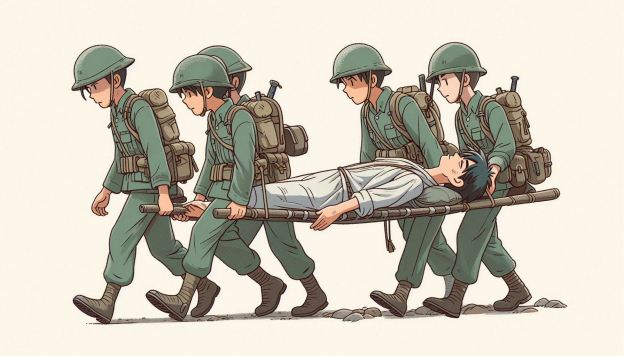
In all this we never negate the situation where a spouse is sick and needs help. If one gives selfish demands in this situation, they are worse than an unbeliever. However, to be sick is a curse and an attack of Satan (Acts 10:38). One reason the devil attacks us with sickness, is that we are busied helping our family, rather than devoting our time to serve God and expand His kingdom. One strategy used in war is to injure soldiers rather than kill them, because healthy soldiers are taken away from fighting to help the wounded. Satan does the same in his fight against Christians with sickness, injuries, and cancers. We are commanded to be healed, just as much as we are commanded to praise God, James 5:15. James is not commanding that we pray, but is commanding we get healed. It is not optional to apply or reject the gospel, and healing is part of the gospel. Other things can be the gospel, such as forgiveness, however something cannot be more gospel than healing is. Because healing is the gospel and we are commanded to be healed, it is wrong to stay sick. It is wrong to allow Satan to steamroll over you with sickness and pains, and by this force others in prolonged care of you, when they could use their time in serving God. You are commanded to do the opposite. You are to storm the gates of hell and tear them down. You are to heal the sick, cast out demons, raise the dead, and set the prisoners free. Thus, staying sick or in pain is no excuse to not have sex. It is wrong not to constantly be one flesh for the act of pleasure.

If you read Song of Solomon you realize Christian sex and orgasms, ought to be the envy of the world.

You Said Something

There is nothing wrong in the statement, “I was once a sinner who was saved by grace.” However, if you stop there it is unbelief. The same gospel that saves is the same gospel that gives me a new identity in Jesus and baptizes me in the Spirit. Therefore, I am the righteousness of God. I am not affirming God is God’s righteousness, but that “I,” am God’s righteousness. God gave it to me and it is now mine. I am righteous like God is righteous. This is who I am.  This is important because the gospel is not mainly a negative belief. It is not mainly about past forgiveness. It is mainly a positive belief. I am righteous. I am empowered by the Spirit for miracles. I have authority to cast out demons and heal the sick. I am a child of God. I boldly march in God’s throne room and ask and then receive.

This is important for prayer. James says that the prayer of a righteous man is effective. If your focus is that “I am a sinner saved by grace,” then according to James, your prayers will not be effective. I am not a sinner. I am righteous. The focus is that I am present tense, righteous. The focus is not a negative belief of my past forgiveness, but a positive declaration of my present righteousness. It is to this type of Christian who will have effective prayers.

Jesus teaches on prayer in Mark 11:22-24, saying, “ Say to this mountain; and, whatever you ask, believe you have received it, and it will be yours.” The focus is not God’s goodness. The focus is not begging and crawling to God, waiting to see what God does. The focus is not God, but you. Jesus puts the focus on “believe you have received it,” when you said it.  As with James only a person who knows they are righteous in God’s sight, God’s child and has contractual rights, is able to put the focus on them and get answers to prayers. The focus is not problems. The focus is not telling God your problems, trying to prick His heart and see what He does. No.

Jesus did not instruct you to tell God about your mountain. Jesus commanded you to open your mouth and tell the mountain to move. The focus is on your mouth to say it, and your mind to believe it. Your mouth is Moses’ Staff of God. Stretch out your mouth and say something. Say it. What you want, say it. Jesus’ says the focus is not waiting to see what God does, but believe (past tense) you have received. The focus is not your problem or God. The focus is that someone so righteous as you, just spoke something in faith. The focus is that you opened your mouth. It is that simple.

This is Jesus’ teaching on prayer. Jesus is the extreme faith preacher.

The Bible Distinguishes The Elect From Reprobate Trash, By Praying In Tongues

Jude 1:18-21
“In the end time there will be scoffers…”
These…not having the Spirit.
But you, building yourselves up in your most holy faith, by praying in the Holy Spirit, keep yourselves in the love of God.”

Jude says mockers (and this is a continuation of his condemnation of false teachers) do not have the Spirit, which is referring to the baptism of the Spirit (Acts 1-2, Paul in 19:2 refers to “The Spirit” as the baptism of the Spirit and speaking in tongues (v.5)). Jude refers to those born again as “the called,(v.1).” In conversion the Spirit works on you to receive Jesus. In this sense you have Jesus, or you do not have Jesus. In baptism of the Spirit, Jesus works on you to receive the Spirit. In this sense you do have the Spirit, or do not have the Spirit.

In contrast to mockers, who do not have the baptism of the Spirit, Jude instructs the saints to pray in the Spirit, which is the baptism of the Spirit, which refers to praying in tongues. By praying in tongues, you keep yourself in God’s love. Think about that. Consider the consequence for not praying in tongues.

Paul says something similar in Ephesians 6:17-18. He says to “receive” the helmet of salvation and the sword of the Spirit by “praying in the Spirit.” Receiving the helmet of salvation and the sword of the Spirit are important. Paul says to do this by always praying, by praying in the Spirit. We know what Paul means by praying in the Spirit, because in 1 Corinthians 14 he defines “praying in the Spirit,” as “praying in tongues.” Thus, we continually receive the helmet of salvation and the offensive power of the Spirit, by praying in tongues.

Lastly, Paul says in Corinthians 14 that by praying in the Spirit we edify and encourage our inner man. This was one way Paul was able to encourage himself in context of all his hardships.

Paul therefore says I thank God I pray in tongues more than you all, to the Corinthians.

By praying in tongues, we keep ourselves in God’s love, strengthen our inner man, and keep receiving the helmet of salvation  and are continually empowered with the sword of the Spirit.

This does not mean a person cannot be saved without the baptism of the Spirit. However the same unstoppable God who causes an elect to receive Jesus for salvation will cause the same to have faith to receive the Spirit. Peter argues in Acts 2 that forgiveness is a stepping stone to receive the Spirit. To this Peter brings in the doctrine of election and predestination making the connection to the baptism of the Spirit. Some might think Peter’s connection is this: Those whom God calls to Himself are those born-again, however, this is not correct. Rather, Peter’s connection is, those whom God calls to Himself He gives them the baptism of the Spirit, with speaking in tongues. This isn’t how religious elites use predestination, but it is how the scripture uses the doctrine. And so God is faithful to call his elect to Himself, by causing them to receive the Spirit.

If a Christian has not received the Spirit, they do so by ignorance and unbelief. By unbelief and disobedience the Christian has pragmatically caused their Christian experience to be second class. The baptism of the Spirit enables one to fight with power to expand God’s kingdom. Praying in tongues causes one to continually receive the sword of the Spirit. To not have this while others are doing the hard work is spiritual negligence.

This is something mockers cannot do, and refuse to do. First of all, they are two busy mocking and making fun of the faith teachers, who are praying in tongues, to keep themselves in God’s love. Secondly, they hate the Spirit and so they refuse His gifts and powers.  False teachers and heresy hunters mock the very thing which the bible uses to distinguish the Called, from the reprobate.

Christology Overlords

I dislike having to give this note of warning on such a wonderful topic and focus, but it needs to be said. The forceful way some people use the hermeneutic and focus of Christ-o-centric, or Christ-centered or the redemptive historical reading of scripture is wrong and heretical. For some people the bible is not Christ-centered enough for them. As odd as it sounds, Christ is not Christ centered enough for them. And so they invent man-made theories to force most or all of the bible to be Christ-centered in a way that the bible is not. By doing this they exalt themselves and exalt man focused theories over the scripture and how the bible interprets itself.

This is pathetic, because when reading the bible with a redemptive historical approach, in a correct way, it can yield some beautiful insights.  However, if you take it too far you end up making Jesus and the Father fight one another, and cause the scripture to devour itself.  

For example the story of David and Goliath is not mainly about Jesus and His defeat of sin and death. This passage is not Christ-o-centric. There can be an additional insight taken from this story about Jesus and His defeat of sin, but it does not replace the original story as the main thing. Because the bible teaches us to moralize the bible for ourselves, then an additional insight or application of this story is to inspire us to use courageous faith to defeat Goliaths in our lives; however, this is not the main point.

There is an important reason for why this story is the main story and why there are grave consequences if you try to make the Christ-o-centric the main thing. David prays to God (a Word of Faith Confession), and thus, God is already the main power and author in the story. David even says by his actions everyone will know there is a God in Israel. The point of the story is for all to know there is a God who has chosen Israel.  Now, carefully think about the implication if you were say that a story where God is already the main power and author, is not the main story, but Jesus is, because Jesus is more central and important.  

The implication is that God is not the main thing, but rather God is. It is contradictive nonsense. Or, God the Father is not the main thing, but Jesus is. This is blaspheme. This is to make the scripture devour and fight itself.  This story with David and Goliath is a story already about God. You cannot therefore make it more God-centered. It is already God-centered to the max. A story where God is already the main author and displayed power does not need your help to make it more God-centered. A story where God is already the main author and power does not need your help by allegorizing God into it, as if God was not already there.

If a person did not already see God as the main author and power of this story, then I understand why they would feel the need to allegorize God into the story by making it Christ-centered. They are reading the story as if they are an atheist. God is not there and so they need to allegorize God into a story where God is not present.  This happens because their Christ-o-centric theories have become so all consuming that when they read the bible they do not even recognize the Father or the Spirit. They do not see God already in the passages, and so they need to allegorize Jesus into it so that the passage now becomes God-centered.  

Vincent Cheung even noticed a pastor bragging about this.

“A well-known pastor and professor was teaching a group of children something about biblical theology. They came upon a passage in which Christ performed a healing miracle. The pastor persisted with one of the children until the poor thing finally surrendered to the interpretation that the passage was not about the healing miracle, but about Jesus Christ. But the passage was already about Jesus. Why did the pastor forbid the child’s initial understanding? The advocates of biblical theology and the redemptive-historical approach are fond of boasting that they find Jesus on every page of the Bible. The problem was that this particular page revealed Jesus Christ the healer, and as one who would heal those who ask by faith. You see, this is what the theologians resent. This is the thing that the pastor and professor refused to permit. He had to destroy it before faith in this Jesus grew in the heart of the child. He had to murder this Jesus before he could take root in the next generation. And so he did it. And then he wrote a book and boasted about it. But Jesus said that someone like this should go kill himself (Matthew 18:6).

He claimed a miracle is only a “sign” that points to Jesus Christ. But which Christ? What does the sign tell us about this Christ? Does the sign “Christ is a healer” point to a Christ who is not a healer? Does the sign “Christ heals those who come in faith” point to a Christ who does not heal those who come in faith? How do you pull this off? Magic! What would a sign have to say to actually tell you that “Christ is a healer” and “Christ heals those who come in faith”? You just won’t let it happen, will you? You will allow Christ to be only that one thing about him you still believe in and nothing else. You will let Christ be only as big as your microscopic faith, instead of increasing your faith to embrace all of Christ. When the Bible reveals a Christ that is bigger than your faith, you cry heresy. This is what you mean by Christ-centered, but you make everything, including Jesus himself, centered on what you decide…”[1]

The issue with their Christ-o-centric theory is that the Father, the Spirit, the Scripture, and even Jesus Christ Himself are not Christ-centered enough.  The scripture is not God-centered or Christ-centered enough for them. Jesus is not Christ-centered enough for them, and so they even end up correcting Jesus by allegorizing passages directly about Jesus to not be about Jesus and what Jesus is doing and teaching, but instead be about Jesus. Nonsense. This nonsense occurs because they have a version of Jesus they like and allegorize all scripture, even Jesus and His own words into this version.

Christ-o-centric theology has become a smoke-screen to allow elites to practice liberal theology by covering it up with the most gospel sounding words possible. They have a doctrine of Jesus that is liberated from the confinement of scripture. They do not like the Christ that the scriptures reveal and so they create a false doctrine of Christ and then force the entire bible into this false doctrine of Jesus. They call it Christ-o-centric and then accuse others for not being Christ-centered when they do not adhere to this anti-Christ version of Jesus they allow. They are the worst of the worst of religious elites.

A Jesus who says, “your faith saved you” (regarding forgiveness of sin) and “your faith healed you,” is a Jesus that they cannot allow to live. If I teach on these verses, then I will get corrected by them, saying I am too man-centered. Since this is a direct teaching from Jesus’, they are correcting Him not me. And if they think, if they were put back in Jesus’ time that they would not correct Him, then they are delusional. They would correct Him with great zeal. Since Jesus it the main protagonist of His own existence, then Jesus serving man, healing man and praising man for their faith, is as Christ-centered as it gets. It is already Jesus to the max. It is already Christ-centered on steroids. The issue for many, is that the Jesus revealed by scripture is a Jesus they hate.

At that time the argument seemed so pious. The church had strayed from the path by paying too much attention to men, holding services for healing, prosperity and marriage, when the purpose of worship should be the glory of God, not the needs of men.

Liturgical music should talk less about us, and more about God and Christ. Preaching should be focused on the person and work of Christ, and not on our instruction for healing and prosperity, for example.

Men need to be degraded and humiliated. God should be the only one to receive glory. That was the message.

It was through Vincent Cheung’s writings that I began to realize the hypocrisy of these people. To paraphrase, if you are more Christ-centered than JESUS Himself, then this whole time you have been only self-centered, and still marveling at being so Christ-centered!…

When a church holds an event to restore marriages or heal the sick. The immediate purpose of such meetings is to use divine resources to meet human needs, and in this sense it seems that God is being used as a springboard.

However, since people are being saved by divine means rather than by human tools, it is clear that the meetings are theocentric. They would be completely man-centered if psychology were used to heal relationships and medicine to heal bodies.

Because it is the wisdom and power of God that is in action — exactly as God wants it to be — it is not God who is being used, it is he who uses human needs and the activities of the church as a springboard to magnify his attributes and results in the world.

Christocentrism is a hermeneutical and liturgical principle that lacks a biblical basis. Nothing in the Bible suggests that the word of God should be interpreted in a Christocentric way or that everything in worship should be Christocentric. The Bible is messianic, not Christocentric. Some things in it are about Christ, others are not. It is not correct to say that Jesus is the subject of the Bible, if by that we mean that every sentence in the Book is about him. It isn’t, and we don’t need to pretend it is. Some sentences, paragraphs, chapters and even books are not about him — although they can be read in his light and may contain specific references to him, whether literal or figurative. For the Bible to be Christocentric to the standard demanded by those who make a big deal about this need, it would have to be a book about Christ and not about us, but the Bible is a book about us too, therefore, it is not Christocentric. Defenders of Christocentrism consider it Christocentric only because they distort it to fit their standards..

This shows that Psalm 24 is not Christocentric. The second part can be taken as referring to Jesus Christ, but in the poem as a whole Jesus shares space with the believer. The Christocentric preacher was forced to distort the passage so that the man would not have space in his exposition. In the process he ended up saying that God’s people are made up of people with dirty hands, impure hearts, who turn to other gods and swear by idols. This is probably true of him and those who approve of him, but it is not true of anyone who actually belongs to God’s people.

Advocates of this principle are often eager to humiliate man, even man who has already believed in Christ. They say, for example, that the believer’s righteousness is like filthy rags, and that our best works are nothing. However, the Bible says that we do good works by the power of Christ and the Holy Spirit. When they denigrate our good works, they are attacking the righteousness that God produces in us. In their zeal to offend man they end up offending God.…[2]

In a galaxy not so far away, there exists a breed of theological overlords who wield the “Christ-centered” hermeneutic like a lightsaber, slicing through scriptures with a zeal that would make even Darth Vader blush. These folks have decided that not only is the Bible not Christ-centered enough, but apparently, Christ Himself isn’t Christ-centered enough for their taste.

Picture this: David and Goliath, the ultimate underdog story, gets hijacked. Instead of a tale of faith and divine power, these overlords twist it into a convoluted allegory where Jesus is both the slingshot and the stone, leaving poor Goliath to symbolize… well, who knows? Sin, bureaucracy, or perhaps bad WiFi?

These scripture-twisting maestros have turned the Bible into a one-man show starring Jesus, where even God the Father gets sidelined like an understudy. They’ve created a Christological echo chamber where every story, prophecy, and proverb must echo “Christ” or be deemed heretical.

In their quest for ultimate Christocentrism, they’ve managed to argue that when Jesus heals or teaches, it’s not really about what Jesus is doing but about some abstract version of Jesus they’ve concocted. It’s like saying the main character of a movie isn’t the main character because he doesn’t fit the sequel they’ve already written in their minds.

So here we are, caught in a theological tug-of-war where the Bible’s rich tapestry is reduced to a single thread, and that thread must be Christ, even if it means tying the scriptures into knots. Let us  return to sanity, where logic and categories are not turned into a child’s playdough; let us leave this mono-themed Christ-fest where every page must scream “Jesus!” or be cast into the outer darkness of “not Christ-centered enough.”

Let’s return to scripture and logic and leave these elitist zealots who can’t different that clouds and rocks aren’t the same thing. While Christ is central, He doesn’t need to be the center of every verse to validate His divinity or our faith.

(AI Grok, 2024, summarizing my essay.)


[1] Vincent Cheung. All Things Are Yours.  Sermonettes Vol.9. 2016.  Pg. 16-17

[2] Gabrial Arauto. Translated to English by Google Translate.