
Tag Archives: body

Incapable Of Producing Human Works

So we have stopped evaluating others from a human point of view. At one time we thought of Christ merely from a human point of view. How differently we know him now! This means that anyone who belongs to Christ has become a new person. The old life is gone; a new life has begun! 2 Corinthians 16-17 NLT. There’s a shift here that’s not just cosmetic—it’s ontological, a complete overhaul of how we exist in God’s eyes. And if we’re honest, most of us skim over this like it’s inspirational wallpaper, but Paul is dropping a metaphysical bombshell. The old you? Buried. The new you? Alive in a way that defies human categories.

“If you depend on the righteousness of Christ that has been applied to your account, then when it comes to your standing before God and your boldness before Satan, your own righteousness is irrelevant.” Vincent Cheung, Faith Is good enough.  Irrelevant—now that’s a word that should make the faith-fumblers squirm, because it forces us to reckon with a righteousness that’s not earned by our sweaty efforts but imputed by divine decree.

The point of focus is how God sees us in His own mind and definition. Not how we see ourselves, but How God sees us. It is about us agreeing with God, not sensation. Our standing before Him, as defined by His own thoughts.

Consider how God’s mind is the ultimate arbiter of reality. He doesn’t dabble in opinions or probabilities; His thoughts shape existence itself. When He looks at your sinful past—that laundry list of failures, rebellions, and half-hearted attempts at goodness—He sees it as belonging to a person who’s already dead. Not metaphorically dead, but actually, definitively gone. God transferred that record onto Jesus, who bore it as if it were His own, enduring a punishment so severe it led to the cross and the grave. The intensity of that exchange wasn’t some mild rebuke; it was lethal, a divine judgment that extinguished life. This is the profound symbolism in baptism’s immersion: you went under, into death, sharing in Christ’s burial. We don’t grasp this through feelings or empirical evidence—no lab test or emotional high confirms it. We know it because God has revealed it in His Word, and His revelation trumps every sensation or doubt. In the sovereign mind of God, that old version of you is six feet under, decomposed, irrelevant to the present equation. Meditate on that until it sinks in: the old you isn’t lurking in the shadows, waiting to sabotage; it’s obliterated.

If you claim to see your sins, you cannot do this without claiming to see the east from the west. I would consider such a person as too stupid to waste my time talking.  As far as the east is from the west, that’s how invisible my human sins are to God; and I agree God is correct. Some try to bridge that gap with a telescope of observation, but knowledge comes by God’s word, not observation.

God’s mind defines reality, not ours. He sees a new Oshea, a new creation, with a list of God’s righteousness baked right into my definition.

Now, flip the script to the new creation. God’s mind, being the only one that counts, has redefined you with a record that’s spotless, infused with His own righteousness. This isn’t a patch job or a fresh coat of paint; it’s a total rewrite of your essence. Your righteousness now mirrors Jesus’—not a diluted human version, but the unblemished, divine standard that God Himself upholds.

This means I’ve died to any notion of human righteousness in my standing before God. Since my old man was human, I’ve died to defining myself that way. To think I’ve produced righteousness by my own actions is to cling to that dead human identity—but that Oshea is history. I’m not human anymore in that sense. My existence is defined as part of Jesus, with His righteousness as mine. My righteousness is God’s, not some DIY human version.

This category shift is huge—like upgrading from bicycle to first-class eternity. If you grasp this distinction, neither your conscience nor Satan can lob accusations at you. The only list of wrongs and rights I have is exclusively in the category of God’s works. Human wrongs or rights? They don’t apply to me anymore—it’s like trying to charge a cloud with murder. A cloud is not a man and so God’s laws do not categorical apply to it. God sees my list as pure divine righteousness. When God thinks about me, He doesn’t slot me into a human category, so it’s logically impossible for human mistakes to stick.

By stripping away my human list of wrongs, killing the old man, and exclusively crediting God’s righteousness to me, my very category of existence got a new definition.

The old self operated in the realm of human effort, where righteousness was something you might scrape together through good deeds or moral striving. But that framework died with the old you. To even entertain the idea of producing your own righteousness now is to resurrect a corpse, to pretend you’re still playing by obsolete rules. You’re not human in that sense anymore; your existence is intertwined with Christ’s, defined by a righteousness that’s categorically divine. It’s like trying to apply the laws of gravity to a spirit being—utterly inapplicable. When God contemplates your standing, it’s through the lens of His own perfection, unmarred and glorious.

This redefinition slams the door on accusations, whether from your own nagging conscience or that slimy accuser, Satan. How can human faults stick to someone who’s no longer classified as merely human? The old you could rack up demerits in that category, but the new you exists in a different ontological bracket altogether. Your record is exclusively filled with God’s works—His faithfulness, His holiness, His victories. Attempting to pin a human sin on you now is a logical absurdity, like accusing a cloud of being too heavy. The faithless might try, whispering doubts or dredging up memories, but they’re arguing against God’s own verdict. And let’s not forget the grafting: God hasn’t just slapped a new label on you; He’s woven you into Christ’s body, making you one with Him in spirit and substance.

For my conscience, Satan, or the faithless to accuse me of sin, they’d have to pretend I’m still human, still capable of churning out human righteousness. But I’m not. I don’t have the ability to produce human righteousness anymore—that guy died ages ago. Think about it: I’m as incapable of producing human works as empiricism is justifying the laws of logic. It’s a category that doesn’t fit me. Even if I tried, I couldn’t whip up my own righteousness. Because God has redefined me in a new category, it’s logically impossible for me to produce human works anymore—which means I can’t even produce human sin. All the sins I did commit were already transferred to Jesus, died, and buried with Him. As Hebrews says, Jesus once and for all removed my sins, even future ones and already perfected me.

Some might say, “But yes, you can still produce human works.” Nah—I’m no more able to do that than Jesus can produce human works. The categories just don’t line up. Even if I attempted it through my own effort, it’d only be “human” in the narrow sense of my mind wandering into a delusional fantasy world that doesn’t exist. This delusion in biblical terms is called unbelief. God’s mind is the sole definer of reality. In this reality, I’m not human in that old way, so I’m incapable of producing mere human works.

One reason the works I do, which are not built upon Christ, will be burned up, is because they were done in the delusion of my mind thinking I was still human, a reality that doesn’t exist in God’s Mind. They are burnt up, because they cannot logically be attributed to me, who isn’t human anymore. God is the law of non-contradiction and Identity. He doesn’t say one thing and then the opposite. He has defined me as not human and so He will not attribute any human works to me, whether good or bad.  Can a rock produce human works and earn righteousness? No, because it is not human.

But God didn’t stop at just adding divine righteousness to my record—He grafted me into the body of His beloved Son. That’s another layer of why God doesn’t pin any lawbreaking on me: if He saw a wrong attached to my list, it’d be attached to Jesus too. Since God thinks I’m part of Jesus, He can’t think of me with wrongs without implying Jesus has them—because we’re one body and one Spirit.

Satan can’t accuse me of sin without accusing Jesus of sin, because I’m one body and one Spirit with Him. If I’m, for example the toes of Jesus’ body, and those toes have sin, then Jesus has sin. If Satan tried to accuse me, he’d have to stand before God and point the finger at Jesus.

Satan and the faithless can’t deny that I’m God’s righteousness without denying that Jesus is, because I’m one with Him. Is there any part of Jesus that isn’t perfectly righteous? Any blemishes in Him? Nope—so I’m always the perfect righteousness of Jesus.

When I pray, I can’t approach with human righteousness because that human Oshea is dead. It’s impossible for me to have human merits or faults—that version doesn’t exist. When I pray, I do so as part of Jesus’ body. I pray as His righteousness. God sees Jesus when He looks at me, because He no longer thinks of me as human, but as one with His Son in body and Spirit. Does God think Jesus is righteous? Then He thinks the same of me. This is the Oshea who exists today—the only one that can.

I know when God sees me, He sees His Son, so I can pray as a righteous person. I can pray knowing God views me as Jesus’ righteousness. Thus, I can have effective prayers, because I only exist today as God’s righteousness, and the old human category is dead and buried. I can pray knowing any human notions of wrongs or rights don’t apply to me. Just as “heavy” doesn’t apply to God (who’s pure Spirit), human wrongs or rights don’t stick to me anymore—I’m something new and different. The only righteousness category for me is God’s, as part of Jesus.

Take this doctrine and rock effective prayers, burst with joyful souls, and use it as power to slam Satan’s face in the ground when he tries to accuse you.
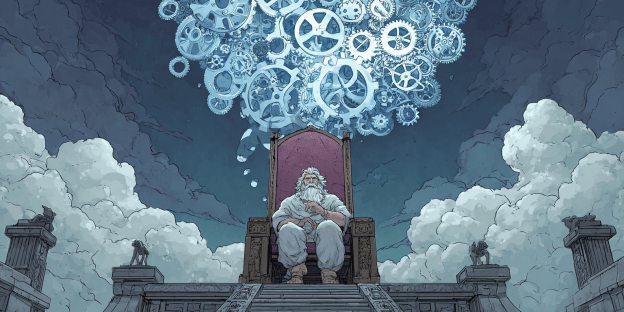
Our Identification With Christ

We live in a time when too many Christians treat Jesus like a historical figure trapped in the pages of an old book—as if His ministry was a one-and-done spectacle for the crowds in Galilee. But Scripture paints a far different picture: one where our connection to Him is so profound, so ontologically woven into the fabric of reality, that when God looks at us, He sees the exalted Christ. “God did all this to give us unshakable confidence to ask and receive, by showing us how intellectually, relationally, and ontologically we are identified with Jesus” (S.T., page 654). This isn’t some feel-good theology; it’s the bedrock of how we operate in ministry today. Because we’re united with Him—not the earthly Jesus under the law, but the resurrected King pouring out His Spirit—we do the works He did, and even greater, in the same power. Let’s unpack this, drawing straight from God’s Word, and expose the faith-bumblers who’d rather limit God than let Him loose. Limiting God is like trying to cage a cosmic supernova—spoiler: it doesn’t end well for the cage.

Consider the closeness Scripture describes between Jesus and His body, the church. It’s not a loose association, like distant relatives at a family reunion. No, it’s as intimate as a head to its limbs—where the head goes, the arms follow; what empowers one, surges through the other. Paul captures this in Ephesians 2:6, declaring that God “raised us up with Him and seated us with Him in the heavenly places in Christ Jesus.” Think about that: right now, in God’s sovereign mind, you’re not scraping by down here; you’re enthroned above every principality, every sickness, every obstacle. This identification means that when God sees you, He sees Jesus. God thinks that right now, I am seated with Jesus in the heavenly places. As Jesus is, so am I in this world. The only reality is the reality that God’s Word creates and sustains. There is no other truth or reality. God thinks I am identified with Jesus, as part of Him. Would God deny Jesus a request? Of course not. Thus, God would not deny me a request, because in God’s mind He considers me as part of Jesus. If we miss this, we mock the gospel, trampling the finished work of Christ as if it left us half-redeemed—not identified with Jesus as part of His body—and limping along until heaven. Frankly, that’s not just bad theology; it’s a cosmic insult, like handing back a gift from the King because you prefer your old rags. Ouch—talk about a divine facepalm.

This union isn’t abstract metaphysics for theologians to debate in ivory towers. It is reality because reality is based on God’s thoughts and words. He considered the old Oshea to have died with Jesus, and a new created Oshea is defined as part of Jesus. By God merely thinking this about me is what creates, shapes, and upholds reality. You cannot get more reality than “God thinks so.” Thus, this has direct implications for ministry. Look at how Jesus Himself operated. In Luke 4:14-19, after His baptism, “Jesus returned in the power of the Spirit to Galilee… He stood up to read… ‘The Spirit of the Lord is upon Me, because He has anointed Me to preach the gospel to the poor; He has sent Me to heal the broken-hearted, to proclaim liberty to the captives and recovery of sight to the blind, to set at liberty those who are oppressed.’” Here’s the key: Jesus, as a man born under the law (Galatians 4:4), didn’t rely on His divine nature for miracles. He ministered through the anointing of the Holy Spirit, just as Acts 10:38 confirms: “God anointed Jesus of Nazareth with the Holy Spirit and with power… healing all who were oppressed by the devil.” Even the Son of God modelled dependence on the Spirit’s power for healing, deliverance, and proclamation. Why? Because He was born under the law and operated miracles as a man would; by this, He was the forerunner showing the church how to operate as humans empowered by the Spirit. “Jesus came as a man, born under the law, and even ministered God’s power as a saint does—by the power of the Spirit” (p. 654). He wasn’t flexing inherent deity in isolation; He was demonstrating how Spirit-empowered humanity crushes Satan’s works. Picture Jesus as the ultimate tutorial video: “How to Wreck the Devil’s Plans in Three Easy Steps.”

Now, fast-forward to the ascension. Jesus doesn’t leave us orphaned or downgraded. Instead, He commands the disciples in Acts 1:4-8: “Do not leave Jerusalem, but wait for the Promise of the Father… for John truly baptized with water, but you shall be baptized with the Holy Spirit… But you shall receive power when the Holy Spirit has come upon you; and you shall be witnesses to Me.” This isn’t optional equipment for apostles only—it’s the same Spirit, the same power, poured out on all believers for ministry. Peter echoes this in Acts 2:33, noting that the exalted Jesus “received from the Father the promise of the Holy Spirit” and poured it out. The result? The early church exploded with miracles, healings, and bold proclamation, far beyond what one man in one place could do. “After His resurrection, Jesus commanded the disciples not to minister or spread the news until they were clothed with the same power of the Spirit.” If Jesus needed the Spirit’s anointing to start His ministry, how much more do we? Yet some theologians act like this power fizzled out after the apostles, as if God got bored with miracles. That’s not cessationism; that’s Satanism, limiting the Holy One of Israel like the Israelites did in the wilderness (Psalm 78:41). God bored? As if the Creator of quantum physics and kittens runs out of ideas.

Jesus promised we’d do “greater works” than He did (John 14:12). Not because we’re superior, but because He’s now on the throne, multiplying His power through a global body. In His earthly ministry, He was localized; now, through us, His reach is exponential. “As great as it would be to be identified with Jesus under the law in His earthly miracle ministry, it is still a limitation, because what we have is greater. This is why Jesus promised we would do greater works!” Imagine: the same Spirit that rested on Jesus now rests on you, empowering you to command mountains (Mark 11:23), heal the sick (James 5:15), and cast out demons (Mark 16:17). It’s not arrogance; it’s obedience. Faith isn’t wishing; it’s assenting to God’s definition of reality. When you speak in Jesus’ name, reality bends because you’re so identified with Him that your decree carries His authority. This is true and it is reality because God’s sovereign mind thinks so.

Satan trembles at this, which is why he peddles doctrines that sideline the Spirit—calling miracles “for then, not now,” or faith “presumptuous.” But as Vincent Cheung might say, such views are just human pride masquerading as piety. Critics will cry, “But we’re not Jesus!” Exactly the point—we’re better off now, identified with the glorified One. Paul warns in 2 Corinthians 5:16, “From now on, therefore, we regard no one according to the flesh. Even though we once regarded Christ according to the flesh, we regard him thus no longer.” If you evaluate Jesus—or yourself—from a human viewpoint, you’ll cap God’s power at what your carnal senses perceive. You’ll pray timidly, heal sporadically, and witness anemically. But embrace your union: you’re a new creation (2 Corinthians 5:17), co-heir with Christ (Romans 8:17), partaker of the divine nature (2 Peter 1:4). This means ministry isn’t imitation; it’s reality based on how God’s sovereign mind thinks about His own creation. Heal like Jesus did—lay hands, command sickness to flee—because the Spirit’s power flows through you as it did Him. Preach with authority, knowing demons flee at His name through your lips. And yes, expect greater: more salvations, more miracles, across more territory. “The power of the Spirit is so contested by many… When Jesus on His throne becomes central, the baptism of the Spirit for power becomes central” (S.T., page 399).

The same Spirit who empowers also convicts of sin (John 16:8). But what was the sin the Spirit comes to convict the world of? All? No. The Spirit’s ministry is to convict the world of the sin of unbelief—because they do not believe in Jesus. They do not believe He is God’s Son. And because they do not believe He is God’s Son, they do not believe the things He preached and did. What are some things Jesus said? “Jesus answered, ‘Truly I tell you, if anyone says to this mountain, “Go, throw yourself into the sea,” and does not doubt in their heart but believes that what they say will happen, it will be done for them. Therefore I tell you, whatever you ask for in prayer, believe that you have received it, and it will be yours’” (Mark 11:23-24). The Spirit comes to convict us of the greatest sin, which started with Satan’s temptation to Eve: “Did God really say?” It is the sin that leads and opens the door to all other sins. It is the defining sin of the faithless; they refuse to believe God and they refuse to believe Jesus Christ.

Unbelief stopped Jesus in Nazareth (Mark 6:5-6), not besetting sins and not Satan. If sickness lingers or prayers seem unanswered, it’s not God’s will changing—it’s our faith needing sharpening, or perhaps a fresh infilling of the Spirit’s power. Pray in the Spirit (Jude 1:20), building yourself up in God’s love. “Sickness is Satan’s victory lap. Jesus did not just patch up boo-boos; He threw haymakers at the devil’s disease factory” (Systematic Theology, page 648). Join the fight; wield the power. Because who doesn’t love a good spiritual smackdown?

Look at how Jesus kicked off His Galilean ministry in Luke 4:14-15—He returned “in the power of the Spirit,” and suddenly news spread like wildfire, with Him teaching in synagogues and getting glorified by everyone. This isn’t some vague spiritual high; it’s raw, divine dynamite exploding into action. Jesus, as a man born under the law, didn’t launch His world-shaking work until after His baptism, when the Spirit descended like a dove and empowered Him to heal, cast out demons, and preach with authority that left jaws on the floor. The Holy Spirit wasn’t just tagging along; He was the engine, turning Jesus’ steps into a kingdom invasion that demolished Satan’s strongholds. And here’s the kicker—Jesus didn’t hog this power. In Acts 1:8, He promises His followers the same deal: “You shall receive power when the Holy Spirit has come upon you,” turning ordinary folks into unstoppable witnesses from Jerusalem to the ends of the earth. This isn’t optional fluff; it’s the blueprint for Christian life. If we’re co-heirs with Christ, why settle for powerless piety when the Spirit’s ready to supercharge us for miracles and bold proclamation? God’s not stingy—He’s lavishing this power on anyone hungry enough to receive it. Without the Spirit’s baptism, we’re just playing church while the devil throws a party.

The faithless treat this power like an ancient relic gathering dust in some theological museum, when Scripture screams it’s for now. Jesus returned in the Spirit’s power after fasting and facing down Satan, emerging not weakened but weaponized for ministry—teaching that silenced critics and healings that restored the broken. That same Spirit, poured out at Pentecost, isn’t a one-time fireworks show; it’s the ongoing promise for Abraham’s kids through faith (Galatians 3:14). When Acts 1:8 hits, it’s Jesus saying, “Wait for the download—then go conquer.” This power isn’t about flashy showmanship; it’s God’s sovereignty flexing through us, making the impossible routine. Think about it: if Jesus needed the Spirit’s anointing to crush the devil’s works (Acts 10:38), how much more do we? Yet, some peddle a gutless gospel, ignoring this dynamite because it messes with their unbelief. Nah, the Spirit’s power is our birthright—grab it, and watch reality bend as we advance the kingdom, just like our Lord did. Anything less is selling short the God who turns water-walkers into world-changers. Pro tip: Don’t be the guy who brings a squirt gun to a divine water fight.

In closing, our identification with Christ isn’t a doctrine to shelve; it’s dynamite for daily living. Because we’re one with Him, we minister in the same way—Spirit-anointed, faith-fueled—and with the same power, only amplified. Don’t know Him from a human viewpoint anymore; know Him as the enthroned Lord, and yourself as seated there too. Speak to storms, sickness, and souls; watch heaven invade earth. If that sounds radical, then it exposes that your heart is hard. As Scripture says regarding the disciples’ surprise at Jesus’ miracles: they were surprised “because they did not consider the loaves.” Jesus expected them to extrapolate the miracle of multiplication of material substance to be a regular activity. Their inability to see miracles as common and regular indicated their hearts were as hard as stone. Let us cast off any stony parts of our hearts and put on a heart of faith and the Spirit. Miracles, the Spirit, and healing are the gospel. And if critics scoff, well, they’re just cheering for the wrong team in this cosmic showdown. Don’t wash your hands with them, unless you wish to partake of their judgment.