Tag Archives: give

Your Peace

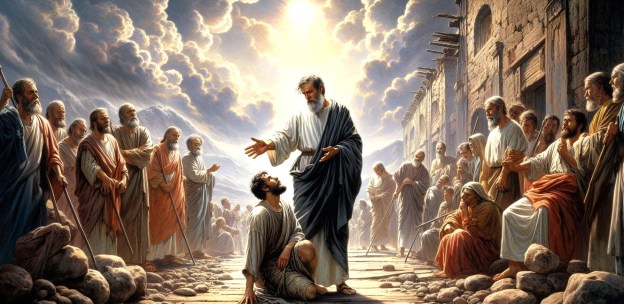
In Luke 10:5-9 and Matthew 10:12-13, Jesus lays out a blueprint for His disciples that’s as straightforward as it is revolutionary to the faithless. “Whatever house you enter, first say, ‘Peace be to this house.’ And if a man of peace is there, your peace will rest on him, but if not, it will return to you. Stay in that house, eating and drinking what they give you; for the laborer is worthy of his wages. Do not keep moving from house to house. And whatever city you enter and they receive you, eat what is set before you; and heal those in it who are sick, and say to them, ‘The kingdom of God has come near to you,’” (Luke 10:5-9 LSB). Matthew echoes this: “As you enter the home, give it your greeting. If the home is deserving, let your peace rest on it; if it is not, let your peace return to you,” (Matthew 10:12-13 NIV).

Jesus operated as a man born under the law, anointed with the Spirit’s power for ministry—not relying on His divine nature, but showing us how a Spirit-empowered human crushes Satan’s works. He didn’t do miracles in “Jesus power” as God incarnate flexing; no, He modeled what a man filled with the Spirit could achieve. And here’s the kicker: that same Spirit, that same authority, He handed off to His followers. On the relative level—the human level where we live, fight, and pray—it’s “your peace,” not God’s. Once bestowed, it’s ours to wield, to give or withdraw as we see fit. Luke ties it to faith with that simple “first say”—a command spoken in confidence, expecting results because God’s sovereign mind integrates His power so seamlessly into our reality that when we declare it, heaven backs us up.

Think about it deductively. Premise one: God is sovereign, decreeing all things, including the authority He delegates to His elect (Matthew 28:18-20; Acts 1:8). Premise two: Jesus, post-resurrection, pours out this authority on believers through the Spirit, commanding us to heal the sick and advance His kingdom (Luke 10:9; Mark 16:17-18). Conclusion: If you’re born from above, this power isn’t locked in heaven waiting for a divine mood swing—it’s yours now, on the human level, to command peace over homes, sickness, and even demonic strongholds. Deny that, and you’re not just short on faith; you’re slapping the Spirit who anoints us for battle.

“On the human level, Jesus, the most God-centered man ever, said about both healing and forgiveness, ‘Your faith saved you.’ In Acts 10:38, Peter says all the sick people Jesus healed were ‘victimized’ or oppressed ‘by the devil.’ So, the Bible has no issue saying sickness isn’t from God; it is from Satan or the curse” (ST. p. 658). As God says in Isaiah 54, If someone attacks you, I did not send them. Or in today’s terms, if sickness attacks you, I did not send it. Jesus didn’t point to ultimate metaphysics every time He healed—He almost always pointed to the person’s faith. Why? Because that’s how God relates to us: through covenants, promises, and His good nature. Satan offered Jesus authority over kingdoms (Luke 4:5-6), but Jesus reclaimed it all at the cross, triumphing over principalities (Colossians 2:15). Now, seated at the right hand of Power, He says, “All authority has been given to Me” (Matthew 28:18 LSB), and then commissions us to use it.

But what about us today? If we don’t want to blaspheme the Spirit, our response must be that we have more than the disciples pre-Pentecost. They operated under Jesus’ direct commission, but post-resurrection, the fullness of the Spirit is poured out for power (Acts 2:33). It’s impossible to claim we have less without insulting the Spirit’s outpouring. Unlike the faithless who center on man—”Oh, that was for apostles only”—it was never about them; it was about God anointing humans to smash Satan’s works. Peter preached the baptism of power at Pentecost, and in Acts 3, he declared, “What I have, I give” (Acts 3:6 LSB)—the Name of Jesus, which we all wield. Jesus hammered it in John 14-16: ask in My name, and it’ll be done. This power mirrors binding and loosing (Matthew 18:18)—authority for any who confess Jesus as the Son of God.

Vincent Cheung nails it: “Faith trumps everything. Faith is immune to even correct theological arguments. This is not because faith could contradict sound theology, but because faith can override it” (Faith Override, Sermonettes Vol. 9, 2016, p. 14). The disciples’ peace wasn’t some ethereal vibe; it was Spirit-backed authority to bless or withhold, healing the sick as proof the kingdom’s near. Today, we don’t dust off sandals—we command peace over chaos, sickness, and oppression. If it sticks, great; if not, it returns to us, undiminished. Most Christians treat this like a loaded gun they won’t fire, begging God to pull the trigger while Satan laughs. Newsflash—He gave you the authority; use it, or you’re playing church while the kingdom stalls.

Apply this systematically. First, epistemology: Start with Scripture as God’s truth that is revealed and self-authenticating. God defines peace not as absence of trouble but victory over it—”I have told you these things, so that in Me you may have peace. In the world you have tribulation, but take courage; I have overcome the world” (John 16:33 LSB). Jesus says the peace He has, He has given to us. In God’s sovereign mind there as a substitute in Jesus. He bore the chastisement that has brought us peace. In God’s mind we already have this peace. It is given freely by grace and received by faith. Our Faith assents to this—declare peace over your home, and watch demons flee or blessings flow. Metaphysics: On the ultimate level, God decrees all; relatively, our words release it. The power of the Spirit’s peace was with the disciples; once God gave it to them, then on the human level, it is their peace, not God’s, just as my arm and my legs are mine, not God’s.

Anthropology: We’re remade as overcomers. “By faith we understand that the entire universe was formed at God’s command” (Hebrews 11:3 NIV), so speak to storms, sickness—reality obeys. Ethics: Command it. “Heal those in it who are sick” (Luke 10:9)—not optional. Reject this, and you’re siding with faith-fumblers, peddling unbelief like those who taught bad doctrine to my twin brother Joshua. They’ll be caught trying to wash blood off their hands when the Big Guy’s gavel drops.

When many seem to be fighting for all their lives to get peace, to find peace, to drive out the depression and stress and replace it with peace, Jesus offers an entirely different worldview. He expects us to have His peace. If we can give away our peace like a divine magic spell, then Jesus is presupposing we have this peace already. Jesus says, “Do not let your hearts be troubled, because I have overcome the world.” God’s peace is beyond all that we can measure. It is not merely a psychological crutch in the mind. It is peace with God. It is God’s sovereign decision to make things all around you to treat you well, so that even your enemies are at peace with you. It is blessing that surrounds you like a divine magical ward of luck. It is based on the thoughts of God’s good pleasure toward you. And God’s thoughts are reality; they create reality itself.

This peace isn’t some fragile inner calm that crumbles under the weight of life’s chaos; it’s the unshakeable reality of God’s victory invading our everyday existence, turning potential disasters into divine footnotes of rest. The idea of having peace with God is the ability and position to approach God, in His throne room of grace, to ask and then to receive the help we are asking for. Jesus Himself models this when He declares, “Peace I leave with you, My peace I give to you; not as the world gives do I give to you. Let not your heart be troubled, neither let it be afraid” (John 14:27, as quoted on p. 141). Think about it— if God’s presence shows up, as it did in Acts, it’s not content to whisper sweet nothings; it erupts in miracles, healings, and prophecies that bulldoze sickness and troubles. After destroying the troubles we can rest from them. This is God’s peace and it affects the whole life of the man who belongs to God. “Peace is not a chemical feeling in the brain. It is when you can rest from troubles.” Frankly, if your version of peace leaves you grinding through endless stress without supernatural breakthroughs, you’re settling for a counterfeit—Satan’s cheap knockoff, not the real deal that Jesus paid for with His blood. God’s thoughts toward us aren’t wishful thinking; they’re the blueprint of reality, decreeing enemies silenced and blessings overtaking us, as Isaiah 54 promises no weapon formed against us will prosper.

Yet, this peace demands we align our minds with God’s sovereign script, not man’s empirical rewrites. God’s peace flows from His unchanging nature—He doesn’t dabble in shadows or half-measures, as No ‘shadow’ of turning, for a shadow would contradict light. It’s the peace that Jesus bore our chastisement to secure: “The chastisement for our peace was upon Him, and by His stripes we are healed” (Isaiah 53:5). God’s presence is a contradiction to suffering. For a child of God, suffering’s greatest enemy and contradiction is God’s presence. If you’re still battling for peace like it’s an uphill slog, perhaps it’s time to stop playing defense and start commanding the mountains to move—because Jesus didn’t overcome the world so we could tiptoe around it. He overcame it, so that we have peace and rest. He overcame the world so that we also overcome, and storm the gates of Hell and expand His kingdom. God creates a reality where peace isn’t pursued; it’s possessed, permeating every corner until even your foes wave the white flag.

Your peace isn’t God’s passive pat on the back—it’s delegated rest that packs more power than a nuclear bomb. Post-Pentecost, we’ve got the upgrade: baptism for power, faith to command. Don’t blaspheme the Spirit by claiming less; grab God’s peace and declare it, and watch the kingdom expand. If critics call this extreme, point them to Jesus—the original faith zealot. But for those with faith? Peace rests, kingdoms fall, and glory goes to the One who armed us for victory.

Satan’s Sticky Fingers: Robbed of Speech

Sept / 16 / 2025

“A spirit has robbed him of speech.”

Picture this: a desperate father, elbowing through a crowd in ancient Galilee, clutching the frayed edges of his hope like a man who’s just realized his wallet’s gone missing in a divine pickpocket scheme. “Teacher,” he blurts out in Mark 9:17, “I brought you my son, who is possessed by a spirit that has *robbed* him of speech.” Robbed. Not gently borrowed, not misplaced in some cosmic filing error—robbed. As if Satan himself is out there running a black-market operation on human dignity, snatching voices, health, and futures with the glee of a thief who knows the cops are on coffee break. And Jesus? He’s not there to commiserate over the loss. No, He’s the divine restitution agent, the one who turns the tables and declares, in essence, “That’s not how this story ends.” Because while Satan steals, kills, and destroys, Jesus—that is, God in the flesh—shows up to give life, and life to the full (John 10:10). It’s a total takedown, a comprehensive comeback, where the enemy’s heists meet their match in the King’s vault of abundance.

Let’s not rush past that word, though: “robbed”. The NIV nails it here, capturing the raw theft at play. This isn’t some vague affliction drifting in from the ether; it’s a deliberate grab, a demonic mugging. The father isn’t whining about a genetic glitch or the general brokenness of a fallen world—he’s pointing the finger straight at the spirit doing the dirty work. And Jesus doesn’t correct him with a theological footnote about Adam’s ancient fumble in the garden. No, He rolls up His sleeves, rebukes the foul spirit, and sends it packing, leaving the boy whole. It’s a scene that echoes through the Gospels like a divine audit: Satan as the ultimate con artist, pilfering what God intended for flourishing. But here’s the frank truth, straight from the self-authenticating pages of Scripture—our epistemology’s unyielding foundation: This robbery isn’t God’s idea. It’s not His script. God doesn’t script poverty of body or spirit; He authors prosperity, health, and unhindered communion. To think otherwise is to buy into the devil’s counterfeit theology, where lack masquerades as piety and suffering as sanctity. What a con. What a waste.

Dig a little deeper into Jesus’ ministry, and you see this contrast isn’t a one-off plot twist—it’s the central narrative arc. From the synagogue in Capernaum to the dusty roads of Judea, Jesus doesn’t just forgive sins in some ethereal corner of the soul; He pairs it with healing the body, restoring the broken, and multiplying the loaves like He’s got a divine expense account with no limits. Remember the paralytic lowered through the roof in Mark 2? “Son, your sins are forgiven,” Jesus declares. The scribes mutter about blasphemy, so He follows up: “Which is easier: to say, ‘Your sins are forgiven,’ or to say, ‘Get up, take your mat and walk’?” Then—bam—the man walks. Forgiveness and function, absolution and ability, bundled together like a covenant combo meal. It’s total salvation on display, where spiritual restoration isn’t isolated from material wholeness. Satan robs on both fronts: voices silenced in shame, bodies bent in pain, wallets emptied in want. But Jesus? His life-giving ministry hits back harder, broader, deeper. He doesn’t offer a half-measure grace that patches the soul while leaving the flesh to fester. No, He restores the whole package, because anything less would dishonor the God who, from Genesis onward, pronounced creation “very good”—abundant, integrated, thriving.

And let’s not kid ourselves: This robbery extends to the material realm, too. The same spirit that mutes a boy’s speech whispers lies about scarcity, convincing folks that God’s too stingy for silver or too sovereign to care about supper. But Scripture shreds that nonsense. Satan steals health *and* wealth, binding people in cycles of lack that mock the Creator’s generosity. Look at the widow’s oil in 2 Kings 4—multiplied by God’s word through Elisha—or Abraham’s flocks swelling under heaven’s favor. These aren’t anomalies; they’re previews of the blessing that flows from faith. Jesus embodies it fully: feeding five thousand from a boy’s lunch, turning water to wine without a single budget meeting. His high priesthood isn’t one of half-rations and holy poverty; it’s the ministry of righteousness, healing, and prosperity (as Peter sums it up in Acts 10:38). To claim Jesus as your priest while nursing a theology of deprivation is like hiring a chef who specializes in feasts and then settling for stale bread. It’s not devotion; it’s delusion. God’s unmerited favor supplies man—man doesn’t supply God. Satan peddles the lie that lack builds character; Jesus proves abundance glorifies the Father.

Now, pivot to that sevenfold restoration—the Bible’s bold promise of over-the-top payback. Joel 2:25 thunders it: “I will repay you for the years the locusts have eaten—the great locust and the young locust, the other locusts and the locust swarm—my great army that I sent among you.” Not just a refund, mind you, but a surplus, a divine interest rate that turns theft into treasure. Zechariah 9:12 echoes the vibe: “Return to your fortress, you prisoners of hope; even now I announce that I will restore twice as much to you.” Twice? Try seven, as the pattern holds from Job’s double-down restoration to the prodigal’s fatted calf welcome. This isn’t cosmic compensation for pity’s sake; it’s God’s sovereign logic at work, where what the enemy meant for ruin becomes rocket fuel for glory. Satan robs your speech? God restores your voice—with volume, clarity, and a testimony that echoes through eternity. He robs your health? Expect not just mending, but vitality that turns heads and topples strongholds. Wealth pilfered? Watch as storehouses overflow, not from sweat alone, but from the blessing of Abraham crashing through the gates of grace.

But here’s where the rubber meets the road, and the wit turns a shade sharper: If the curse of Adam looms in the background—and it does, that primal fracture rippling through creation—Jesus didn’t leave it hanging like a bad sequel. Galatians 3:13 lays it bare: “Christ redeemed us from the curse of the law by becoming a curse for us, for it is written: ‘Cursed is everyone who is hung on a pole.'” Substitutionary atonement in action: Jesus absorbs the thorns, the sweat, the silence of the tomb, so you get the garden’s bounty. The father in Mark 9 doesn’t blame Adam’s echo; he names the demon. Jesus doesn’t theologize about original sin; He evicts the intruder. The bent-over woman in Luke 13? “Ought not this woman, a daughter of Abraham whom Satan has kept bound for eighteen long years, be set free on the Sabbath day?” Satan, not some vague curse, gets the credit for the crook in her spine. Sure, the Fall set the stage for such invasions, but Jesus spotlights the squatter, the thief in the night. And why? Because pinpointing the robber empowers the resistance. If it’s just “the curse,” you shrug in fatalism (aka the Christian word for “if it is God’s will”). But if it’s Satan—and Scripture screams it is—then you’ve got a command: Resist the devil, and he will flee (James 4:7). Cast out spirits, heal the sick, reclaim the stolen. Faith isn’t passive therapy; it’s aggressive restitution.

Frankly, if you’re sitting on robbed health or pilfered prosperity, nursing it like a badge of spiritual maturity, you’re not just missing the plot—you’re aiding and abetting the heist. You’re a willing accomplice, handing Satan the getaway car keys while Jesus stands ready with the restitution check. Maxim 16 cuts like a surgeon’s scalpel: Reprobates who resist faith on demand for healing and blessings have sided with demons to trample the blood of Christ. Ouch? Good. Truth should sting when it exposes the lie. God isn’t the miser doling out affliction for your “growth”; He’s the Father who, through the Son, has already swapped curse for blessing, poverty for plenty. Abraham’s seed? That’s you, insider to the Contract, heir to the abundance; inheritor of Jesus who is the resurrection of life “now,” not just pie-in-the-sky later. To accept the robbery without a fight is to declare Jesus’ cross as ineffective, His resurrection a footnote. But no—His life is abundant, total, sevenfold-plus. Satan steals your speech? Jesus restores your shout of praise. He binds your back? You walk tall in dominion. He empties your coffers? You sow in faith and reap barns that burst.

Don’t let the thief define your story. Scripture interprets itself, originalist to the core, and it screams restoration over ruin. Start with the self-authenticating Word: Your faith saved you—from sin, from sickness, from scarcity. Confess it daily, relentlessly: “Satan, you robbed what was mine, but Jesus redeemed it sevenfold. I take it back now, in His name.” Command the mute spirit out, the bent frame straight, the empty hands full. Reality obeys faith, because the resurrected King backs your play. It’s not arrogance; it’s agreement with God, whose love to you, makes you worth the overpayment. And when the loot rolls in—health humming, wealth working, voice vibrating with victory—remember: This glorifies Him, who is the power, the love and the giver; not you. It’s the Father’s joy to lavish on sons who believe.

In this fallen farce of a world, where Satan still pickpockets the unwitting, be the one who turns the tables. Robbed of speech? Speak life. Robbed of strength? Stride bold. Robbed of substance? Scatter seed and watch the harvest mock the thief. Jesus didn’t come to commiserate; He came to compensate, to conquer, to crown the believer with triumph. By faith, you’ll save yourself from Satan’s steal. And in doing so, God boasts of you before the heavens, as the hero He always scripted you to be. No more victims in the kingdom. Only victors, voices restored, vaults replenished. That’s the gospel’s punchline—and it’s hilariously, eternally good.

My Power My Choice

Acts 3:4-6 NIV

Then Peter said, “Look at us!” 

….what I do have I give you.
In the name of Jesus Christ of Nazareth, walk.

First. Peter said, “look at us.”  I thought we were to direct attention away from us and point to Christ? Why is Peter so focused on himself?

Second. Peter says “what “I,” have, “I,” give to you.” I thought it was, “what God has, He will sovereignly will or choose to give?” I thought it was God’s power, and God’s choice, not Peter’s power and Peter’s choice?

Peter said it was Peter’s power, “what I have,” and it was his choice, “I give.” Peter claims it was his power and his will. Why does Peter pray in a contradictory way as compared to the theologians? Who is right?

The Bible rejects pantheism. God is not what He creates; He absolutely and directly controls all things, but He is not what He controls. God gave his followers the power to heal the sick, and cast out demons. He did not give this power to Himself. Jesus commanded both the apostles and followers to heal the sick. Jesus commanded both is disciples and 77 others to “heal the sick and cast out demons.” Some stop at Matthew 10:7 when Jesus command them to “preach the kingdom of heaven.”  Jesus is commanding them, and us by extension, to preach the gospel. So far, so good. But Jesus continues by saying, “heal the sick, cast out demons, and raise the dead.” Jesus was not going to do this; He was commanding them to do it. If someone was going to get healed, it was up to their power and choice.  Thus to heal the sick and raise the dead is as much as a command as it is to preach the gospel. If it was not clear enough Jesus after His resurrection, commanded them to receive power, Acts 1:8. Most of them were not apostles, because it had nothing to do with the apostles, but Jesus sitting as the right hand of the Power.  Not only did they have the power, it was their will or choice to administer it. It was not up to God’s power and will to heal, it was their power and will.

This is how Jesus spoke on this topic and it was how Peter spoke on it. However if I spoke like Jesus and Peter in most American churches I would be labeled a heretic.

Yes, on the ultimate level the power is God’s, just as the power in my hand to type this essay is ultimately God’s power and by His direct control. However, Jesus and the Bible rarely mention this ultimate level; they mostly speak on the human level. I will do the same.  Thus, it was not God who typed this, but it was I, who typed with my power and choice. Likewise , the sick are not healed by God’s power and choice, but my power and my choice.  Anyone who has a problem with this rejects a doctrine directly taught by Jesus and the Holy Spirit. Cut such a person out of your life. They are servants of demons.

Peter sums this up by saying faith in Jesus name brought the healing. It was a person’s will to have faith that brought the healing, not God’s will. For more on this topic see, Vincent Cheung, “Healing, The Will Of Man.”

Also, Peter did not even pray, at least not in the traditional way. He simply commanded the healing. This is what Jesus told us to do. “You heal the sick.” It was the same with Moses and the Red Sea. God said, “You divide it.” Many do not pray by commanding and this is why their prayers go unanswered. This is why many have died before their time by sickness and troubles. Jesus commanded us to do the healing, not God.

Jesus’ faith doctrine is extreme. He does not instruct us to pray to God and tell Him about our mountain; rather, Jesus tells us to move the mountain by using faith and commanding it to move.  Jesus said, “it will obey you.”

This is not a suggestion. It is a command from our God. Because of this, when many pray they are in rebellion against God. Jesus commands us to move and heal. However, many respond back saying, “No, God, You do it, if You are willing.” By praying like this, they have ensured their sickness has already gained victory over them. On rare occasions God might still heal such a prayer, out of extreme pity, but it would be an exception. If you are sick and pray like a beggar, asking God to heal, you have already lost. You are a dead man walking. Sickness has already defeated you for the glory of Satan.

When some pray, they pray confessing unbelief rather than faith. If you are born-again then you are not a worm, not a beggar, not a nobody and you are not a sinner. James says the prayer of a righteous person is very effective; however, if your prayer is confessing how pathetic you are, then of course you will not pray knowing how righteous you are, and thus, your prayers will not be effective.  Prayer is a good confession of faith in God’s truths and promises; and yet, people often pray confessing who they were, before they were born-again. They say, “I am a worn and sinful and nothing, but God is everything and powerful.” This takes no faith; it is a coward’s way out. It is a religious maneuver to remove you from God’s command and responsibility. If you are nothing and sinful then you need to get born-again so that you become righteous and have privileges that come from being a son of God.

To illustrate this think about asking God for the forgiveness of sins, or a salvation type prayer. Although, there is nothing wrong for a salvation prayer to “ask God into your heart,” yet there are more precise ways to describe it.  Peter in his Pentecost sermon gives direction for a salvation prayer. He instructs the audience to ““Repent and be baptized, in the name of Jesus Christ.” Notice Peter did not instruct them to “ask” God to forgive them; rather, he tells them to repent in Jesus’ Name to be saved. Why? Because Jesus already died and was resurrected. The forgiveness already happened. We are not asking God to crucify His Son again to forgive us, because it already happened.  We are not asking God to do anything in the present tense to forgive us, because Jesus already accomplished it. Because it has been accomplished all we do is repent.  In this context we do not ask or beg. It is when a person has confidence in Jesus’ finished atonement, they repent of their sins in Jesus’ Name. Salvation in this sense is a confession, and not asking and begging. We confess our sins and that is all it takes. Faith in this sense, is about God letting you know He has already forgiven you, and by repenting you are agreeing with God.  It is foundationally about agreeing and confessing and not asking.

Other gospel benefits such as a healing, and the authority to cast out demons and cast down mountains is the same. They have been accomplished by Jesus’ finished atonement. We do not ask and beg for them, because they have been accomplished by Jesus and given to us. It is irrational to beg for something that already belongs to you.  It was the stripes on Jesus’ back that healed us. And so, it is irrational to ask God to heal us, as if He needs to break out the whip again and start slashing Jesus in the throne room. God accomplished our healing in Jesus’ atonement. Thus, we don’t beg for it, because it is already ours.  As with salvation, we repent as a confession of confidence in Jesus finished atonement, rather than beg and ask forgiveness. The same with healing. We confess and agree with God, rather than beg and ask. This is why Jesus tells us to “heal the sick, and cast out demons.” When we command healing and command demons to leave, we are giving a confident confession in the finished atonement of Jesus, which has given us the healing and authority to do such things.

Some people are asking God to do things that He told us to do. They have it flipped upside down. And yes, we see examples of Jesus in John 14-16 telling us to ask in His name. However, in my experience it is only those who already know their authority in Jesus, who already are healing the sick, who are able to ask God for things in prayer, without asking as if they are a beggar or outsider.  Those how can heal the sick and cast out demons are better equipped to march boldly to God’s throne of grace and confidently ask for things as a son who belongs there.