
Tag Archives: Jesus

anirudh-H4ISZ-_m54w-unsplash

Word of Faith

We have the same Spirit of Faith.” -Paul

Psalm 116 is all able David being in trouble, then calling out to God and then God saving him. This is the same Spirit of Faith that Paul said he has, and by extension, we have.

 I believed when I spoke, “I am afflicted greatly.”
 I said in my haste, “Everyone is a liar.”

“I was brought low, but he gave me victory. Return, O my soul, to your repose, for Yahweh has dealt bountifully with you. For you have rescued me from death.”

I love him, because Yahweh has heard the voice of my supplications. Because he has inclined his ear to me.” (Psalm 116:10, 7-8, 1-2 LEB)

Consider David in Psalm 31

“Blessed is Yahweh, because he has worked marvelously his loyal love to me in a besieged city.

As for me, I said in my [haste], “I am cut off from before your eyes.”

However you heard the voice of my supplications when I cried to you for help.”

David feeling the pressure of fear and in “haste” says something that is not a faith declaration of victory, “I am cut off.”

But then in Psalm 31 David calms down and asks in faith for God to rescue him. He has confidence God will do so. One quick lesson we learn from this is that a faith declaration is stronger than an unbelief declaration said in haste. Sin is strong but the Spirit is stronger. Unbelief can cause you not enter the Promise Land, but faith is still stronger.  If you haven’t committed the unforgivable sin, then hope and victory are still yours for the taking. God is stronger, and the Saints are given, even commanded, to walk in God’s power and might! There is nothing to hard for God, and thus, there is nothing too hard for His chosen ones.

In further context of Paul’s letter to the Galatians, we know the same faith that Abraham had, to receive miracles and blessings, is our same faith and miracles. The SAME Faith and certain outcome of miracles and blessings. Thus, Paul in more than one way teaches how the Old Testament faith that produced miracles is our same faith today, if not more so because of God’s contract in blood through Jesus Christ.

Thus, wee see Paul teach the “Word of Faith,” and “Name it and Claim it,” doctrine.

But what does it say? “The word is near you; it Is in your mouth and in your heart,” that is, the message concerning faith that we proclaim: If you declare with your mouth, “Jesus is Lord,” and believe in your heart that God raised him from the dead, you will be saved. For it is with your heart that you believe and are justified, and it is with your mouth that you [declare] your faith and are saved,” Romans 10:9-10.

We believed in our hearts that Jesus has forgiven us and so we spoke, or declared with our mouths it to be truth. We name it. We name ourselves as forgiven and righteous in God’s sight, through Christ. We claim it by faith. By faith we save ourselves. By faith we heal ourselves.

It is a logical point of non-relevance that God is the direct, absolute and only real cause of all things. It is irrelevant that God is the metaphysical author of sin and evil, when discussing our will, our declaration and faith to be saved, because God is not what He creates (the bible denies pantheism) and He has commanded us to do these things. He talks to us on our level and expects us to respond to Him on this same human level that He is engaging us on. To ignore this, is to ignore God. 

According to Jesus, in context of salvation (Luke 7:50) the most God-centered man who ever lived, this means “your faith has saved you.” Jesus is God, so He must knew He is the one who “ultimately” saves her, right? I mean, the theologians know this, because every chance they get, they remind us of this. But why is it that the most God-centered man, never reminds us of this, or very rarely reminds us of this? Why does the most God-centered man speak in contradictions to what the theologians emphasize? Did people back then perfectly knew and excepted the absolute and direct sovereignty of God, and this is why Jesus hardly ever mentions this emphasis? Of course not. They sound so different because Jesus and the theologians teach a different gospel, a different God-centeredness and different God altogether.

Naming and Claiming, is the inheritance of the children of Abraham. In fact, it is with Abraham that the bible introduces the doctrine of God declaring someone righteous in His sight. God declares Abraham righteous in His sight after Abraham declared he believed God would be faithful to do all the good things He promised to do, including making Abraham’s name great, blessed, and supernatural health.

God then said his new name is “Father of Many Nations.” Thus, Abraham lived a life of constant “Word of Faith declarations,” and “name it and claim it.” Every time he used his name or introduced his name to someone, it was naming something that did not exist, and claiming that it does exist. Imagine the long years of Abraham’s servants hearing this.

Imagine Abraham is about to introduce himself to a new neighbor, and servant A says to servant B, “here he goes again.” How many years has it been, since he has been claiming to be the “father of many nations,” while he is childless and in his 90’s? Servant B. “Well, he’s a good master, and so I will gladly follow him, but his “Word of Faith” declaration of things that do not exist and cannot exist is delusional.”

But we know how the story ends. We know how Abraham kept “naming and claiming it,” until what did not exist, did exist, and Sarah conceived Isaac.

Our entire gospel, doctrine of imputed righteousness, and blessing all started as a Word of Faith declaration. The promise, the gospel and the blessing of Abraham still stands today (Galatians 3), with the certain outcomes of the Spirit and miracles. We prove ourselves to be true children of Abraham, if we have the same faith. Yes, the same Spirit of faith that names and claims things that do not exist (a healed body) and bring them into existence. How can one claim to have the same faith as Abraham, if they never do Word of Faith declarations? There are many promises with certain outcomes of victory, thus, we ought to be “Naming and Calming” all the time, so that we can at least have some of these many promises.

Many live in a habitual animalist feeling of haste and fear. These are the same ones who mock the Word of Faith guys. Yet, they daily Name and Claim things all day long. The only difference is that they declare themselves, sick, suffering and afflicted by God’s will. Yet, these are the things God reserves for reprobates. Sure, it is possible for born-again saint to be handed over to Satan for the destruction of their body so that their soul might be saved. Yet, but this is an exception, and we are not commanded by God to strive to be like that. If you make this rare expectation your goal, don’t be surprised if you end up in hell.  These critics make it their goal to outdo their peers in how much they can “Name and Claim” the title reprobate.  They are the ones in agreement with the 10 elders who gave a bad report in unbelief. They are animalistic in their reasoning. They confess what they see, touch and experience as a contradiction against the promises of God. They declare based on what they see.

We confess the Word of Faith, in the promise of God, not in what we see, feel, touch or experience. Let us confess all the more, knowing the outcome is certain victory. God is pleased with such faith. God is pleased with faith that expects Him to richly reward. Let strive to outdo each other in trying to please God more, by seeking more rewards and greater rewards in our Word of Faith confessions. Let us Name and Claim so many promises of God that we become heroes of faith. Let our names be worthy, so that the world is unworthy to speak them.  Let our names become too valuable for these reprobates to pronounce them on their filthy lips.

The truth is that a child who daily confesses Psalm 23 with faith, who Names and Claims this, is 100X better than 90% of theologians and Christians and 10,000X more than any cessationist. 

Christ has already bore your sins, sickness, and curses on the cross. He has already declared you righteous, and deposited your healings, blessings, and prosperity in a warehouse with “your” name on it. Speaking on the human level, your healing is not with God, but has already been deposited to your account. It’s already yours. Faith is the request order to get what belongs to you. Stop begging God, as if you are a reprobate outsider; rather, march in the warehouse like a prince and let Jacob take possession of his blessing. The devil will scream at you to not go and get your stuff; he will often do this through cessationist and people of tradition. He will tell you, you are not worthy, you don’t have the right paperwork, and God doesn’t like you. The truth, it is the devil, traditionalist and scholastic cattle that hates you. Let me tell you what love is. You did not love God, but God loved you so much He gave His only Son to be a wrath bearing atonement to save, heal and bless you.

The Father loves us so much that He has predestined us to bear much fruit for healing, prophecy, and miracles. He answers our prayers excessively beyond that we ask or think. This is the Word of Faith I read in the scripture, and it is the word of faith upon my lips.
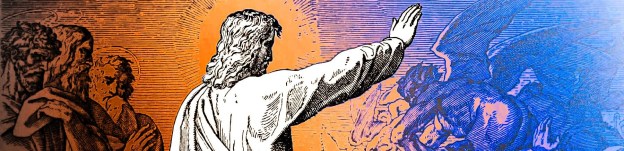

‘The kingdom of heaven has come near.’

Heal the sick,
raise the dead,
cleanse those who have leprosy,
drive out demons.
Matthew 10:7‭-‬8 NIV

But if it is by the Spirit of God that I drive out demons,
then the kingdom of God has come upon you.
Matthew 12:28 NIV

For the kingdom of God is not in word but in power.
I Corinthians 4:20

How can your church be part of God’s Kingdom if it doesn’t do Kingdom activities? How can your church be in the Kingdom if they do not expell the kingdom of darkness by the power of God’s Spirit? If they don’t participate in God’s Kingdom then such churches are part of Satan’s Kingdom, because if you are not with Jesus you scatter against Him. What good is it to preach repentance of sins, if your pastor and leaders do not operate in the Kingdom of God? They are reprobates deceiving other reprobates they are safe from judgment.

john-thomas-KDgylqBhijE-unsplash

Who Or What does Prayer Change?

The teaching that prayer changes the person (inward growth and not material miracle) is a Buddhist and Eastern teaching.

What does change?

I prayed for healing and then my “body changed.”

This happens, because “God is unchangeable” in being faithful to preform His promise. When I pray for financial help, then my finances change to the better, because God is unchangeable to His promise. When I pray for deliverance from my enemies, then my enemies change for the worse, because God is unchangeable in keeping His promise.

If there is a focus on inward change it happens before you pray. Before you pray, you hear the word of God and your inward man changes from unbelief to faith about promise x or y. After this inward change, then when you pray you experience material change, because God’s faithfulness is unchangeable.

Lastly, if we were to focus on God changing, it would be how God, despite His Will to only bless this person or group, changes His Will to change the material world of an outsider, because of their faith (Matt. 15:21-28). Thus, “faith can change” the Will of God, from a No to a “Yes.” There is no record in Scripture of God’s Yes changing to a No or Maybe, on the demand of faith. With faith, the change in the Bible that God makes to His Plan, is a change to a “yes.”

Thus, the teaching that prayer changes us inwardly, is a triple falsehood. We change inwardly before we pray, by hearing the word of God. When we pray in faith, our material world changes. When we pray in faith, because God is unchanging to keep His promise, our material world changes. And lastly, the only time God does change His Plan, is to change our material world for good when there is faith.

For the Christian the idea of change is a good and heartwarming term.

Strength to My Bones

“Then you will have healing for your body
    and strength for your bones.” Prov 3:8

When I was in my early twenties, I did not have enough money to go to the dentist. I was worrying about my teeth. The Spirit clearly told me not to worry, for there will be no issue with my teeth.

Twenty years later, in my 40s visit the dentist and was told my teeth are in remarkable good condition for being 40 and haven’t been to the dentist for so long.

God is my healer. His is the strength of my bones and teeth, and the health of my flesh. What the Spirit says will always come to pass; His word, even His prophetic words are where we get the terms for permanent, faithful and true.

yiran-ding-sKXZm7cTZMM-unsplash

I HAVE HEARD YOUR PRAYER: Faith is Certainty

God will often just say, “I have heard you,” or “I am able.” God will say this in context, where we are told in modern theology, we need to know the “will of God,” or we need to know that God will give a “yes” from possible combination of “yes, no or maybe.” Yet, God will just say “I have heard you,” “I have the ablity.” Why are the pastors so contradictive to the word of God as if their life depends on it? Why does Jesus, the prophets and apostles sound opposite to our pastors and theologians? Since what they say is a contradiction, then they both cannot be right. Who is wrong?

Faith is certainty.

Hebrews 11 says, faith is absolutely certain in what it hopes for. In fact, the Greek word means “reality, or substance.” A paraphrased meaning would mean, faith is the reality of things hoped for. Faith sees the invisible things promised and faith makes them reality. Faith changes the invisible promise of God into material substance. So of course faith is certain in what it hopes for, it makes the invisible reality. Hebrews 11 is a long list of faith making the invisible into reality. The chapter shows the certainty of God’s promise that surged in the hearts of these heroes. Abraham had certainty in the particular outcome of a son and God’s favor in his life. Abraham was not wishfully hoping for a multitude of options that God might or might not grant him. The same with all the other heroes of faith.

The big takeaway from this is simple. Faith is not a wishful hope of possible outcomes; rather, faith is the absolute certainty of a particular outcome promised by God.  Thus, when we hear some moron say, “God answers prayer by a yes, no, or maybe,” we know they are a servant of the faithless. It is not possible to have certainty in a particular outcome, if you are also saying there are many possible outcomes. Even Jesus appealed to the logic of contradiction, thus, you must not have even a hint of it in your theology. It is a contradiction to say God will give certainty give me ‘x’ when I pray, and then affirm God might give me x, y or z when I pray. Even a child is more intelligence than this. Maybe that is why Jesus told us to have faith like a child. If a parent says to their small child that they will have their favorite meal tonight, the child believes they will have the particular outcome tonight, and not 15 possible food outcomes.

If you say God might give me a “yes, no or maybe,” then by definition you cannot have faith as defined by Hebrews 11:1, which says faith is certainty. The rest of the chapter defines this certainty in a particular outcome, not many.

This is easily demonstrated with the forgiveness of sins. If you say you can ask God for the forgiveness of sin, through Christ, in faith, and God will answer by a “yes, not, or maybe,” you have contradicted the definition of faith. That is, even though you used the word “faith” in your statement, you used a context that contradicts its meaning. You cannot by definition have certainty God will forgive your sins (a particular outcome) and at the same time say God will answer you with a “yes, no or maybe.” No, you do NOT have certainty God will forgive sins, but to sound humble, you say it in a confusing way to make it look you have faith to others when you really do not.

Most will see in the example of the forgiveness of sins, that it is hypocrisy to say you have certainty and at the same time say God might not forgive you. However, many play the part of a spiritual pervert and will apply the hypocrisy to things like healing and answers to prayers about everyday difficulties.  The bible defines faith as certainty, but when it comes to healing, which is a promise and a promised based on the substitutionary atonement of Jesus—just like forgiveness, then God will answer with a yes, not or maybe.

If you pray for healing and think God can answer with a few possible answers, then by definition of Hebrew 11, you do NOT have faith. You cannot be healed thinking like this, unless God shows you kindness and heals you despite your unbelief.

If there is any doubt, any uncertainty, any nubilous outcomes, anything less than the invisible being reality, it is not faith. Anyone who affirms any of the above teaches a doctrine of faithlessness. Abandon such a person or organization.

I Have Heard Your Prayer:

“Then Isaiah sent a message to Hezekiah:

“This is what the Lord, the God of Israel, says:

I have heard your prayer...”

That night the angel of the Lord went out and put to death a hundred and eighty-five thousand in the Assyrian camp.” (2 Kings 19:20,35 NIV)

“And if we know that he hears us—whatever we ask—
we know that we have what we asked of him.” (1 John 5:15 NIV)

“And they will stand, for the Lord is able to make them stand.” (Romans 14:4 NIV)

“To him who is able to keep you from stumbling and to present you before his glorious presence without fault and with great joy.” (Jude 1:24. NIV).

Whether it is God’s promise of blessing, fame, healing, and prosperity to Abraham (which we have in Christ-Gal. 3) or promises of safety from the terror that stalks at night (Psalm 91), or safety in sanctification (Jude 1:24), or delivered from sickness (James 5:15), God’s policy is rudimentary: if He is able, then He will do it. If God hears us, then we have what we asked.

The context that makes this work is that God loves us. As Christians, God has revealed He loves us. He has promised to never stop from doing good to us, in both spiritual and material blessings.

Think about marriage. Imagine a marriage of 40 years of faithfulness, love and joy. Now imagine the wife calling her husband at 2 am at night, waking him up from sleep and says, “Honey, my car just broke down on the side of the road, I’m afraid.” What do you think the husband will say? Will he give a 10-minute speech about his love for her? Most likely not. Why? Because in the context of this faithful marriage, they already know that. Rather, the husband will likely respond with, “Where are you, I’ll pick you up.” Because he loves her, he will help his wife, because he is able. Because the husband heard her request for help,” it is as good as done.

This is what God is doing, when He says in our passages, “I am able, I’ll do it.” This is what John means when he says, “if God hears you, your prayer is answered.” He shouldn’t have to repeat with every interaction with a 50 page essay that He loves us. He has already proven that with His Son’s atonement, and covenant. Even though many Christians struggle with receiving God’s love, the way God and the bible interacts with people it assumes we understand how great God’s love is for us.

Jesus was excessive about healing people and then saying over and over in the gospels, “if you ask in faith, you will get it.” Or that is, “If you are stranded on the road, and call me (this calling is faith), I will be there; I will pick you up just like you asked of me.” Jesus made answers to prayers to be anything you “want,” whether spiritual or material, with a special emphasis on healing.

The immature are still struggling with know how much God truly loves them. This is why they contradict themselves when they talk about faith and prayer. For the bible, love is not the issue, in the sense it assumes we get it. The Bible assumes the important issue is about ablity and power, and because God has infinity ablity, your prayers are as good as done. This does not mean God does not recognize our weakness and slowness of heart to receive His love as we ought. This is why we have that great prayer from Paul in Ephesians 3. However, many times God assumes you have matured to the place that you truly understand His great love for you, so that His communication to you assumes it.

Those who are mature know the width, length, depth and height of His love. They can cry out to God for help, who sits on His throne of unmerited favor, and they can hear, through faith in His commands and the voice of the Spirit, “My dear child, where are you? I will pick you up.” “I have heard your prayer.”

 Because faith is certainty, if we know God hears us, we know we have the things we asked for.


ENDNOTES

[1]. The phrase “servant of the faithless,” I first heard from Vincent Cheung.

NO FEAR, ONLY FAITH & DELIVERANCE

“I sought the Lord, and He answered me; He delivered me from all my fears.” (Psalm 34:4)
“There is no fear in love. But perfect love drives out fear.” (1 John 4:18)

In the above two verses, we see a clear theme. John says God’s love delivers us from the wrath of God so we can stand before Him in confidence. Thus, the way God’s love delivers from fear isn’t a mere psychological Band-Aid. There’s a real material trouble, and it’s removed. The same is true for the Psalmist. There are real threats of sickness, dangers, and more, but God removes these. His love is defined as removing material troubles. The removal of the troubles is why the Psalmist has no fear. The removal of God’s punishment is why the elect have no fear.

This is how God loves us. This is how the gospel works. Anyone against this doesn’t know the love of God or the gospel. Remove such a person from your life.

God’s love isn’t a fluffy pep talk—it’s a wrecking ball smashing real fears like sickness and danger. Psalmist and John spill the tea: faith zaps material troubles, leaving zero room for fear. Doubt this gospel power-up? Kick those naysayers to the curb and watch faith flatten walls with divine swagger.

By faith, we can see the walls fall down before it happens. The certainty of the walls coming down is absolute and imminent. By faith, we can both praise God and reject all fear in our minds because, immediately or soon, the material issue causing the fear will be removed. This is the confidence that belongs to faith. This is how God loves us.


Do Not Accept God’s Ordained Circumstances

Do Not Accept God’s Ordained Circumstances

This section addresses an abuse of God’s sovereignty I often encounter, falling under the basic category of Decree versus Command. I’ve mentioned this fallacy before, and I’m thankful to Vincent Cheung for pointing out this error numerous times in his materials. Rather than paraphrasing what he’s said, I’ll tackle this from a slightly different angle.

We’ll first deal with the negative and then the positive.
I read a piece of garbage posted on social media saying:

Stop wasting time wishing your circumstances were different. It is God who ordained them. Learn how to be faithful in every circumstance.”

Let’s see how this works in Bible stories:

Hannah, stop wanting your childless circumstance to be different; be childless.

Hezekiah, stop wishing you weren’t going to die by Isaiah’s prophecy; just die and let the grave praise God.

Jacob, stop wanting your circumstances to be blessed; stop this crazy, charismatic wrestling with God and move on without God’s blessing.

Canaanite woman, Jesus already gave theologically correct arguments that His ministry isn’t for you and that it’s morally wrong to take from the Jews and give to you; just accept your circumstances and let your daughter foam at the mouth and roll on the floor. Accept God’s circumstance for your daughter.

People lying in the street for Peter’s shadow, stop this charismatic, man-centered embarrassment; just accept your painful circumstances and moan to the glory of God.

You blind men sitting by the road, causing all this loud commotion and public annoyance, just shut up already, accept you’re blind, and beg for money to the glory of God.

Sinner, stop thinking there might be salvation in Jesus, for God has ordained you to be born a sinner; accept your drug addiction circumstances and be spaced out to the glory of God.

Sola empiricism,
Sola suffering,
Sola circumstances,
Sola Satan.

I’m not being over-the-top. This person’s theology is a doctrine of demons. It uses circumstances (what God caused) as an excuse to invalidate God’s commandments. They use circumstances the way satanists use a Ouija board to divine what they ought to do. They use metaphysics to divine ethics, like witch doctors.

It’s like soldiers on the battlefield saying, “There’s fierce fighting, so we need to leave,” when their commanding officer ordered them to enter the fierce fighting and aid the left flank. They use circumstances to invalidate the commands given to them. So-called Christians do this all the time. They use circumstances to negate God’s revealed commands. They don’t want to obey God and use circumstances to argue their way out from under them. However, they’ll give an account for such rebellion.

Circumstances aren’t the revealed commands of God. If you want to know what you ought to do with the circumstances God has given you, go to Scripture, find the commands and precepts related to that subject, and obey them. We’re children of God, and we obey our Father’s commands, not circumstances. As Christians, we get knowledge (subject and predicate combinations about “oughts”) from God’s commands, not circumstances.

Luke 18:1-8 NLT
One day Jesus told His disciples a story to show that they should always pray and never give up.
“There was a judge in a certain city,” He said, “who neither feared God nor cared about people. A widow of that city came to him repeatedly, saying, ‘Give me justice in this dispute with my enemy.’ The judge ignored her for a while, but finally he said to himself, ‘I don’t fear God or care about people, but this woman is driving me crazy. I’m going to see that she gets justice, because she’s wearing me out with her constant requests!’”
Then the Lord said, “Learn a lesson from this unjust judge. Even he rendered a just decision in the end. So don’t you think God will surely give justice to His chosen people who cry out to Him day and night? Will He keep putting them off? I tell you, He’ll grant justice to them quickly! But when the Son of Man returns, how many will He find on the earth who have faith?”

This is an explicit command. Jesus, as our Master, doesn’t give suggestions like some yoga guru. He’s our commanding officer, our Master, our God. God is sovereign, so this lady’s circumstance is caused by God ordaining it. Jesus isn’t teaching us to accept our God-ordained circumstances; rather, He tells us to ask God to stop what He ordained and make it go away. Jesus commands us to keep praying until God gives us what we want, and what we want is for the circumstance God ordained to vanish.

The last statement is Jesus asking if He’ll find faith on earth. This is said in the context of a person having a bad circumstance (that God ordained) and praying for God to make it go away, with the certainty that God will come quickly and make it vanish. This is the kind of faith Jesus was talking about when He said, “Will the Son of Man find faith on earth?” He wasn’t talking about faith for the forgiveness of sins but faith to change your circumstances—faith that changes the material world around you to be a blessing for you. This is the true test of faith; therefore, this is the true test of orthodoxy.

The command of God is to not accept bad circumstances that He ordained but to have enough perseverance and faith to make them go away. He commands you to have faith to make circumstances favorable for you.

(I want to add a quick note: I normally don’t think in terms of “God’s ordained circumstances” when facing everyday troubles, at least not in the way we’re discussing here. We acknowledge God’s absolute and direct sovereignty over all things, so He directly and absolutely causes all circumstances. However, when dealing with everyday troubles like those above, Jesus doesn’t deem it necessary to say such things when the topic is faith and the Spirit. Thus, I follow Jesus’ example on such topics. I’m focusing on God’s sovereignty here because the person forced it into this type of topic.)

Romans 5
“(12) Because of this, just as sin entered into the world through (Adam), and death through sin, so also death spread to all people because all sinned… (15) by the trespass of the one, the many died…
(19) For just as through the disobedience of the one man, the many were made sinners.”

Acts 17:30
“God now commands all people everywhere to repent.”

God, in His absolute and direct sovereignty over all things, has ordained all men to be born sinful and dead and made sinners in their behavior. He did this through Adam. I did ask to be born into existence. I did not ask to be given the consequence of Adam’s sin and born with a sinful nature. God gest to write His story the way He wants. Therefore, according to some Christians who divine ethics from circumstances, we ought to accept being born sinners, stay that way, and not want to change what God ordained. LOL!

At this point, some will realize that divining ethics from circumstances contradicts Scripture, at least on the point of forgiveness. They’ll say Acts 17 commands us to repent, so we “ought” to do this rather than divine an ethic from our ordained circumstance. But they might not want to apply this to things like healing, for example. However, you can’t turn God’s commands “on and off” like a light switch. You’ll be judged by them, even if you give dumb excuses to avoid them. Christian ethics comes from God’s commands, and there’s no other option.

God has commanded that we shouldn’t be happy with the bad circumstance He ordained for us. He commands us to repent and cause Him to remove the bad circumstance. He commands us to repent so we can be blessed with reconciliation and forgiveness, so that times of refreshing will flood our lives. God has also commanded us not to be happy with our sickness circumstances but to acknowledge that in His atonement we’ve been healed, and He commands us to make the sickness go away (James 5:15, John 14:12-14, Mark 16:18, Luke 10:9, Matt. 21:21-22).

Acts 10:38
“And you know that God anointed Jesus of Nazareth with the Holy Spirit and with power. Then Jesus went around doing good and healing all who were oppressed by the devil, for God was with Him.”

James 5:13-15
“Is anyone among you in trouble? Let them pray. Is anyone happy? Let them sing songs of praise. Is anyone among you sick? Let them call the elders of the church to pray over them and anoint them with oil in the name of the Lord. And the prayer offered in faith will make the sick person well; the Lord will raise them up. If they have sinned, they’ll be forgiven.”

Because God is sovereign, all the sick people in the Gospels that Jesus healed were sick by God’s ordained will. Also, by God’s ordained will, relative to created object to created object, it was the devil (not God) who made all these victimized people sick, as Acts 10:38 indicates.

Some teach that we’re to let Satan and sickness steamroll over us and that we should be their victims for entire lifetimes because “God ordained it.” Those who suggest such things teach a doctrine of demons. Their doctrines increase the kingdom of Satan and his dominion of victimizing human beings. This is ultra cruel and unloving.

However, for us with faith, we view the world differently. We see God’s commands as our foundation for how we behave, rather than using divination to formulate ethics from circumstances. We read the commands to be healed and to heal others. Thus, this is how we behave.

Jesus healed all who came to Him. In Acts, it says those with faith and filled with the power of the Spirit healed all who came to them. In fact, the Spirit so empowered them that their shadows and handkerchiefs healed people. This proves the critics of the health-and-wealth preachers who teach “name it and claim it” are wrong—but they’re wrong for opposite reasons. The “name it and claim it” doesn’t go far enough in affirming Jesus’ faith teaching. Peter didn’t even speak; his shadow had enough spiritual physics to heal. This is called “shadow it and be done with it.” Thus, you don’t even need to “name it” to “claim it.” All you need is a shadow. All you need is to be filled with the power of the Holy Spirit. Jesus healed all those under the kingdom and torment of Satan. Holy Spirit-empowered church members, even table bearers, did the same. Jesus commanded them to be filled with power and continue His work. They did just that.

Jesus, who understood God’s sovereignty better than anyone, didn’t accept His Father’s ordained circumstances for all the sick people He encountered. The Scriptures record that only unbelief could stop Jesus from healing—not demonic power, not the Father’s will, only unbelief. In the ultimate sense of ontology, God did ordain all those people sick. Jesus went against His Father’s ordained circumstances and followed His Father’s command by healing all who asked—and even some who didn’t ask. In the book of Acts, the entire church, filled with power, did the same. They went on a campaign of war against the ordained circumstances of God by healing all who asked.

“What about Job and how he submitted to God’s ordained circumstances?” some might say. What about him? Beyond the point that God gave him double health and wealth, Job didn’t have a covenant with God as we do in Christ. I have a contractual right to make demands on God, as He does on me. Thus, Job and I aren’t in the same category. We’re not equivalent in this way. Beyond this, if we consider the category of healing, Jesus already became my substitute for sickness, and He’s commanded me to get healed (Isaiah 53:4-5, James 5:15). I’m categorically different from Job. If you insist on acting like Job, then you must treat God like an outsider, and if you still must act like Job, get his double health and wealth to prove it.

Even Jesus didn’t bow to the Father’s ordained circumstances—who am I to think I’m better than Jesus? I’m not better than Jesus, so I’ll follow His example. The apostles didn’t bow to God’s preordained circumstances when they healed all the sick—who am I to think I’m better than them? To bow to God’s ordained circumstances in the context of healing, for example, is to abuse God’s sovereignty to trample on God’s commands as garbage.

James says if you’re happy, then praise God. This isn’t a suggestion. If you’ve truly been blessed by God and are happy, you’re commanded to praise God. And why wouldn’t you? As Jesus said, if these didn’t praise God, the stones would cry out. God deserves our praises. However, James doesn’t stop his commandments there. He says if you’re sick, the elders are to come together and pray, and then you’ll be healed. The command isn’t to merely pray for healing and see what happens. The command is to pray and be healed. James is commanding the result of healing.

You’re to pray in faith with absolute certainty you’re healed. The same certainty you have when you pray for forgiveness and know you’re forgiven is the certainty you’re to have when you pray for healing and are healed. Anything less than receiving forgiveness is disobedience, for God has commanded all to repent and be forgiven. Anything less than receiving healing is disobedience, for God has commanded us to get healed. God is patient and will sanctify us to have this level of faith, but His patience and compassion don’t turn an act of disobedience into its opposite.

How wonderful is our God. How kind He must be. For His children, what He commands, He also grants. What He’s commanded is for us to ask for healing. He’ll grant both the faith and the fulfillment of this. He truly loves us. One way to view God’s commands and promises is to see them as a definition. To be healed and victorious over everyday troubles is God’s definition of His children. This is who we are. We already have God’s authority and power as part of our DNA.

Bread


Joshua 14:9 LSB
“Do not rebel against Yahweh; and do not fear the people of the land, for they’re our bread. Their protection has been removed from them, and Yahweh is with us; do not fear them.”

Mark 7:27
“First let the children eat all they want,” He told her, “for it’s not right to take the children’s bread and toss it to the dogs.”

Jesus, in the context of being asked for healing and a demon being cast out, says this “bread” belongs to Jews, and it’s “not right” to take this healing that “belongs to the children” and give it to non-family members. Jesus is correct. However, this woman wouldn’t accept the ordained circumstance that she was born at the wrong time, on the wrong side of the covenant. By faith, she made it her time and made the covenant apply to her.

The point relevant to our discussion is how Jesus refers to healing and casting out demons as bread on His Father’s table, meant to be freely eaten by the children at that table.

Those who use God’s ordained circumstances to deny God’s children their RIGHT to freely eat the bread of healing and casting out devils on their Father’s table are themselves children of Satan, twice dead, foaming at the mouth, and perverted stars. How dare anyone, seeing a child of God reaching for some delicious, buttery bread of healing on their Father’s table, slap their hand away. They’ll receive their just reward.

For us who are seated in the heavenly places with Christ and at God’s table of gospel benefits, we see the world differently from those without faith. We see the world as Joshua did. We don’t see sickness, political troubles, or finances as painful burdens to bear on our shoulders but as bread for us to eat. God didn’t ordain the high walls of Jericho to hinder Israel but as an opportunity for faith to turn them into bread. God didn’t ordain the sickness for the people James referred to in his letter to hinder them but as an opportunity for faith to turn cancer into bread of healing and praise.

John says our faith overcomes the world. Our faith is victorious even over the bad circumstances God ordained in this world. Faith is the answer. It’s the answer to all the troubles of the world and even God’s ordained circumstances. Faith in God will turn them into delicious bread. Are you seated at God’s table or not? If you are, reach for the bread. Just one crumb can cast out a demon and heal. What would happen if you had enough faith to take a big bite from it? What would happen if, by faith, you ate the whole loaf? If you want this, you have free access to grab it. God is the power and salvation for all your troubles. He’ll deliver. And when He does, don’t forget to praise Him, for you’re commanded to do so.

Using God’s sovereignty to shrug at sickness or sin is a demonic dodge—circumstances aren’t commands! Jesus didn’t mope over ordained hardships; He zapped them with faith, and so should we. Healing’s our bread; so grab a loaf, ditch the devil’s Ouija ethics, and turn cancer into crumbs with Spirit-powered moxie.

christophe-rollando-qjwd5VipY64-unsplash

A Miracle is an End to Itself

I posted this statement today and had some interesting responses. I will deal with one of them. “One small miracle by a Charismatic by faith is more valuable than 1000 Reformed sermons.

Billy responded with:

“(1) A miracle is not an end to itself.
(2) A miracle (physical healing or any charismatic supernatural scenario) can mean nothing if the crowd misses the point. Many in the crowd, where the miracle of multiplication of bread and fish, missed the point that Christ is the Bread of Life. (3) Meanwhile, the preaching of the Word under the operation of the Holy Spirit inwardly regenerates a sinner. (4)True conversions born anew with the genuine and observable fruit of sanctification and evidential maturity leading to glorification of the saints is more important that a miracle (even if the miracle is from God).”

(1) Miracles happen for different reasons. Some miracles, a small minority of them are to confirm a ministry or a future promise. One such miracle is when Jesus said, “know that the Son of Man has authority on earth to forgive sins.” So he said to the paralyzed man, “Get up, take your mat and go home,” (Matt. 9:6). Yet Jesus says statements that indicate most of His miracles were to fulfill His ancient promise to Abraham (Luke 13:10-17, Mark 7:25-29, Galatians 3). There is a category difference between a sign miracle to “confirm” a future promise or ministry versus a miracle to “fulfill” a promise already given.

With that being said people who find the Bible and God is not humble enough for them will always ignore God in order to make them sound more humble by appealing to things such as God centeredness. Usually, the people who hate God the most surround themselves with religious talk and activities, but are never able to produce true fruit that proves election such as miracles, the baptism of the Spirit and healing. Just like the religious leaders in Jesus’ day, they are masochists but surrounding themselves with outward displays of the person they hate the most.

Also, miracles are for God’s glory. However, this is misleading in the sense all things are for God’s glory, in the ultimate sense. Even my unbelieving family members burning in hell are to the glory of God. Just as you can always answer any question about reality with God’s sovereignty on the ultimate sense, you can do the same with God’s glory for the ultimate purpose for everything. It is like saying “things are things that exist.” Such statements are true, but also unhelpful. Even imaginary trees exist in my mind, so what? Thus, such an immeasurably broad answer is not helpful if a specific question is being asked. It is like my mom asking “what would you like to eat for lunch tomorrow” and then I answer with “food.” Yet, this is how most Reformed people answer biblical questions, and they think they are intelligent. LOL!

I could go into more detail, but will deal with this in one brut slap. “Until now you have not asked for anything in my name. Ask and you will receive, and your joy will be complete, (John 16:24).

Jesus says by asking and receiving miracles that the end result will be to our joy.  Early, Jesus said it would bring the Father glory. Yet, Jesus the most God-centered man who ever lived, has no issue saying, miracles are for your joy, as an end to itself. People who cannot receive God’s love for them have a hard time with this, because receiving from God takes a level of wisdom and maturity they do not have. This might be a surprise, but Jesus thinks many loving thoughts toward His children, and wants them to be full of joy. He wants to answer prayers with miracles and make their hearts burst with joy, simply because He loves us. God gave us His Son, how will He not freely give us all things? God’s love is an end to itself. God’s love to Himself is an end to itself, and the Father loves us with the “same love” He loves Jesus with. And in this sense, His love to give us miracles for “our joy,” is an end to itself.  To say otherwise is to say God’s love for Himself is not an end of itself.

It is also an end to itself in the same way healing is according to the will of man, is an end to itself. For more of this see Vincent Cheung, “Healing: the Will of Man.” For quick summary remember the woman who Jesus told her she was a dog. Jesus correctly told her it was “not God’s will” to minister to gentiles at this time. Yet, after she gave an argument based on faith, Jesus relented and said, “Women, your will be done.” In this sense, the miracle was for her joy, in accordance with the will of man. Jesus the most God-centered man did a 180, going from, “this plan is the “will of God,”” to the “will of man be done on earth.”

Also, the statement of Jesus to receive miracles so that our joy is complete is not a suggestion, but a command. You are commanded to receive miracles and to be overjoyed by them in thankfulness, as an end to itself. If you do not do this, you are in rebellion against the command of God. Miracles is a proof of election and the lack thereof a proof of reprobation.

(2) This is just so stupid I feel befouled just answering it. The passage mentioned about the feeding and the crowd not understanding cuts both ways. Jesus also preached and taught, and they still did not understand. Thus, I should conclude that preaching is a lesser thing than x or y? But this was the argument he used against the miracle. Dumb.

It is true that preaching is foundational in the sense of knowing the truth. But my comment about miracles is not addressing the “foundational issue of knowing the truth.” Thus, this section of critique is a non-relevant fallacy, and shows they are intellectually incompetent. I am talking about “a” and then they either stupidly or they knew, but then tried to do a slight-of-hand fallacy and made it about “h” instead.

(3) This is a ridiculous critique against my original statement. Again, this cuts both ways.  The blind man Jesus healed believed because of the miracle. Of course the Holy Spirit was behind the invisible rebirth, but the miracle is what was highlighted, not preaching. Jesus said more than once even if you do not believe what He is saying, you should believe because of His miracles. In either case, the preaching or the miracles, if one believes it is because of the invisible work of the Spirit. However, we not talking about that ultimate level. We are dealing wit the argument of Jesus, who was the most God-centered man who ever lived. He said miracles should lead you to believe in Him. John records more than once in his gospel that miracles were the catalyst for many people believing in Jesus (Lazarus for example), not the preaching.  In fact, on the day of Pentecost, where the baptism of the Spirit came down with miracles, and the crowed asked about the miracle, 3000 were saved. Peter’s ending remark was to be forgiven, and “then” they can receive the miracle of baptism of the Spirt, if they have been predestined for it.  

(4) This is so stupid its funny. “If you remain in me and my words remain in you, ask whatever you wish, and it will be done for you.  This is to my Father’s glory, that you bear much fruit, [proving] yourselves to be my disciples, (John 15:7-8).

Billy’s argument is that “fruit” which prove your sanctification and thus prove your confession is true, is more important than miracles. This is like saying “how long have you been hitting your wife” loaded question.

Jesus says by asking and receiving miracles, you prove to be His disciples. Thus, by Billy’s own standard miracles are the most important thing we can be pursuing. According to Jesus, if you do not have miracles, then you prove you are chosen to be a reprobate.

I say this often, but fighting against God will always make you lose.

Points 2-3 are non-relevant points to my statement, and I only answered them to show the stupidity of them. Point (1) is the real issue.

It is true that God has made it so that pouring His love into us, is what gives Him glory. This is the ultimate end. However, like I said before, “for the glory of God” is so broad, it is meaningless unless defined. This is going to be obvious, but it needs to be said in light of the above stupidity. Because the way God ultimately glorifies Himself in us, is by pouring His love into us (the details), then if we truly want our life to be “for the glory of God,” then we need to receive the abundant love of God. Just being a theological troll by going to every site and posting “for the glory of God,” does not do the thing that brings God’s glory, which is to receive His love in our life. Paul in Ephesians 3 in the context of talking about the width, length, height, and depth of God’s love says that God will answer our request exceedingly beyond what we ask. Therefore in a miracle of financial provision, there were 12 large baskets left over. This is how God loved Jesus when His Son asked for help. We are now sons of God. God loves us as much as He loves Jesus, and as much as the Father loves Jesus, Jesus loves us the same love (John 15:9, 17:26).

You glorify God, not by how much you give love to God, but by how much you receive from God’s love. It is true that we love God by obeying His commands, and yet, it is these very commands that commands us to ask for miracles and receive them so that our joy my be full. God’s command includes more than this, but not less than. It is true that it is more blessed to give in human relationships, but with God it is more blessed to receive. Therefore Jesus rebuked Martha, because she had this backwards. Receiving is the “better part” in relation to God. When you are blessed, enriched and healed by receiving from God’s love, you glorify Him the most.  Human superstition and speculation in pagan religions give to the gods to honor then, but in Christianity, we receive His abundant life and love and by this we honor the true God.

Thus, one miracle by a charismatic receives God’s love 1000 times more than 1000 reformed sermons, and thus glorifies God 1000 times more than 1000 reformed sermons. Solo Deo Miracles is how to give us all the joy. Solo Deo Miracles is how God loves us so much, as an end to itself. Solo Deo Miracles is how God gives Himself all the glory.

One on One Ministry with Jesus

I have been sick the last week. When I had the mental strength, I would ask for healing and praise God for helping me. However, I did not receive the instant healing I was asking for and didn’t know what was hindering it. Then today I felt well enough to walk and pray in tongues. I was doing so along with praising God and making faith declarations of God’s promises. “God you forgive me all my sins. You heal me all my sickness. You cause my cup to overflow. You are my salvation. You are my righteousness.”  However, I did notice a slight hindrance when saying, “You are my righteousness.” I mentally noted to work on this, and then moved on continuing to pray in tongues. I was also asking for an interpretation. At one point the praying in tongues intensified, and then the power of God came upon me. It was a continued pouring of power, wave after wave. Then the Spirit of God said,

 “I will make you truly understand how righteous you are. You will become strong and powerful from knowing how righteous I have made you. You will know the powerful effects that come from knowing how righteous you are(James 5:16). The years of the Evil one hindering you from realizing how righteous you are, are over. I have removed them. Rejoice!”

Two important takeaways from this.

One. I need more faith in general, and more faith in the doctrine concerning how righteous I am and the powerful implication of this. Second, is how important it is to have God give you one-on-one personal ministry through the Spirit. If you recall how Acts described Phillip and Steven, it says they were filled with “faith and the Holy Spirit.” There is no greater powerful combination on earth than being filled with both the Spirit and faith.  

This is an aspect that faith cannot fulfill. Faith is truly the master key. The charismatics are wrong in overemphasizing the spiritual “gifts” over faith, because faith is both more foundational in making the inner man strong and in how it can constantly (morning, daytime and night) bring in miracle after miracle after miracle. The gifts are God’s sovereign choice and they flow when He chooses. This does not mean we cannot do things to encourage a more constant flow of the gifts and the anointing presence of God. However, as Paul says in 1 Corinthians 12 these are the sovereign work of God. It is not something we do on instant demand, with a possible exception of tongues. This is where faith is different and has an advantage. Faith is on demand of your believing. You need no feeling or situation. You only need to believe. On the demand of faith, God will always work, heal and supply by giving you a fish for a fish, each and every single time.  Moring and midmorning, afternoon, evening and midnight, over and over and over again in the same day. If you have faith, you will have whatever you ask, everything you ask and as much as you ask. The only exception is that God will likely give you more.

This is why when spiritual strength is measured for a person, faith has the largest part to play. It is something we need to think about everyday and consider how to increase it by hearing of the world of Christ. Particularly the Christ found the gospels and Acts.

With that being said, one way the Holy Spirit endows us the power, comes from an aspect some overlook or place too small a value on. It is something faith cannot do. (I say this in context of our weakness and imperfect faith. With mature faith there is nothing you cannot do.). Jesus is your personal minister. Because our faith is not perfect, we can benefit from tailored advice for our specific problem or question.

Imagine if you can go back in time and sit with Jesus for an hour and ask Him to bless and give you personalized instruction? How wonderful would that be, right? It would be amazing, which is why Jesus said it is good that He go away and send the Spirit. It is good because then we all will have direct access to God the way the apostles did with Jesus, but for all believers. Do not be tempted to think this is less powerful than going back in time and having one-on-one ministry from Jesus. The Spirit is called the Spirit of Christ in Romans. When we are baptized in the Spirit for power, we have the power that allows Jesus to minister to us as if we were with Him in person. This is amazing power! This is the greatest Master to student training that ever existed, and all Christian have this available to them if they seek it.

I needed to know I had deficiency in not believing how righteous I truly am. I did recognize this in-part, from reading the word and analyzing my own thoughts. But how good is my analyses of myself? Who am I to ask? Who will give me advice? And how do I remedy this? If it takes real power to solve a problem, then will the person giving advice give me the power to solve it? And in age where it is hard to find a church that is expansionist and believes in God’s sovereignty, who can I ask for personal help?

Yet, all this is swept away by the fact God is my personal Minister. He knows His own word, and He knows me perfectly. He knows the problem and cause. God had the power to remove the problem and the knowledge I needed to hear the most. Who cares if it was Satan himself personally hindering me all these years. God just kicked it to the curb and removed the obstacle, so of course I don’t care. I get a tailored-made encouragement and power, that both fixes the mind and fixes the problem. Who can counsel like this, but God? Who can look at a hiding Gideon and say just what was needed and provide the power at the same time? Who can minister like God? Yet, the Spirit gives us the power to have God to be our minister. He can say the perfect word, at the perfect time. He can give the power to remove any hindrance and solve any problem. If God is your minister, then rejoice because the Greatest Master is your personal instructor and helper.

mic-narra-RA3f0b26qwE-unsplash

Word Of Faith vs God Was Never There

Since, Bill Johnson of Bethel was unable to raise Olive from the dead, that proves he’s a FALSE Apostle because one of the signs of a real apostle of Jesus is that they have authority to raise the dead.
-Chris Rosebrough (twitter dec. 2019)

The real issue here is if Rosebrough can logically deduce that if an apostle or someone claiming to be an apostle prays for a miracle, such as resurrection, but then fails, it “necessarily” infers false apostle. This of course, cannot be done as a sound argument, if Scripture alone is your starting point of knowledge. Now, if one wishes to hybrid Christian epistemology with the Pope or their speculative sensations, observations, history and other human starting points, then they might be able to make a valid, albeit, an unsound argument.

Part of the problem, might come from a strawman concerning the nature of Bethel asking for resurrection. When people were praying for the miracle, some were making declarations of faith as “word of faith.” That is, just like Jesus making “word of faith,” declarations with the fig tree or with Lazarus. Or like Joshua with the sun, or the woman asking Elisha for her child to be resurrected. The issue here is that a “word of faith,” declaration is not the same thing as prophecy. To make this short, a “word of faith,” like Jesus used it or other biblical examples is nothing more than a shorthand prayer. When the Shunammite woman said to Elisha that “all is well,” this was word of faith. (2 Kings 4:18–37) It was not a prophecy. It was faith that God was able to do what she was asking. She still acknowledge the reality saying, “Did I ask my lord for a son? Did I not say, ‘Do not deceive me?’” She, like Jesus, both when questioned acknowledge the persons in question were indeed dead, yet, both made faith declarations about it.

This is like the criminal on the cross or Samson, when they summed up a whole bunch of doctrine about mercy in the shorthand phrase, “remember me.” Instead of saying, “father I ask, through your Son Jesus Christ, that you raise person x from the dead,” they make a word of faith, “they are not dead, but asleep.” Or, “Father, through your Son, forgive me of my sin,” as a word of faith, “I am already the righteousness of Christ.” Or, “Father, through your Son, heal me of this sickness,” as a word of faith, “sickness you have already left my body.” There is nothing complicated about this. It would take a bottom-of-the-barrel stupid person to miss this.

This issue is simple. It is about faith. Faith that God does what He promised. Faith that the blood of Christ is a guarantee for all it is promised for. God cannot lie. God was sovereign and all-knowing when He made the promise. He made the promises because He wanted to. Because He was sovereign when He made it, and is still sovereign, the promises are still guaranteed today.

A prophecy is something different. If a false one is given, then it would indeed make the person a false prophet. One problem with some sects, focusing too much on “word of faith,” rather than on “faith” itself, is that it can give mixed appearances. Some with weak faith, in the “word of faith” circles, focus on faith declarations as empty pragmatics, or a program, when they would be better served focusing on hearing the word of God, so that their faith is strengthened. With great faith, (the type of great faith Jesus pointed out) it does not matter how the prayer of faith is given. If you have strong faith, you will be given what you ask for. Thus, it is a non-relevant issue if it is a longer prayer asking the Father for something, or if it is given as a shorthand of a declaration. What matters is faith. Faith is always the relevant issue. This was Jesus’ focus, and it ought to be ours.

Thus, a prayer in faith that fails, does not lead to the necessary consequent of a false apostle, prophet or Christian. Such a case merely shows this person’s faith is not as strong as they thought it was. Now, a continued lifelong example of prayers and no miracles, at least according to Jesus, would prove you are not one of His true disciples (John 15:5-8). When the disciples asked why they failed in a ministry operation Jesus said, “Because of your little faith, (Matt 17:20 LEB).” Jesus went behind their backs and healed the boy. That is, despite God causing them to have little faith and failed to minister compassion, Jesus did God’s Will by healing the boy. Did this failed ministry moment, because of little faith, make the disciples “false apostles”? But I digress. Jesus, with these weak faith disciples, kept rebuking and comforting them to be better. They did.

One point of concern about this critique is that everything about this situation screams, “this is about faith in God,” or maybe, “faith vs. weak faith.” Their focus was about obeying God will (commandments), and seeking God’s promise and God’s power. Yet, religious fanboys see, “apostles.” It is easy to distinguish an empiricist, because they are so focused on people, on sensual things (sensations). Spiritual, intellectual and invisible things like God’s word and faith, are too intellectual and spiritual for their fleshly minds. They need to focus on men. They need robust histories, stories, heavy smelly books, elaborate traditions and colorful shadows. Because they cannot understand how a sinner like themselves is able to have faith to raise the dead, their focus is thus on other men, and how these other men cannot do it either. God was never in the picture. God was never there. They do apologetics against others by assuming God out of their arguments, when God is their defining epistemology, metaphysics and ethics. These fanboys, manage to talk about the Bible, sovereignty, and grace without God being there. If only in this aspect, they are miracles in how blind a person can be. They are practicing empiricists and atheists when they view the world and when they speak.