Tag Archives: spirit

Direct and Constant Access to God

Years ago, when I first dove into Vincent Cheung’s commentary on Colossians, it hit me like thunderclap. There I was, flipping through chapter 2, and Vincent further explains what Paul calls “shadows” or “shadow religion”—those rituals, holidays, and sensory crutches that masquerade as piety but throw a veil over the direct, unfiltered access to God that Jesus secured for us. It’s not just ancient Jewish festivals Paul was warning against; Vincent applies it straight to our modern mess, like Christmas trees and Easter bunnies, turning what should be a vibrant, Spirit-drenched faith into a dim echo of the real thing. The church today needs this message hammered home, because we’re no better than those early believers clinging to calendar days, thinking they add something extra when Jesus already delivered the full package. His atonement is finished, His ascension locked in that ongoing ministry of blessings at the Father’s right hand—no bells, no smells, no seasonal vibes required to tap into it. We’ve got it all, right now, if we’d just believe.

In his Commentary on Colossians (2008), Vincent Cheung unpacks Colossians 2:16-17: “These are a shadow of the things that were to come; the reality, however, is found in Christ.” He drives home how Paul is dismantling the Colossian heresy that promised deeper spirituality but delivered nothing but chains. Vincent writes, “The regulations mentioned—’Do not handle! Do not taste! Do not touch!’—refer to things that are all destined to perish with use, because they are based on human commands and teachings. Such regulations indeed have an appearance of wisdom, with their self-imposed worship, their false humility and their harsh treatment of the body, but they lack any value in restraining sensual indulgence” (Colossians 2:21-23). Then he ties it to contemporary traps: “Christian traditions like Christmas or Lent often function the same way, imposing man-made observances that veil the direct reality of Christ. They suggest we need these shadows to approach God, when the substance is already ours in Him.” It’s a reminder that anything sensory—sights, sounds, smells—we lean on to “feel closer” to God is just a step back into the old covenant’s dim previews, when we’ve got the high-definition fulfillment in Jesus.

Paul isn’t mincing words—these observances were pointers, not the point. The reality is Christ, full stop. No more veils, no more middleman rituals. Satan loves these shadows because they distract from the direct line Jesus opened. The church today is starved for this truth—we’re drowning in sensory religion while the Spirit’s river flows untapped, and the word is not believed.

 In a world where barriers seem to define so much of our existence—whether it’s the red tape of bureaucracy, the emotional walls we build in relationships, or even the digital firewalls that guard our online lives—it’s liberating to consider what the Bible teaches about our access to God. This isn’t some distant, occasional privilege reserved for the spiritual elite, like a VIP pass to a concert that only works on special occasions. No, through Jesus Christ, we have direct and constant access to the Father, a reality that reshapes everything from our answered prayers to our eternal confidence. As I reflect on this, I can’t help but think how the faithless complicate what God has made straightforward.

The New Testament paints a vivid picture of this access, rooted in the finished work of Christ. Consider Ephesians 2:18, where Paul declares, “For through him we both have access to the Father by one Spirit.” Here, the apostle is addressing the radical shift brought by Jesus’ death and resurrection, tearing down the dividing wall between Jews and Gentiles, but more broadly, between humanity and God. Before Christ, access was mediated through priests, sacrifices, and the temple veil—a system of shadows that pointed forward but never fully delivered the intimacy we now enjoy. That veil, symbolizing separation due to sin, was literally torn in two at the moment of Jesus’ crucifixion (Matthew 27:51), signaling that the way into the Holy of Holies is now open to all who believe. It’s not a seasonal thing, like waiting for the right festival or the perfect alignment of stars; it’s constant, available at any hour, in any circumstance. Hebrews 4:16 urges us to “approach God’s throne of grace with confidence, so that we may receive mercy and find grace to help us in our time of need.” Boldly! Not with timidity or hesitation, as if we’re crashing a party uninvited. This is the throne room of the universe’s Sovereign, and we’re welcomed as sons and daughters, not strangers.

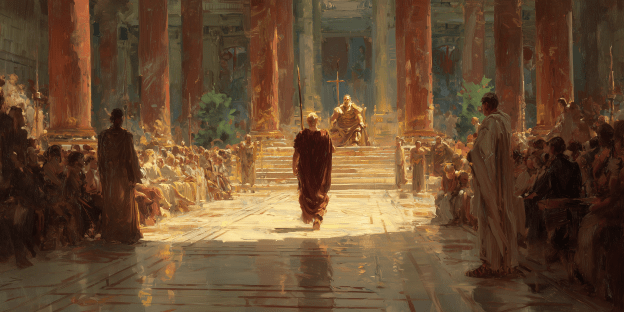
We can approach those ancient throne room doors to God Himself. We can push against them and swing those massive doors wide open. As we look, the middle of the throne room is empty. But off to the sides are angels and other heavenly hosts. They do not stand in the middle, before God, because they don’t have that type of access. But we do. All eyes watch us as we march down the center aisle, with our heads held high. We march in with boldness, as if we are God’s sons, who are co-heirs—not just mere sub-heirs—with Jesus Christ. We walk in with our heads held high, as if we are the very body of Jesus Christ, because we are. We were not first given a specific reason to come in at that moment. But we can anyway, unannounced. We stand before the throne, looking at God face to face, and boldly make our requests known to God. And God gives us what we ask for. God does this because when He sees us, He sees His Son. He thinks we are part of His Son, and God’s thoughts are the only thoughts that matter on the subject. God is correct, and I agree with God. I am part of Jesus and get prayers answered while boldly walking in and asking without hedging. Who am I to disagree with the Power?

To grasp the depth of this, we look back to the Old Testament contrasts that highlight the new covenant’s superiority. In Exodus 19, when God descended on Mount Sinai, the people trembled at a distance, warned not to touch the mountain lest they die. Even Moses, that great mediator, approached with fear and awe. Yet, in the New Testament, we’re invited to draw near without such dread, because Jesus has become our great High Priest who “ever lives to intercede” for us (Hebrews 7:25). This intercession isn’t a barrier; it’s the guarantee of our direct line to the Father. Romans 5:2 echoes this: “through whom we have gained access by faith into this grace in which we now stand.” Notice the present tense—we stand in it now, not sporadically or conditionally. Faith is the key that unlocks this, and as Vincent Cheung aptly notes in his commentary on faith’s role, it provides “unhindered, direct access to God,” serving as proof of our election. We don’t manufacture this access through rituals or good deeds; it’s gifted through Christ’s atonement, where He bore our sins and opened the path once for all.

 In Ephesians 2, it says we’re sitting with Jesus in the heavenly places. Not that we will be one day, but we already are. If you don’t see yourself that way, it’s because you do not believe God’s word and think He is a liar. Repent and start to agree with your Creator. Think about it. At this very moment, when the Father thinks of you, He thinks you are right now seated with Jesus, who sits at His right hand. He never thinks less of you than in that position with Jesus. If you are not experiencing the benefits of being seated with Jesus right now, that’s your fault and unbelief. God thinks you are, and so you are.

Too many Christians treat this access like an old phone line they only pick up in emergencies, crackling with static from doubt or tradition. They pile on layers of “helps,” like special days or sensory aids, thinking it draws them closer, when in reality, it veils the directness Jesus secured. Days like Christmas or Easter, while culturally ingrained, aren’t biblical doctrines, and so they can subtly shift our focus from revelation and the Spirit to a fleshly starting point. The early church faced similar temptations with Jewish festivals, as Paul warns in Colossians 2:16-17: “Therefore do not let anyone judge you by what you eat or drink, or with regard to a religious festival, a New Moon celebration or a Sabbath day. These are a shadow of the things that were to come; the reality, however, is found in Christ.” Shadows! They’re not the substance. The reason a person wants a shadow and not the real thing is because they do not believe the real exists, or worse, they don’t like it. Our access isn’t enhanced by smells of incense or sounds of carols; it’s sustained by the Holy Spirit, who cries out “Abba, Father” within us (Romans 8:15). This reluctance to embrace constant access often stems from unbelief, masquerading as humility. We think, “Who am I to march boldly into God’s presence?” But the Bible flips that: “How dare you not boldly approach, when Christ has paid such a high price?”

Delving deeper into Scripture, Ephesians 3:12 reinforces this boldness: “In him and through faith in him we may approach God with freedom and confidence.” Freedom—that’s the Greek word parrhesia, implying open, unreserved speech, like chatting with a close friend rather than petitioning a distant king. This isn’t license for irreverence, but it shatters any notion of intermittent access. Jesus Himself modeled this in His prayers, addressing the Father intimately, and He invites us to do the same in John 16:26-27: “In that day you will ask in my name. I am not saying that I will ask the Father on your behalf. No, the Father himself loves you because you have loved me and have believed that I came from God.” See that? No middleman needed beyond Christ’s ongoing mediation, which empowers our direct petitions. This ties into our identity as co-heirs with Christ (Romans 8:17), where all things are ours, including this unfettered communion. It’s about asking for wants and getting them, but it also includes all sorts of benefits, such as constant and direct fellowship, where we abide in Him as branches in the vine (John 15:4-5), drawing life, miracles, prosperity, and every sort of favor, moment by moment.

Hebrews 10:19-22 urges, “Therefore, brothers and sisters, since we have confidence to enter the Most Holy Place by the blood of Jesus, by a new and living way opened for us through the curtain, that is, his body… let us draw near to God with a sincere heart and with the full assurance that faith brings.” The “new and living way” isn’t static; it’s dynamic, sustained by faith that actively receives. Unbelief can hinder this, much like the Israelites who limited God by their grumbling (Psalm 78:41). They had manna from heaven, yet craved Egypt’s leeks—a foolish trade. Similarly, if we doubt our access, we forfeit the peace, power, and provision flowing from God’s throne.

“Beloved, now we are children of God… we shall be like Him, for we shall see Him as He is. And everyone who has this hope in Him purifies himself, just as He is pure,” (1 John 3:2-3 NKJV). “Set your mind on things above, not on things on the earth. For you died, and your life is hidden with Christ in God. When Christ who is our life…,” (Colossians 3:2-3 NKJV). We draw strength not from self-effort, but from this constant access, where our seated position in Christ refines us by walking in that position when we ask, receive, and praise God. As we see ourselves better as already seated with Jesus, seeing His rich life pouring into us, the more we purify ourselves. The better we see how awesome we are in Christ and walk in that bold access, the more we have power to walk in purity and holiness. People often try to do the opposite of John’s instruction. The order is to first believe who you are, and the proof that you are believing your identity in Christ is if you can boldly ask and receive miracles, and then by doing this you will purify yourself in holiness.

Imagine waking up, not with a list of rituals to “get right with God,” but with the immediate awareness that the throne room doors are swung wide. You pray for healing, and James 5:15 assures, “The prayer offered in faith will make the sick person well; the Lord will raise them up.” You seek wisdom, and James 1:5 promises generous provision without reproach. Even in trials, like Peter’s denial followed by restoration (John 21), access remains, because our standing is in Christ’s righteousness, not our performance. The callings and gifts of God are irrevocable. God sees you as already righteous without any sinful markings on your record. And what God thinks is the only thinking that matters. This is irrevocable. Your righteousness record is forever. God thinks you are a royal priesthood, now, not later. God thinks you are seated with His Son in the heavenly places. This is irrevocable. It was based on Jesus’ finished work and given freely to you in grace. It has nothing to do with your performance.

Direct and constant access to God isn’t a theological footnote; it’s the heartbeat of the gospel. It mocks the idea that we need additives to spice up our spirituality, reminding us that Christ is sufficient. As we stand in this grace, let’s live it out with the frank boldness it deserves—no more hiding behind shadows when the Light Himself beckons us near. If we’re not experiencing this daily, perhaps it’s time to examine our faith, repent of unbelief, and step into the throne room. After all, the Father isn’t stingy; He’s extravagantly welcoming, eager for our company. In the words of 1 John 5:14-15, “This is the confidence we have in approaching God: that if we ask anything according to his will, he hears us. And if we know that he hears us—whatever we ask—we know that we have what we asked of him.” That’s not wishful thinking; that’s gospel power, yours for the taking. Because God sees us as part of His Son, and thinks the blessing of Abraham already applies to us, “what we want” is the threshold that qualifies as “asking according to His will.” The only time what we want is not God’s will is if it violates a specific command or a word of direction the Spirit spoke to us. Thus, we can always ask in confidence knowing, “what we want” is what we get.

 Faith isn’t waiting around for special days or moods; it’s grabbing hold of the promises now, because Jesus is already interceding with all the good stuff He pledged. Think about it: if the early church got tangled in Jewish Sabbaths thinking it helped their standing, aren’t we doing the same with Christmas carols and advent wreaths? It’s like showing up to a feast with your own sack lunch—you miss the bounty because you’re stuck on shadows. And let’s be frank, if your faith needs twinkly lights to sparkle, maybe it’s time to check if the power’s even plugged in. Imagine trading divine Wi-Fi for a holiday dial-up connection—talk about a spiritual lag!

Shadow religion veils the intellectual, spiritual core of Christianity. It’s empiricism in pious drag, basing faith on feelings and festivities rather than revelation. But Jesus’ high priestly role means constant access—no calendar needed. If we’re born from above, we’re insiders in the Father’s house, with rooms prepared. If your Christmas ham tastes better than the bread of life, you’ve got your feasts mixed up. That’s like preferring MRE meal to a gourmet banquet from the King.

Let’s ditch the veils and live in the full benefits that Christ already won for us—bold, direct access, and miracle-ready. To drive it home, consider the ethical fallout: shadow religion dishonors Christ’s sufficiency. As sons, we’re co-heirs with eternal rooms prepared (John 14:2-3), yet holidays suggest that calendars somehow help us sit closer to Jesus in the heavenly places. However, miracles aren’t holiday perks; they’re gospel proofs. If you tie them to Christmas, you’re unbelieving the very good news that sets us free. If you think miracles happen more around Christmas than from a daily prayer spoken in faith, then maybe check who’s really guiding your sled—your flesh or faith? Santa’s list might be naughty or nice, but God’s access is always “yes” in Christ—no reindeer required.

This delusion of seasonal surges stems from defective anthropology, viewing man as sense-bound rather than Spirit-led and word-based. The gospel tells us we are redeemed, righteous, headed to glory, designed for miracles now. Calendars chain us to the old man; faith unleashes the new creation (2 Corinthians 5:17). Feeling closer via festivities? That’s flesh talking, empirical highs mimicking intimacy. Do you feel distant? That is the chill of a religious shadow, exposing your drift from reality. The cure? Deductive faith in Scripture: Jesus’ finished atonement and our current reality seated with Him means miracles come through faith, not calendar dates.

The Power of God Is Here to Heal

In the Gospel of Luke, we encounter a powerful and vivid scene that perfectly illustrates divine authority in action: “One day Jesus was teaching, and Pharisees and teachers of the law were sitting there. They had come from every village of Galilee and from Judea and Jerusalem. And the power of the Lord was with Jesus to heal the sick” (Luke 5:17, NIV).

This wasn’t some vague, ethereal spiritual mist floating around like early morning haze—no way. It was the tangible, manifest presence of God’s raw authority, actively enabling Jesus to confront sickness and demonic oppression head-on, without hesitation. Peter later echoes this truth powerfully in Acts, declaring how “God anointed Jesus of Nazareth with the Holy Spirit and power, and how he went around doing good and healing all who were under the power of the devil, because God was with him” (Acts 10:38, NIV). This should shake up any believer who’s settled for a powerless version of faith: this identical power, this very anointing of the Holy Spirit, isn’t sealed away in some historical archive exclusively for Jesus. Because of His finished work on the cross, His resurrection, His ascension to the right hand of Power, and His glorious outpouring of the Spirit at Pentecost, we now have direct access to that same explosive force. Yet, far too many of us live as if we’re still waiting for the spiritual UPS truck to finally arrive with our package.

Let’s unpack this thoroughly and biblically, because relying on mere empirical observations or fleshy experiences is about as useful as installing a screen door on a submarine when it comes to discerning God’s revelation. Jesus operated fully as a man under the law, born at the appointed time to redeem those who were trapped beneath it (Galatians 4:4-5). Importantly, He didn’t perform healings by tapping into His inherent divinity during His earthly ministry; instead, He did it all through the anointing of the Holy Spirit, deliberately modeling the pattern for ordinary humanity empowered by God. This is crucial—it shows us exactly how we’re meant to operate today. “If it is by the Spirit of God that I drive out demons, then the kingdom of God has come upon you,” Matthew 12:28. Jesus tell us plainly that He was casting out demons by the Spirit’s power, not His. And it is for this reason we can be like Jesus, because He has given us the same Spirit empowered ministry. This is why the tired excuse of the faithless, “well that was Jesus, or that was the apostles,” is inexcusable. Excommunicate any such people out of your life.

Jesus Himself issued this staggering promise that should ignite every believer: “Very truly I tell you, whoever believes in me will do the works I have been doing, and they will do even greater things than these, because I am going to the Father” (John 14:12, NIV). If that doesn’t feel like a direct invitation to step boldly into the same arena of supernatural power, then what would?

Consider the seamless transition from Jesus’ earthly ministry to the ongoing ministry of His church. He ascended to heaven not to retire comfortably on a cloud strumming a harp, but to actively pour out the promised Holy Spirit—the baptism specifically for power (Acts 1:4-8). This isn’t some optional premium upgrade reserved for a select spiritual elite; it’s the standard, essential equipment for every genuine disciple who’s serious about advancing God’s kingdom on earth. Peter drove this home unmistakably on the day of Pentecost: repent, be baptized in the name of Jesus Christ for the forgiveness of sins, and you will receive the gift of the Holy Spirit—this promise is for you, for your children, and for all who are far off, everyone whom the Lord our God calls to himself (Acts 2:38-39, NIV). Paul reinforces and expands this in Galatians, connecting the blessing of Abraham—which explicitly includes receiving the Spirit through faith—to us Gentiles as well, all through Christ Jesus (Galatians 3:14, NIV). We’re not talking about a faint, barely audible whisper of the Spirit here; this is rivers of living water flowing powerfully from within the believer, empowering us to heal the sick, prophesy boldly, cast out demons decisively, and turn the world upside down, just as the early church demonstrated so vividly.

Sadly, too many Christians today treat this available power like it’s some expired container of yogurt hidden in the back of the fridge—technically still there, but they’d rather not risk opening it. They’ll often hide behind a misunderstood view of God’s sovereignty, as if His absolute control somehow turns us into passive fatalists with no responsibility to act. But they conveniently overlook that the very same sovereign God commands us explicitly to eagerly desire and pursue spiritual gifts (1 Corinthians 14:1). I’ve personally observed how unbelief can cleverly masquerade as false piety or intellectual humility, effectively blocking the free flow of God’s power in our lives and ministries. Some believers are quick to claim forgiveness solely by faith without hesitation, yet when the topic shifts to healing or miracles, suddenly it becomes “only if it’s God’s will.” That’s inconsistent nonsense. If we applied that same doubtful logic to forgiveness, we’d pray in faith for forgiveness while secretly wondering if God might sovereignly choose not to grant it after all. Total faithless hypocrisy. Let’s call it what it is; a mockery of the atonement of Jesus and the sovereignty of God.

The Bible consistently frames healing as the children’s bread, an integral part of the blessing of Abraham that we inherit and claim through bold faith (Matthew 15:26-28; Galatians 3:13-14). Jesus never paused to check the Father’s current mood or get special permission before healing someone; He simply acted in compassion, systematically destroying the works of Satan because the power of the Lord was present to heal (Luke 13:16; Acts 10:38). And that power source? None other than the Holy Spirit—the same One Jesus promised and poured out upon all believers.

Think about the story of the woman with the issue of blood for twelve long years. She didn’t wait passively for a divine memorandum or scheduled appointment; she pressed through the crowd, touched the hem of Jesus’ garment in faith, and immediately power flowed out from Him to heal her completely (Luke 8:43-48). Jesus Himself felt the power go out; she felt the healing surge through her body—it was undeniably real and tangible, like a surge of spiritual electricity coursing through a live wire. That’s precisely the kind of dynamic, faith-activated encounter we’re all invited into today. We don’t beg or grovel; we believe and receive, because our judgment was fully settled at the cross, leaving only grace and empowerment ahead for God’s children (Hebrews 12:1-11). Yet, influenced by defective or cessationist theology, some make endless excuses for why the power doesn’t manifest consistently today. They’ll say things like, “Well, we just don’t see it in our experience anymore,” as if their observations are an epistemology over the promises of Scripture.  Seriously, how dumb can you be, to think knowledge comes by observation? That’s not being real; that’s unbelief and delusion.

Vincent Cheung puts it sharply when he writes (paraphrased from “Habitual Sin,” Sermonettes Vol. 6): a stubborn focus on sin or lack can dominate our thinking, but true faith shifts attention to holiness and draws continual strength from Christ’s ongoing work.

 Applying this to the realm of power, if we fixate on our perceived shortcomings or past failures instead of Christ’s finished gospel, we’ll inevitably miss out on His healing, His provision, and even the full baptism of the Holy Spirit. But for those born from above, it’s all ours for the eager asking—persistently, expectantly, just like the disciples waiting obediently in the upper room in Jerusalem. And when that power finally breaks through? Get ready for the unexpected fireworks: explosive boldness to preach the gospel fearlessly, spiritual gifts manifesting suddenly and powerfully, demons fleeing in terror, and sickness bowing in defeat. I’ve experienced this transformation in my own life—after seasons of divine discipline and refining, intentionally focusing on Jesus as the author and perfecter of our faith opened wide doors to greater measures of supernatural power. It’s not theoretical or mystical; it’s functional and practical, directly advancing the kingdom with every single healing, every accurate prophecy, every impossible mountain moved by faith.

So, why on earth would anyone settle for a version of Christianity that’s all eloquent talk and zero thunderous demonstration? The same power of God that rested upon Jesus for healing is now available upon us, accessed through faith and the baptism in the Holy Spirit. It’s not something we earn through performance; it’s something we receive freely because it’s already been accomplished by Christ and we have already be re-created by its effects. If you’re still dragging your feet or making excuses, remember: unbelief actually limited what even Jesus could do in certain places during His ministry (Mark 6:5-6). Don’t let that same unbelief limit God’s power in and through your life. Seek the baptism earnestly, stir up the gifts already within you, command sickness to leave in Jesus’ name by faith, and watch God’s power flow freely. After all, as true heirs of Abraham’s blessing, we’re not beggars scrambling for crumbs outside the gate; we’re beloved sons and daughters seated at the Father’s table, with healing, miracles, deliverance, and every good gift in plentiful supply.

The Bible doesn’t leave us in the dark about how the Holy Spirit operates in distributing His gifts. In 1 Corinthians 12, Paul explains clearly: the Spirit sovereignly distributes the manifestations as He determines, moving where He wills like the unpredictable wind. No one can twist His arm—He’s God, sovereign and free. Yet, immediately following this, Paul flips the perspective in chapter 14: “Pursue love, and earnestly desire the spiritual gifts, especially that you may prophesy” (1 Corinthians 14:1, ESV). Sovereignty doesn’t mean we passively sit on our hands waiting indefinitely; it means we pursue aggressively and eagerly, fully confident that He’s promised regular manifestations to those who hunger and seek Him. It’s reminiscent of the Father’s incredibly generous heart described in Luke 11: “If you then, though you are evil, know how to give good gifts to your children, how much more will your Father in heaven give the Holy Spirit to those who ask him!” (Luke 11:13, ESV). So ask boldly, seek persistently, knock relentlessly—and expect to receive abundantly. God’s sovereignty isn’t a roadblock or excuse for powerlessness; it’s the rock-solid guarantee that our faithful pursuit will never end in disappointment.

This dynamic will happen frequently in real ministry. The gifts are primarily for the edification and benefit of others. So whenever a genuine need arises and you respond with true compassion, the power of the Spirit will often show up right then to anoint you specifically to meet that need. It doesn’t depend on whether you’ve previously operated easily in that particular gift; you’re freshly anointed in the moment to serve those around you. Of course, some believers may find certain gifts flow more naturally or frequently for them, but many make the grave error of then limiting the Holy Spirit based on that pattern. In reality, all of us, through the same Spirit, have unrestricted access to the full spectrum of God’s power. All it takes is faith to believe, a clear need to address, and genuine compassion to motivate—and the Spirit will desire to flow through you even more eagerly than you desire it yourself.

Just as the woman with the flow of blood dramatically “felt” the healing power surge into her body, the Spirit’s power is often tangible and perceptible. When the healing anointing of the Spirit is sensed or felt by more than one person in the room, we can describe this as the manifesting presence of God has arrived to heal—or to prophesy, or to deliver. This incredible reality is available to every single one of us through the baptism in the Holy Spirit. We all need more of it, deeper immersions, fresh fillings. The needs of hurting people around us, but the power of the Spirit is greater. A combination of faith, compassion, and eagerness to seek this power will inevitably bring results. As Jesus Himself promised, if you seek, you will find (Matthew 7:7, ESV).

Paul reiterates the Spirit’s sovereignty in 1 Corinthians 12: “All these are empowered by one and the same Spirit, who apportions to each one individually as he wills” (1 Corinthians 12:11, ESV). He sovereignly distributes gifts like words of wisdom, words of knowledge, extraordinary faith, gifts of healing, working of miracles, prophecy, discerning of spirits, various kinds of tongues, and interpretation of tongues. It’s entirely His prerogative—no coercion possible. But sovereignty isn’t a restrictive cage; it’s a powerful catapult for those who pursue. Paul doesn’t instruct us to “sit tight and maybe you’ll get something someday.” Instead, he commands: “Earnestly desire the higher gifts” (1 Corinthians 12:31, ESV), and then intensifies the call in chapter 14 to pursue them all actively, especially prophecy. God’s sovereignty has beautifully rigged the system so that sincere seekers consistently hit the jackpot—regular, reliable manifestations of power rather than rare flukes. So if you currently operate more easily in one or two gifts, ok great—keep going! But press in further, and God will expand your capacity to flow in more gifts as you seek Him faithfully. A person’s perceived idea that they are meant to operate in one particular gift, is based only their fleshing induction rather than what the scripture makes available.

Sovereignty isn’t stingy or withholding—it’s extravagantly generous, even breaking through our doubts to deliver miracles when necessary. But why settle for occasional overrides when we can align our hearts with His will and experience constant flow? Active seeking aligns us perfectly, turning “sometimes” into “constant” in practice. The Spirit’s sovereignty assures us that when we chase Him wholeheartedly, He will pour out without measure. As Cheung further notes in “Good Gifts from the Father,” persistently asking for the Holy Spirit unlocks comprehensive power for preaching, healing, casting out demons—everything the kingdom requires, all in one glorious package (Vincent Cheung, 2016). Seek diligently, and the sovereign Spirit will manifest regularly.

Consider the Roman centurion in Matthew 8— he perfectly understood authority and sovereignty, confidently declaring that Jesus could simply speak a command over sickness just as he commanded soldiers. Jesus marveled publicly: “Truly I tell you, I have not found anyone in Israel with such great faith” (Matthew 8:10, ESV). Grasping God’s sovereignty didn’t make the centurion passive or hesitant—it fueled his bold, expectant request. Sickness is ultimately from the devil; it glorifies Satan by sidelining believers and stalling kingdom advance. The Holy Spirit shows up decisively to demolish that oppression, anointing ordinary believers like you and me to heal in the moment—no fancy resume or prior track record required.

Compassion is key.

This anointing will often happen precisely because the gifts are for building up and blessing others. When a real need suddenly appears on the scene, the Spirit provides spot-anointing, equipping you right then and there. You don’t need advanced degrees in spiritual gifts or years of specialized experience; all that’s required is some measure of faith to receive the anointing and genuine compassion to minister to the hurting person.

Sickness originates from the devil; it’s part of the curse of the law that Jesus redeemed us from, and He began demolishing it systematically in His ministry while commanding all His disciples to continue the battle without compromise. We are explicitly commanded to exercise faith for healing—both for ourselves and in compassion for others. Chase prophecy like your spiritual life depends on it—because in many ways, it does. Refusing to pursue prophecy is essentially refusing to pursue God Himself more deeply. Remember Paul’s charge to Timothy: fan into flame the gift of God within you, hold fast to the prophecies spoken over you, and fight the good fight of faith with prophetic power (1 Timothy 1:18; 2 Timothy 1:6-7).  Having compassion and allowing the Spirit to flow through you to help heal, will set a person free from bondage. A prophecy will give them something to fan their faith for a lifetime. And you can be the person to minister this. Young, old, male or female, any can do it. Every power released can save a life, set free and build up for new strength.

In the end, this supernatural power is designed not only for God’s ultimate glory but also for our joy and glory, which then glorifies Him. We do this by faithfully mirroring Jesus’ own ministry on earth. It’s like God’s delightful inside joke: when we step out and wield His power by faith, we get flooded with joy in the process, and everybody wins eternally. So chase Him with everything you’ve got, and watch the power chase right back. Believe expectantly, and you’ll see the sick healed, the oppressed gloriously freed, captives released—just as He did then and empowers us to do now. The question isn’t whether the power is still available today; the real question is whether we’ll grab it with both hands and run with it—like it’s the greatest treasure in the universe. Because, spoiler alert: it is.

Our Identification With Christ

We live in a time when too many Christians treat Jesus like a historical figure trapped in the pages of an old book—as if His ministry was a one-and-done spectacle for the crowds in Galilee. But Scripture paints a far different picture: one where our connection to Him is so profound, so ontologically woven into the fabric of reality, that when God looks at us, He sees the exalted Christ. “God did all this to give us unshakable confidence to ask and receive, by showing us how intellectually, relationally, and ontologically we are identified with Jesus” (S.T., page 654). This isn’t some feel-good theology; it’s the bedrock of how we operate in ministry today. Because we’re united with Him—not the earthly Jesus under the law, but the resurrected King pouring out His Spirit—we do the works He did, and even greater, in the same power. Let’s unpack this, drawing straight from God’s Word, and expose the faith-bumblers who’d rather limit God than let Him loose. Limiting God is like trying to cage a cosmic supernova—spoiler: it doesn’t end well for the cage.

Consider the closeness Scripture describes between Jesus and His body, the church. It’s not a loose association, like distant relatives at a family reunion. No, it’s as intimate as a head to its limbs—where the head goes, the arms follow; what empowers one, surges through the other. Paul captures this in Ephesians 2:6, declaring that God “raised us up with Him and seated us with Him in the heavenly places in Christ Jesus.” Think about that: right now, in God’s sovereign mind, you’re not scraping by down here; you’re enthroned above every principality, every sickness, every obstacle. This identification means that when God sees you, He sees Jesus. God thinks that right now, I am seated with Jesus in the heavenly places. As Jesus is, so am I in this world. The only reality is the reality that God’s Word creates and sustains. There is no other truth or reality. God thinks I am identified with Jesus, as part of Him. Would God deny Jesus a request? Of course not. Thus, God would not deny me a request, because in God’s mind He considers me as part of Jesus. If we miss this, we mock the gospel, trampling the finished work of Christ as if it left us half-redeemed—not identified with Jesus as part of His body—and limping along until heaven. Frankly, that’s not just bad theology; it’s a cosmic insult, like handing back a gift from the King because you prefer your old rags. Ouch—talk about a divine facepalm.

This union isn’t abstract metaphysics for theologians to debate in ivory towers. It is reality because reality is based on God’s thoughts and words. He considered the old Oshea to have died with Jesus, and a new created Oshea is defined as part of Jesus. By God merely thinking this about me is what creates, shapes, and upholds reality. You cannot get more reality than “God thinks so.” Thus, this has direct implications for ministry. Look at how Jesus Himself operated. In Luke 4:14-19, after His baptism, “Jesus returned in the power of the Spirit to Galilee… He stood up to read… ‘The Spirit of the Lord is upon Me, because He has anointed Me to preach the gospel to the poor; He has sent Me to heal the broken-hearted, to proclaim liberty to the captives and recovery of sight to the blind, to set at liberty those who are oppressed.’” Here’s the key: Jesus, as a man born under the law (Galatians 4:4), didn’t rely on His divine nature for miracles. He ministered through the anointing of the Holy Spirit, just as Acts 10:38 confirms: “God anointed Jesus of Nazareth with the Holy Spirit and with power… healing all who were oppressed by the devil.” Even the Son of God modelled dependence on the Spirit’s power for healing, deliverance, and proclamation. Why? Because He was born under the law and operated miracles as a man would; by this, He was the forerunner showing the church how to operate as humans empowered by the Spirit. “Jesus came as a man, born under the law, and even ministered God’s power as a saint does—by the power of the Spirit” (p. 654). He wasn’t flexing inherent deity in isolation; He was demonstrating how Spirit-empowered humanity crushes Satan’s works. Picture Jesus as the ultimate tutorial video: “How to Wreck the Devil’s Plans in Three Easy Steps.”

Now, fast-forward to the ascension. Jesus doesn’t leave us orphaned or downgraded. Instead, He commands the disciples in Acts 1:4-8: “Do not leave Jerusalem, but wait for the Promise of the Father… for John truly baptized with water, but you shall be baptized with the Holy Spirit… But you shall receive power when the Holy Spirit has come upon you; and you shall be witnesses to Me.” This isn’t optional equipment for apostles only—it’s the same Spirit, the same power, poured out on all believers for ministry. Peter echoes this in Acts 2:33, noting that the exalted Jesus “received from the Father the promise of the Holy Spirit” and poured it out. The result? The early church exploded with miracles, healings, and bold proclamation, far beyond what one man in one place could do. “After His resurrection, Jesus commanded the disciples not to minister or spread the news until they were clothed with the same power of the Spirit.” If Jesus needed the Spirit’s anointing to start His ministry, how much more do we? Yet some theologians act like this power fizzled out after the apostles, as if God got bored with miracles. That’s not cessationism; that’s Satanism, limiting the Holy One of Israel like the Israelites did in the wilderness (Psalm 78:41). God bored? As if the Creator of quantum physics and kittens runs out of ideas.

Jesus promised we’d do “greater works” than He did (John 14:12). Not because we’re superior, but because He’s now on the throne, multiplying His power through a global body. In His earthly ministry, He was localized; now, through us, His reach is exponential. “As great as it would be to be identified with Jesus under the law in His earthly miracle ministry, it is still a limitation, because what we have is greater. This is why Jesus promised we would do greater works!” Imagine: the same Spirit that rested on Jesus now rests on you, empowering you to command mountains (Mark 11:23), heal the sick (James 5:15), and cast out demons (Mark 16:17). It’s not arrogance; it’s obedience. Faith isn’t wishing; it’s assenting to God’s definition of reality. When you speak in Jesus’ name, reality bends because you’re so identified with Him that your decree carries His authority. This is true and it is reality because God’s sovereign mind thinks so.

Satan trembles at this, which is why he peddles doctrines that sideline the Spirit—calling miracles “for then, not now,” or faith “presumptuous.” But as Vincent Cheung might say, such views are just human pride masquerading as piety. Critics will cry, “But we’re not Jesus!” Exactly the point—we’re better off now, identified with the glorified One. Paul warns in 2 Corinthians 5:16, “From now on, therefore, we regard no one according to the flesh. Even though we once regarded Christ according to the flesh, we regard him thus no longer.” If you evaluate Jesus—or yourself—from a human viewpoint, you’ll cap God’s power at what your carnal senses perceive. You’ll pray timidly, heal sporadically, and witness anemically. But embrace your union: you’re a new creation (2 Corinthians 5:17), co-heir with Christ (Romans 8:17), partaker of the divine nature (2 Peter 1:4). This means ministry isn’t imitation; it’s reality based on how God’s sovereign mind thinks about His own creation. Heal like Jesus did—lay hands, command sickness to flee—because the Spirit’s power flows through you as it did Him. Preach with authority, knowing demons flee at His name through your lips. And yes, expect greater: more salvations, more miracles, across more territory. “The power of the Spirit is so contested by many… When Jesus on His throne becomes central, the baptism of the Spirit for power becomes central” (S.T., page 399).

The same Spirit who empowers also convicts of sin (John 16:8). But what was the sin the Spirit comes to convict the world of? All? No. The Spirit’s ministry is to convict the world of the sin of unbelief—because they do not believe in Jesus. They do not believe He is God’s Son. And because they do not believe He is God’s Son, they do not believe the things He preached and did. What are some things Jesus said? “Jesus answered, ‘Truly I tell you, if anyone says to this mountain, “Go, throw yourself into the sea,” and does not doubt in their heart but believes that what they say will happen, it will be done for them. Therefore I tell you, whatever you ask for in prayer, believe that you have received it, and it will be yours’” (Mark 11:23-24). The Spirit comes to convict us of the greatest sin, which started with Satan’s temptation to Eve: “Did God really say?” It is the sin that leads and opens the door to all other sins. It is the defining sin of the faithless; they refuse to believe God and they refuse to believe Jesus Christ.

Unbelief stopped Jesus in Nazareth (Mark 6:5-6), not besetting sins and not Satan. If sickness lingers or prayers seem unanswered, it’s not God’s will changing—it’s our faith needing sharpening, or perhaps a fresh infilling of the Spirit’s power. Pray in the Spirit (Jude 1:20), building yourself up in God’s love. “Sickness is Satan’s victory lap. Jesus did not just patch up boo-boos; He threw haymakers at the devil’s disease factory” (Systematic Theology, page 648). Join the fight; wield the power. Because who doesn’t love a good spiritual smackdown?

Look at how Jesus kicked off His Galilean ministry in Luke 4:14-15—He returned “in the power of the Spirit,” and suddenly news spread like wildfire, with Him teaching in synagogues and getting glorified by everyone. This isn’t some vague spiritual high; it’s raw, divine dynamite exploding into action. Jesus, as a man born under the law, didn’t launch His world-shaking work until after His baptism, when the Spirit descended like a dove and empowered Him to heal, cast out demons, and preach with authority that left jaws on the floor. The Holy Spirit wasn’t just tagging along; He was the engine, turning Jesus’ steps into a kingdom invasion that demolished Satan’s strongholds. And here’s the kicker—Jesus didn’t hog this power. In Acts 1:8, He promises His followers the same deal: “You shall receive power when the Holy Spirit has come upon you,” turning ordinary folks into unstoppable witnesses from Jerusalem to the ends of the earth. This isn’t optional fluff; it’s the blueprint for Christian life. If we’re co-heirs with Christ, why settle for powerless piety when the Spirit’s ready to supercharge us for miracles and bold proclamation? God’s not stingy—He’s lavishing this power on anyone hungry enough to receive it. Without the Spirit’s baptism, we’re just playing church while the devil throws a party.

The faithless treat this power like an ancient relic gathering dust in some theological museum, when Scripture screams it’s for now. Jesus returned in the Spirit’s power after fasting and facing down Satan, emerging not weakened but weaponized for ministry—teaching that silenced critics and healings that restored the broken. That same Spirit, poured out at Pentecost, isn’t a one-time fireworks show; it’s the ongoing promise for Abraham’s kids through faith (Galatians 3:14). When Acts 1:8 hits, it’s Jesus saying, “Wait for the download—then go conquer.” This power isn’t about flashy showmanship; it’s God’s sovereignty flexing through us, making the impossible routine. Think about it: if Jesus needed the Spirit’s anointing to crush the devil’s works (Acts 10:38), how much more do we? Yet, some peddle a gutless gospel, ignoring this dynamite because it messes with their unbelief. Nah, the Spirit’s power is our birthright—grab it, and watch reality bend as we advance the kingdom, just like our Lord did. Anything less is selling short the God who turns water-walkers into world-changers. Pro tip: Don’t be the guy who brings a squirt gun to a divine water fight.

In closing, our identification with Christ isn’t a doctrine to shelve; it’s dynamite for daily living. Because we’re one with Him, we minister in the same way—Spirit-anointed, faith-fueled—and with the same power, only amplified. Don’t know Him from a human viewpoint anymore; know Him as the enthroned Lord, and yourself as seated there too. Speak to storms, sickness, and souls; watch heaven invade earth. If that sounds radical, then it exposes that your heart is hard. As Scripture says regarding the disciples’ surprise at Jesus’ miracles: they were surprised “because they did not consider the loaves.” Jesus expected them to extrapolate the miracle of multiplication of material substance to be a regular activity. Their inability to see miracles as common and regular indicated their hearts were as hard as stone. Let us cast off any stony parts of our hearts and put on a heart of faith and the Spirit. Miracles, the Spirit, and healing are the gospel. And if critics scoff, well, they’re just cheering for the wrong team in this cosmic showdown. Don’t wash your hands with them, unless you wish to partake of their judgment.

ALL Is Not Lost

I was praying the other day. It is now common for me to be praying in tongues and making faith confessions and praising God.

Over the last few years, God has been healing me, restoring me, and growing my inner man. And now, as I look to the future, my focus is more power, more righteousness, more kingdom expansion, seeing my dreams become reality, and taking all choke points and limits off God and what faith can do.

I am in my 40s, and I was feeling a little bit of hopelessness because of my age. I was wishing I could go back to my teens to teach myself what I have learned and practiced over the last several years. And so, I decided to use life’s greatest life-cheat: praying in tongues. After some time, I received an interpretation, “All is not lost. I have heard your prayers.”

When God says “I have heard your prayers,” as He did to Hezekiah, it means He gave you what you asked. Because God is so loving and so faithful to do what He promised, the same act of God hearing you is the same act as God granting your request.

When I heard the Spirit say this, I was unsure if God meant “all” as in “some things might be lost but not all things,” or “all the dreams you have ever had are still yours for the taking.” I looked up and said, “I don’t know how you meant ‘all,’ but I mean it as all my dreams are still here. Even if you did not mean it that way, I mean it that way and receive it that way, because you said ‘all.’” (Hey, if you’re going to quibble with the Almighty, at least do it with faith and a dash of audacity—its how scriptures teach us to pray.)

God told King David that He gave wives to David (this is mostly about sex), a kingdom, prosperity, and fame, and if David wanted more, God would have given more sex, more kingdoms, more prosperity, and more fame to David.

This teaches us that we cannot ask too much. The risk in praying is asking too little and shooting too low. If you aim for the Andromeda Galaxy but end up hitting Orion’s belt, then great, you accomplished some good things. But if you aim for the ground, then that is all you will hit—frankly, why settle for dirt when the stars are up for grabs?

The Gentile woman hijacked Jesus’ words, which meant one thing, to mean something else. Jesus approved and called her faith great. In fact, Jesus was arguing for God’s will to be done, and by the end of the exchange, Jesus confesses out loud, “Woman, your will be done.”

Jesus had already promised to go and heal the centurion’s servant, but the centurion asked for an upgrade to a miracle already in motion (just say the word). Jesus approved of this man asking for more, and he got the upgrade.

Last note: Pray in tongues and ask for interpretation. Even if you don’t have a spiritual gift for interpretation, by asking in faith, you will find you will receive interpretations. Don’t sleep on this. It will help you.

I am here to remind you: All is not lost.

Do not limit God. Do not shoot too low. Do not ask for only small things. Pray for big things; pray for upgrades to miracles you are already getting. Pray for more. And when you think you have asked for too much, ask for more.

And when God hears you, you know God has given.

The Lie that You Only Need to be Still

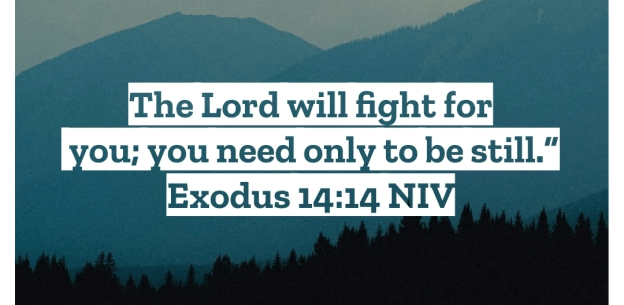
In my teaching “The Staff of God,” I highlighted the passage where God was displeased with Moses’ statement, despite it sounding like a bold “word of faith confession.” The issue wasn’t the confession itself but what it confessed. God responded with irritation, “Why are you crying (i.e., whining) to Me? Take the Staff and divide the waters.”

Moses’ confession was misleading. God was indeed fighting for the Israelites and would continue to do so, but it was incorrect to say, “they only need to be still.” God didn’t command Himself to divide the waters; He commanded Moses to do it. If Moses had sat there “waiting for the will of God,” the Red Sea would not have parted, because it wasn’t God’s job to divide the sea; it was Moses’ job.

Moses was hedging, trying to buy time with a good faith confession, but God had already acted. He had given Moses the Staff of God. Likewise, God has already acted for us. He sent His only Son, who was brutalized, raised from the dead, and seated at His right hand. Jesus took on God’s wrath for our sins, gave us His righteousness, bore the stripes that healed us, took our curses, and gave us the blessing of Abraham. God has made us a royal priesthood, an irrevocable calling, and engraved Jesus’ name and authority on our tongues. What we have is far greater than the Staff of God or Zeus’ lightning bolt. We have the Name of Jesus and the baptism of power in the Spirit.

Moses thought he could chill with a faith-filled soundbite, but God was like, “Bro, grab the Staff and make waves—literally.” Spoiler: Sitting still doesn’t part seas, but swinging God’s power does.

Unlike the faithless of our day, Moses was a friend of God, yet God still grew irritated when Moses lingered, waiting for God to move. Moses held God’s power in his hands. It was Moses’ move, not God’s. It wasn’t time to be still and watch God; it was time to act and command the waters to stand.

So it is with us. The waters are divided by us, not God. When Moses stopped hedging and acted with the Staff of God, the waters parted. Healing will happen when we stop hedging, stop waiting for the so-called will of God, and command it in the name of Jesus. If you wait for God to move, you’ll die waiting. God has already moved.

The faithless amplify Moses’ misleading confession, pumping it full of unbelief. They wait for the will of God, and they wait, and they wait. Nothing happens, for their worldview has no God and no power in it. However, God has already willed our sicknesses onto His Son, stripe after stripe. He has already addressed our sickness problem. There’s nothing more for Him to do for us to be healed. Do you suppose your begging for healing requires Jesus to be re-crucified? Your healing is already accomplished. In God’s thoughts He transferred your sickness to Jesus, who carried it away. In God’s mind, He thinks we are healed by Jesus’ stripes. Who am I to disagree with God’s own thoughts?

The lie is waiting for God to move when He has already moved. Through Jesus’ finished atonement, He placed the Staff of God on our tongues. His command is that we move next. Like a chess game, God has made His move. Now it’s our turn.

The faithless camp out, waiting for God’s will like it’s a cosmic Amazon delivery. Newsflash: God has already shipped the healing, signed, sealed, and delivered on Jesus’ back. It’s already sitting on your living room floor. Open the package. Doing nothing and looking at the box, will not open it.

God’s made His checkmate move with Jesus’ atonement. Now He is sipping divine coffee, waiting for you to slide the bishop and part the Red Sea. Don’t leave Him hanging.

The miracle happens, not when God moves, but when we move, and divide the waters in Jesus’ name. Because God has already moved, the healing happens, not because God will move, but because we will move in faith.

The disciples finally got this. And so, Peter said “what I have I, I give, in Jesus Name, walk.” It wasn’t what God had. It wasn’t what God gave. It was what Peter had, and what Peter gave. He had the Name and power of Jesus, to throw around as Peter wanted. Peter had this because Jesus was sitting at the right hand of the Power. And despite many Christians hating this, Jesus is still at the right hand of the Power. We have the same Name and the same power.

(witty summaries provided by Grok 2025 )

Tongues: The Ultimate Life Hack

I have a few essays on the power of speaking in tongues. The reason for this is simple. It’s a command from Scripture to be baptized in the Spirit; we’re commended to have the corporate gifts that edify the body. But to speak in tongues is to edify yourself; it’s a personal gift, and as a personal gift, it’s for anyone who asks for it. It’s so common that Paul assumes it for believers: “Have you received the Spirit?” And the outcome was, again, speaking in tongues as proof.

Speaking in tongues edifies and builds up the inner man. It keeps you from being depressed and empowers you to be filled with peace and joy. Furthermore, praying in tongues is how you put on and keep on the helmet of salvation and wield the Sword of the Spirit. Praying in tongues is also how you keep yourself in the love of God. Lastly, praying in tongues can easily lead to interpretation. This is the category of prophecy, divine knowledge, and insight. It allows Jesus to sit at the right hand of the Power and be a personal counselor to all His children across the world. Interpretation of tongues is, therefore, a gateway into all the powers of the Spirit. It’s a foothold into more and more power.

However, over the past week or two, I needed a new computer because the old one was breaking down. I decided to build my first PC rather than buy one, because I noticed I could build it for a cheaper price with the same parts and get more performance out of it. I built it and enjoyed doing something new for the first time. Praise God, it went well, but with one minor issue. I won’t bore you with the details. But for over a week, I toiled over this issue to fix it. I spent day after day, with long, exhausting hours, with no success. I was on forums asking and getting all sorts of replies, but none helped.

I did my devotions during this time, but they were rushed, including not praying in tongues as much as I usually do. Because of my internal frustrations and my devotions suffering, I remember asking God for help; however, if I’m honest with myself, I felt my request lacked faith or had doubt mixed in. I should’ve done a full stop there and worked on my inner man, but the temptation of a new thing momentarily distracted my discipline.

Then, a few days ago, while I was at work, I listened to a new essay by Vincent Cheung called “The Benefits of Praying in Tongues.” I like this topic, so I engrossed my attention in fully listening and meditating on the essay. It was mostly a review of my own thoughts and teaching on the subject, with a few new insights. I was encouraged to do the very thing I often do and encourage others to do: praying in tongues.

So, while I was still at work, I began to pray in tongues and confess God’s good promises over my life. Soon, I felt my inner man flood with peace, and my mind became sharper and more focused. When this happens, I know from experience that prayer is so much easier and the results better. I asked God to help with the computer issue that was vexing me. Unlike previous times, I felt faith in my heart as I prayed. The next moment, I received an interpretation, and the Spirit spoke to me, saying, “I will help you with this small issue, and I will also help you with big issues.” I barely had enough time to process and enjoy the Spirit’s word when I got a notification from a forum post. A person responded with a possible answer, and upon reading it, I knew immediately it was the solution. And it was.

A few takeaways: Praying in tongues is a cheat code for life. It’s the ultimate life hack that penetrates all aspects of life. If unbelievers knew the power and extreme advantages that praying in tongues gives believers, they’d scream we’re cheaters and demand we don’t use it. It’s a game-changer. It’s having admin rights when others don’t. It’s the NES Nintendo Game Genie. If Christians utilized praying in tongues, unbelievers couldn’t compete with them in life; depression would run away with its tail tucked between its legs, and demons would tremble in fear. If Christians prayed in tongues, they would both experience the love of God in their hearts and see more of God’s love affecting all parts of their health, wealth, work, family, and on and on. To not pray in tongues is to hate yourself.

It’s the ultimate cheat hack. You can be experiencing a slow mind and disturbed heart due to your own lack of discipline, but then bypass the consequences of this by praying in tongues. It’ll sharpen your mind and bring peace to your heart. It’ll supernaturally allow you to bypass everything going on around you and help you boldly walk into God’s throne of grace to ask and receive. Because praying in tongues strengthens your inner man with peace, joy, and mental sharpness, it helps you have faith without doubts. This is what a stronger inner man has: a more continuous joy and peace of God, with fewer doubts intruding. Praying in tongues is particularly good at strengthening your inner man. This stronger inner man means a more confident faith, which results in more answered prayers.

Tongues are the ultimate cheat code—God’s Game Genie for life! Skip the toil, dodge depression, and crank up peace and power with a Spirit-fueled prayer hack. My PC woes? Toast, thanks to tongues and a divine forum nudge. Refuse to pray in tongues and you are benching the Spirit and begging for a cursed slog!

Lastly, to toil is a curse. We’re commanded to work and not be lazy; however, overworking and toiling with little fruit to show for it is the curse of God for Adam’s sin. But Jesus became a curse for us, in our place as a substitute. In exchange, Jesus gave us the gospel of Abraham, which is abundant increase, health, wealth, and fame. We don’t bear the curse of toil but the blessing of Abraham’s abundant increase. Isaac did sow in the drought. He did work. But God gave a hundredfold increase when there was no water. We’re not under the curse but the gospel of increase.

I should’ve realized this when I was troubleshooting the computer issue. I was toiling as if I was still under the curse. This is wrong. Thankfully, the gospel of Abraham also means being given the Spirit, which means the baptism of the Spirit for power. Thus, when I was praying in tongues, I stopped operating under the curse and began to operate under the gospel of Abraham.

I immediately received fruitfulness and increase.

The Age of Abraham’s Blessing

“What I do have I give you. In the name of Jesus Christ of Nazareth, walk.”
(Acts 3:6 NIV.)

Why do you stare at us as if by our own power or godliness we had made this man walk? (v.12)

Indeed, beginning with Samuel, all the prophets who have spoken have foretold these days… He said to Abraham, ‘Through your offspring all peoples on earth will be blessed.” (v.24-25).

The first statement from Peter would get you kicked out of most churches. God’s power healed the cripple. This is the context. Peter didn’t say, “What Jesus has, Jesus gives to you,” or “what Jesus has, I give it to you.” No. Peter said, “What I have, I give to you.”

Peter did affirm the ultimate level of reality by saying, this was not our godliness or power. This is like saying, “when I shot the man who was trying to kill me, the gun and the bullet is not my power. It wasn’t my power that blew a hole through his chest.”

The power is God’s, but God gave the power to Peter and Peter pulled the trigger by saying, “in the Name of Jesus, walk.”

How does Peter have this power? Do we have it?

The power is the Spirit and the authority is the access to use Jesus Name. Jesus said, “if I cast out demons by the Spirit of God.” And so, it was the Spirit’s power not Jesus’ power, when He was healing and casting out demons. In John 14:10 Jesus also says, the Father does His works, referring to the miracles Jesus was doing. Thus, Jesus was not doing miracles by Jesus’ power, but the Spirit’s power. The power of the Spirit, Jesus gives to us, as Peter argues in Acts chapter 2. It was promised by the Father, and Jesus sitting at God’s right hand ensures the Spirit of power is poured out on all those God calls to Himself.  Jesus said, referring to the Spirit, that life giving waters will flow out of our inner man. The authority is given to us to use Jesus’ name to ask for whatever we want. Jesus says this 4 to 5 times in John 14-16.

Our identity in Jesus, as Peter says, means we are a royal priesthood. We are not just sub-heirs with Jesus, but co-heirs with Him. We are called children of God. Paul says in Ephesians that all blessings have already been given to us, and that we are already seated in the heavenly places with Jesus, above all names, times and authorities. All of this means we have divine, heavenly and royal authority. The gifts and callings of God are irrevocable.

Also, as purchased gifts we have power and authority. The power of the Spirit is a promise of the Father to Jesus, to give to us, upon His resurrection. It is part of the finished atonement and resurrection of Jesus. The authority to use Jesus’ Name is our definition for having our identity in Jesus. Water baptism means we are raised in new life, with Jesus, as part of Jesus. This new identity includes having the definition to wield Jesus’ name to ask for whatever we want.

What is interesting about this, is that it has nothing to do with apostles. It is centered on the finished work of Jesus and His current position of ruling from the Power’s right hand.

Peter makes a last reference to Abraham. The context is why the man was healed in the Name and power of Jesus, and how Peter did it, and how the man received it by faith in Jesus. Peter’s last point to explain all of this was Abraham and God’s promise to bless all people through his offspring. Think about that. According to Peter, the ability to use Jesus Name, and power to heal, is based on the blessing of Abraham. This blessing, as Peter also says, means forgiveness and salvation. But our point of interest in the context of Peter explaining the healing to the authorities.

It was not as if Abraham is so important, but that God made a promise. Abraham was asleep. It was all God. God gave a promise to bless Abraham with fame, favor, healing, supernatural healing, wealth, victories and etc, and to do the same with his children, and by this bless the whole world. Paul argues in Galatians 3, that the atonement of Jesus did not replace Abraham’s blessing, but Jesus’ crucifixion grafts us into this blessing. Jesus took on our curses and in substitutionary exchange gave us the blessing of Abraham. Paul also sums up this gospel as the “Spirit and miracles,” which is received by faith in Jesus. Paul says the power of the Spirit for miracles is part of Abraham’s blessing, and Peter sums up the access to use Jesus’ Name to heal as part of Abraham’s blessing.

Acts opens of with Jesus’ command to receive power by the baptism of the Spirit. The first miracle is Peter claiming to have Jesus’ authority. Rather than saying it was a gift of the Spirit, Peter says it was faith in Jesus that caused the healing. Thus, the first miracle was performed by normal discipleship faith. Peter knew his identity and authority in Jesus. He knew about the privilege and command to use Jesus’ name to heal the sick and cast out demons. He then used it. Peter then says this is part of Abraham’s blessing.

Why is this important. It is important because we have the same blessing of Abraham. The blessing of Abraham is not one thing for one person and something different for another. The only real factor is faith. Your faith determines how much you can extract out of your blessing in Abraham. This is why Paul rebuked the Galatians. Their faith in Jesus, giving them access to Abraham’s blessing, extracted miracles for them. But now they want to abandon faith for works. A relationship of works will stop the miracles that came to the Galatians, from being grafted into Abraham’s blessing.

Lastly, remember again, this has nothing to do with apostles. It is about God and how faithful, true and awesome He is in keeping promises. God made a very old promise, and after all these years, He still keeps His promise. And so, if you hear someone say, “but the book of Acts, is about the apostles; the miracles are only for them; the miracles stopped with them,” then you understand how dumb and perverted they are.

“So, the Book of Acts isn’t just a highlight reel for the apostles. No siree, it’s the kickoff for the “Age of Abraham’s Kids Doing Cool Stuff.” It’s not about how special the apostles were; it’s about how faithful God is. He made a promise to Abe, and centuries later, He’s still like, “Yeah, I got you.”

In short, if you believe in Jesus, you’re not just saved; you’re also signed up for the spiritual sequel where you get to do the stuff. The power’s there, the name’s yours to use, and the only limit? Your faith. So, go out there and make some divine mischief in the name of Jesus, because according to Peter, it’s all part of the family business!”[1]

The book of Acts, is not the age of the apostles. It is not about the apostles. The book of Acts is about the Acts of Abraham’s children. It is the Age of Abraham’s blessing. It is the Age of the power of the Spirit and authority of Jesus Christ spoken by the lips of His children. The book of Acts is the age of faith and power, in the Name of Jesus Christ.

“Get up and Walk!”


[1] Grok AI, fun mode 2024, summary of this essay.

Eschatology In A Nutshell

If someone sums up eschatology without baptism of the Spirit for power, they have no idea what they are talking about.

Acts 1:6-8 NIV. “ Then they gathered around him and asked him, “Lord, are you at this time going to restore the kingdom to Israel?” But you will receive power when the Holy Spirit comes on you; and you will be my witnesses… to the ends of the earth.”

The context is about eschatology. Jesus has sat down on his eternal throne and is ruling. The disciples did what most do, they made eschatology about politics. However, Jesus rebukes them and says eschatology is about being baptized in the Spirit for power and miracles.

The important part to note is that in eschatology the followers made it political and Jesus made it about miracles and the Spirit for power. By making it about politics they made it about man. Religious elites make the baptism of Power belong only to the apostles, and thus they still make it about man. They use religious words, but the result is a man-centred doctrine in what it means to be God-centred. In Peter’s sermon on Pentecost, he made baptism of power about Jesus and His eschatology position, sitting at the right hand of the Power. It had nothing to do with the apostles, thus, the baptism of power still remains, because Jesus still remains at the right hand of the Power. The Power was faithful to His promise to give Jesus the authority to pour out power.

Jesus is still faithful in pouring out power on “all whom the Power calls to Himself,” (Acts 2:39).  The Baptism of power is connected to God predestination of the elect. Peter’s point is not directly about repentance, but baptism of the Spirit and to this Peter directly connects, as many as God calls to Himself. This is why Peter says the gentiles were granted salvation and eternal life when He witnessed them speaking in tongues (Acts 10:44-47). In His Pentecost sermon Peter already said that being baptised in the Spirit is about God calling His predestined ones to Himself. Thus, when Peter saw the gentiles speaking in tongues, and then he told the other disciples, they concluded God elected them to eternal life (11:15-18).  In fact, Peter said because the Spirit was given to them, it was proof they should be baptised in water. And let us not forget that water baptism is a sign that they have died and were raised in new life with Jesus. Speaking tongues was proof they were elected to eternal life.

Peter’s argument for the baptism of power is based on two points. One is the Father being faithful to His promise (2:33) to Jesus, so that Jesus has the authority to pour out power. The second part of the argument is that Jesus is sitting on His throne, at the right hand of the Power (2:31-36). These are the 2 relevant factors, in Peter’s argument, for the conditions in pouring out the baptism of power.  Peter, who is an Apostle, gives no scriptural quotes or logical connections, that the baptism of the Spirit is connected to the apostles. Zero.  What do the religious elites know that Peter did not?

In addition to the Spirit baptism of power, there is the issue of authority. Jesus gave the disciples the authority to heal the sick. In fact, it was a command, because He said, you “heal the sick,” and “cast out demons,” and “preach the gospel.” Then Jesus did the same with 72 others, and so no one can logically say it was only for the apostles. To further insure this, Peter in Acts 3, after commanding a healing, says it was by “faith in Jesus,” and not by the authority of an apostle.  Faith in Jesus is what causes a person to receive salvation, and it is the same faith that commands sickness to leave. It is heavily God-centred. It is not man-centred on the apostles. It is centred on Jesus and His position of authority, while He is sitting at the Father’s right hand.

The next major event after the baptism of the Spirit Acts 3-4, shows how Jesus’ plan for power is how to apply His eschatology.

After being released from prison the Christians got together and prayed. They quoted Psalms 2, a militaristic Psalm, and asked that God would apply this to their situation of government opposition, by healing the sick, miracles and boldness to preach the gospel. God responded back with a resounding Yes.

This is how they applied eschatology. This is how they applied the doctrine that Jesus is on His eternal Throne and rules forever. This is how they applied the doctrine that King Jesus gave them power to advance His Kingdom when they face opposition, even when their enemies use the government to persecute them.

In context of eschatology advancement under King Jesus, they mentioned 3 things, healing, miracles and bold preaching. Many only preach (and they are not even good at that), which is only 1/3rd of the disciples applied eschatology. It is no surprise they fail at kingdom advancement.

The Bible Distinguishes The Elect From Reprobate Trash, By Praying In Tongues

Jude 1:18-21
“In the end time there will be scoffers…”
These…not having the Spirit.
But you, building yourselves up in your most holy faith, by praying in the Holy Spirit, keep yourselves in the love of God.”

Jude says mockers (and this is a continuation of his condemnation of false teachers) do not have the Spirit, which is referring to the baptism of the Spirit (Acts 1-2, Paul in 19:2 refers to “The Spirit” as the baptism of the Spirit and speaking in tongues (v.5)). Jude refers to those born again as “the called,(v.1).” In conversion the Spirit works on you to receive Jesus. In this sense you have Jesus, or you do not have Jesus. In baptism of the Spirit, Jesus works on you to receive the Spirit. In this sense you do have the Spirit, or do not have the Spirit.

In contrast to mockers, who do not have the baptism of the Spirit, Jude instructs the saints to pray in the Spirit, which is the baptism of the Spirit, which refers to praying in tongues. By praying in tongues, you keep yourself in God’s love. Think about that. Consider the consequence for not praying in tongues.

Paul says something similar in Ephesians 6:17-18. He says to “receive” the helmet of salvation and the sword of the Spirit by “praying in the Spirit.” Receiving the helmet of salvation and the sword of the Spirit are important. Paul says to do this by always praying, by praying in the Spirit. We know what Paul means by praying in the Spirit, because in 1 Corinthians 14 he defines “praying in the Spirit,” as “praying in tongues.” Thus, we continually receive the helmet of salvation and the offensive power of the Spirit, by praying in tongues.

Lastly, Paul says in Corinthians 14 that by praying in the Spirit we edify and encourage our inner man. This was one way Paul was able to encourage himself in context of all his hardships.

Paul therefore says I thank God I pray in tongues more than you all, to the Corinthians.

By praying in tongues, we keep ourselves in God’s love, strengthen our inner man, and keep receiving the helmet of salvation  and are continually empowered with the sword of the Spirit.

This does not mean a person cannot be saved without the baptism of the Spirit. However the same unstoppable God who causes an elect to receive Jesus for salvation will cause the same to have faith to receive the Spirit. Peter argues in Acts 2 that forgiveness is a stepping stone to receive the Spirit. To this Peter brings in the doctrine of election and predestination making the connection to the baptism of the Spirit. Some might think Peter’s connection is this: Those whom God calls to Himself are those born-again, however, this is not correct. Rather, Peter’s connection is, those whom God calls to Himself He gives them the baptism of the Spirit, with speaking in tongues. This isn’t how religious elites use predestination, but it is how the scripture uses the doctrine. And so God is faithful to call his elect to Himself, by causing them to receive the Spirit.

If a Christian has not received the Spirit, they do so by ignorance and unbelief. By unbelief and disobedience the Christian has pragmatically caused their Christian experience to be second class. The baptism of the Spirit enables one to fight with power to expand God’s kingdom. Praying in tongues causes one to continually receive the sword of the Spirit. To not have this while others are doing the hard work is spiritual negligence.

This is something mockers cannot do, and refuse to do. First of all, they are two busy mocking and making fun of the faith teachers, who are praying in tongues, to keep themselves in God’s love. Secondly, they hate the Spirit and so they refuse His gifts and powers.  False teachers and heresy hunters mock the very thing which the bible uses to distinguish the Called, from the reprobate.

The Gospel Is The Baptism Of The Spirit For Miracles

If Jesus sitting on the throne is the foundation eschatology, and His commands for power still stand, then applied eschatology for Christians is baptism in the Spirit, faith and miracles.

“Always remember that Jesus Christ,
a descendant of King David, was raised from the dead.
This is the Good News (GOSPEL) I preach,”
 2 Timothy 2:8 (NLT).

Tradition and men have a tendency to limit God, man and the gospel. In this case they limit Jesus’ nature, His position of authority and glorification of man in the gospel. Imputed righteousness and being declared righteous is an awesome doctrine, but there is more that the bible defines that belongs to “good news,” than a few narrowly selected pet doctrines. Men are habitually and systematically man-centered, and this leads to limiting God, His gospel and the elect. This happens because their worldview, despite having many scriptural terms, starts with themselves. They see the world from their limited human experience and then force God, the gospel and the elect into this limitation. We know who they serve.

Paul teaches in this passage that the gospel includes that Jesus was raised from the dead “as a descendant of King David.” This refers to the promise God made to “King” David about a descendant that will come from him. There are two aspects of this promised person. One, he will be the saving Messiah. The second, is that He will be a “King” on a throne, ruling in power and authority.

This descendant of King David, according to Paul, is connected to the fact that Jesus was raised. When you and I are resurrected, it is not necessarily connected to us sitting at God’s right hand as King and Judge over all things as what is inherit in us; however, this is precisely what it means for Jesus. Because we are connected to Jesus as part of His body, by God’s decision, then we share in His power and authority. Not as the head, but we do indeed share in what Jesus’ experienced. We are not just sub-heirs, but co-heirs. Jesus judges in authority, and likewise we will also one day judge angels, etc. The point is that what happens to Jesus in resurrection, also happens to us. For example, Paul argues in 1 Corinthians 15 because Jesus had bodily resurrection, we to will have a bodily resurrection.

Jesus is raised as the promised King, from King David, who sits on a throne of power. That is, Jesus’ resurrection by the Father from the grave, cannot be disconnected from the fact that His rising is a rising to sit on a throne. The doctrine of Jesus rising from the grave is the same thing as His rising to sit at the right hand of the Power, because the two cannot logically be separated. One cannot separate Jesus’ resurrection from His sitting on the throne as a King. Jesus raised from the grave is not to some nebulous place in the clouds. We are told and know where He was raised to. He was raised to the right hand of the Power. This doctrine for Paul, is “the gospel he preached.”

Also note, this is Paul to Timothy. Furthermore, this is the gospel Paul preached to the gentiles; thus, is not a specific doctrine for Jews or something like that.

Peter, in the first recorded apostolic gospel sermon, harps on this aspect of Jesus being King David’s descendant, who was raised to the position of throne power and authority. Peter devoted a good amount of space to make this point about Jesus. 

Peter sums up Jesus’ rising as the seated King from David as,

“both messiah and King.”

Thus, this promised descendant from David, according to Peter includes both the “saving Messiah” and “King” aspect to it. The resurrection is part of the gospel, most would admit, but the resurrection cannot be separated from that fact that it is a resurrection as a King to a throne. This last part of the gospel is the focus of eschatology, as it pertains to this side of eternity and Jesus ruling. This power the Father “worked in Christ, raising him from the dead and seating him at his right hand in the heavenly places,  above all rule and authority and power and lordship and every name named, not only in this age but also in the coming one, and he subjected all things under his feet,” Ephesians 1:20-22. Again, Peter does not separate the saving and Throne aspect of Jesus Christ as the risen descendant of David. It was the gospel Paul preached and it was also the gospel Peter preached. The promise included both, and thus cannot be separated by theologians without blaspheme.

Peter then makes connection to the baptism of the Holy Spirit. His argument is this. Jesus as the descendant from King David, was raised to the right hand of God. What does Jesus do, sitting at the right hand of the Power?  Peter argues that in His position of power, has poured out power on His chosen ones, through the baptism of the Spirit. What does this newly seated King do with His position of Power? Well, He starts to empower His people. What will this seated descendant King of David do with all this authority and power? Peter’s answer is this: He gives us His power and authority so that we can overcome the world and spread His kingdom to every corner. Jesus gives us power to cast out demons, to heal the sick, and make mountains obey us. This is what Jesus does with power.

Thus, to say, “the gospel is the baptism of the Spirit, for speaking in tongues, casting out demons and healing the sick,” is true and should have no resistance. Jesus had to be cut up into a bloody pulp, under the Father’s wrath, and then resurrected to the right hand of Power, in order to have a contractual right to pour out the Spirit for power.  Thus the gospel is the baptism of the Spirit for miracle power; the gospel includes more, but not less than this. It is no less the gospel than the forgiveness of sins, because both are produced by the same thing, which is the blood, death and resurrection of Jesus to the right hand of the Power. To be against the statement, “The gospel is the baptism of Spirit for miracles,” is to trample the blood, death and resurrection of Jesus to God’s right hand.  To be against the baptism of the Spirit for speaking in tongues and power, is to be against the blood, death and resurrection authority of Jesus Christ. To be against the baptism of the Spirit for miracles, is to mock how the reigning Jesus Christ uses His authority from the right hand of the Power.

Paul said if you deny the resurrection then your faith is destroyed, and your hope is vain. However, there are more subtle ways to deny the resurrection rather than doing it directly. In the logic of Modus Ponens it would be resurrection as the antecedent and the manifestation and effects and application of resurrection would be the consequent. But the logic of Modus Tollens is also valid. If you deny the consequent, then you deny the antecedent. If you deny the baptism of the Spirit for miracles and speaking tongues, then you deny the resurrection of Jesus to God’s right hand.

Men and tradition, who use many scriptural terms, mock the gospel continually. You need to remove such a faithless mocker from your life. They spit on the blood of Jesus, trample on His death and make a mockery of His decisions made from His position of authority. Do not even eat or wash your hands with such people. Instead, honor the decisions that Jesus made, as He sits in all authority, at the Father’s right hand. We must seek to be baptized by the Spirit and to be constantly growing in Spiritual power for miracles and spiritual physics. The Spirit will become your personal instructor, as if Jesus Himself were right there with you, giving you instruction. The baseline spiritual power, as recorded in Acts that all get for being baptized, is speaking in tongues for inward edification (1 Corin 14:4,18). If you must start, then start there, and then seek more than more power. I have heard many ministries say they started after they first had a season of increased speaking in tongues. This gift is a spiritual gateway to other spiritual gifts. In my experience this gift is not utilized as it ought, and many have paid harsh price for its neglecting. And if you don’t care about yourself, then have some compassion and care for others and God’s kingdom expanding. Praying in tongues will help you have power to expand God’s kingdom.