
Tag Archives: Acts

Tell It What You Want

“What I do have I give you. In the name of Jesus Christ of Nazareth, walk.”
(Acts 3:6)

 “Jesus Christ heals you. Get up and roll up your mat.”
(Acts 9:34)

“Stand up on your feet!”
(Acts 14:10)


Truly I tell you, if you have faith and do not doubt, not only can you do what was done to the fig tree, but also you can say to this mountain, ‘Go, throw yourself into the sea,’ and it will be done. 22 If you believe, you will receive whatever you ask for in prayer.”
(Matt. 21:21)

The fig tree was a real fig tree, and it dried up when Jesus spoke to it. Jesus didn’t ask God; He spoke to the tree, and it died. It wasn’t a spiritual fig tree. Thus, the category is material or physical. When facing mountains in the material world, Jesus didn’t ask God for help but spoke directly to the problem. He then instructs the disciples to do the same: to speak to the mountain or problem and command it in faith, knowing God’s power will back their words. Jesus didn’t tell the disciples to inform God of their problem or mountain or to present a sad sob story about how bad it is. Rather, He said to speak to the problem and tell it what you want it to do.

After the baptism of the Spirit in the opening salvo of the Book of Acts, the disciples did just that. In Acts 3, Peter didn’t tell God how awful it must be for the cripple to suffer so long and beg God to find it in His will to heal the man. No. Peter spoke to the mountain or problem—sickness. He said, “What I have, I give.” It’s not what God has or what God gives. Peter declared the power to heal is what he has and what he gives. He then said, “In Jesus’ Name, walk.” He spoke to the mountain and told it what he wanted: “Walk.” This is exactly what Jesus instructed.

In Acts 9, Peter says, “Jesus heals you, get up.” Peter doesn’t tell God about the mountain of sickness; rather, he tells the sickness what he wants: “Get up.” Peter obeys Jesus’ instructions for interacting with material mountains and problems. In faith, tell them what you want them to do, whether it’s killing a tree, casting it into the sea, healing the sick, or telling a fish to bring you money.

In Acts 14, Paul looks at the mountain of sickness and speaks to it like Peter, saying, “Stand up on your feet!”

These commands are both spoken to the mountain and serve as instructions for the person to act on faith. Because they believe they are healed, then they need  to do something they couldn’t do before. This is integrated into speaking to the mountain of sickness. It’s a powerful way to administer healing.

God gave Moses the Staff of God. When they were backed against the sea, God told Moses to stop monologuing about His help and use the Staff of God to divide the sea. Thus, it was not God who divided the sea in the most direct sense, but Moses divided the sea, using God’s power. However, what we have is greater than the Staff of God. We have the name of Jesus Christ engraved on our tongues. We are part of Jesus and so we use His Name as our own.


Jesus didn’t whine to God about fig trees or mountains—He told them what to do, and they obeyed. In Acts, Peter and Paul channel that vibe, bossing sickness around like pros: “Walk!” “Get up!” “Stand!” No sob stories, just faith-fueled commands backed by Jesus’ name. Speak to your problem, not about it—whether it’s a tree, a mountain, or a coinless fish, tell it who’s boss and watch God’s power roll.

You Are A Child Of The Devil And An Enemy

Ques: “How do new covenant Christians understand and apply psalms 139:21

Ans:

2 Timothy 4:14, Paul says, “Alexander the coppersmith did me much harm; the Lord will repay him according to his deeds.”

Acts 5:5-6 “You have not lied to men but to God.” 5 And as he heard these words, Ananias fell down and breathed his las\

Acts 13: 9-11, “Then Saul, who was also called Paul, filled with the Holy Spirit, looked straight at Elymas and said, “You are a child of the devil and an enemy of everything that is right! You are full of all kinds of deceit and trickery. Will you never stop perverting the right ways of the Lord?  Now the hand of the Lord is against you. You are going to be blind for a time, not even able to see the light of the sun.” Immediately mist and darkness came over him, and he groped about, seeking someone to lead him by the hand.”

Paul cursing Elymas (Acts 13:9-11), Peter’s confrontation with Ananias (Acts 5:5-6), and Paul’s prayer about Alexander (2 Timothy 4:14)—illustrate that the early church didn’t shy away from invoking divine judgment against those who blasphemed the Spirit or hindered the ministry of the Word. Jesus’ own words in Mark 3:29 about the unforgivable sin of blaspheming the Holy Spirit reinforce this. These aren’t personal vendettas; they’re responses to direct attacks on God’s kingdom and mission. This shows us the imprecatory Psalms also apply to the church after the resurrection of Jesus and Him baptizing us with power.

The context is not about personal pet-peeves or personal hurts. When it comes to believers we are called to love and forgive each other as we have been forgiven in Jesus Christ. We are commanded to be long-suffering. We’re commanded to love our enemies (Matthew 5:44) and forgive as Christ forgave us (Colossians 3:13).

However, the bible, even in the New Testament has a special place for those harming the church, and those directly hindering the ministry of the word and hindering or opposing the power of the Holy Spirit. In fact, Jesus goes out of His way to say those who blaspheme the Spirit will never be forgiven. If God will not forgive them, then I do not forgive either. Who am I to resist God? This would even have some application to governments, but because most Christians lose their minds over the subject I will reframe from this topic. I will only make one quick point. In chapter 4 the disciples ask for God to empower them to fight back at the Jewish government, who were trying to persecute them, by bold preaching, healing and various miracles. God approved of their request. One such miracle was an earthquake that broke prison doors. It damaged government property. The church ought to call on God to act against opposition to the gospel.

There are other ways to apply this, but I wanted to keep it short and on the applicable issue. Paul caused physical harm to a person hindering the gospel and called him cruel names. The Holy Spirit was the power that blinded the man, but Paul is the one who pointed the gun at the person and commanded the blindness, not God. Peter, by the Spirit, killed two people, in church. Paul prays, saying God will repay the coppersmith the harm he caused him in ministry.

Remember the Psalm you quoted? David loves God. Psalm 139 is a deeply personal psalm where David marvels at God’s omniscience, omnipresence, and intimate care for him. Verse 21 arises in this context—David’s zeal for God leads him to despise those who despise the Lord. Then says these wicked people mis-use God’s name. In essence, David hates them, because they hate the God who David admires so much. It is fake love if you are not enraged at someone who hates and targets the object of your love. Imagine a parent who shows no concern when a person hits and abuses their child? You must have the same outrage over people who hate the God, you say you love so much.

In short: Psalm 139:21 calls us to love God so fiercely that we hate what opposes Him. The New Testament examples teach us to channel this anger by prayer and through the Spirit’s power, not our own hands. We forgive personal wrongs but stand firm against assaults on God’s kingdom. Because most do not have power or faith to get their prayers answered, they are left with two bad options. Just do nothing and make kindness your official religion, or become a political zealot. Neither is the way commanded in the book of Acts. When all you have is human power, your options are limited to carnal outcomes. But if you have faith and the Spirit, a whole new world of possibilities opens.

[Grok xAi, aided in some summaries]

They Were All Healed


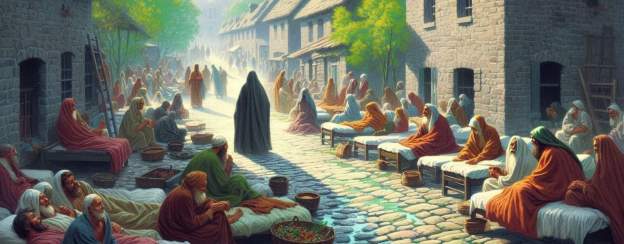
Also a multitude gathered from the surrounding cities to Jerusalem, bringing sick people and those who were tormented by unclean spirits, and they were ALL HEALED. Acts 5:26

Tradition says only Jesus could heal everyone, but this is a lie coming from a false teacher. The bible says that Christians do the same. The foundation is Acts 2:31-36. It is a God-centered focus on Jesus ruling at the right hand of the Power. It is not a man centered focus on the apostles; rather, is about Jesus and the authority to use His Name (Acts 3:6,16, 16:18). Peter said, “what I have I give to you, in Jesus Name, walk.” What Peter had, was the Name of Jesus, not the authority of an apostle. We have the same Name of Jesus today. Jesus teaches us in John chapters 14-16 that all Christians who have faith, can use His name to ask and command anything. In fact, this authority goes beyond healing and casting out demons to asking for anything you want.

Another observation is that healing is equated to casting out demons, which lines up with what Peter said in Acts 10:38. This is important because even if there is not a specific authority to cast out demons, yet, the free access and authority to heal includes any demonic oppression on the body and mind. In Isaiah 53 we are told Jesus’ substitutionary atonement includes healing. In this sense, authority over demons is a subcategory of healing. Jesus purchased with this blood our healing, which includes any harassment to our bodies or minds caused by demons.

To say healing is not on the demand of faith is to also say being freed from demonic oppression is not on the demand of faith because demonic oppression is a subcategory under healing.

Jesus did not lie. He said whosoever believes in Him will do His miracles and even greater. This is why see examples in the book of Acts, where everyone got healed, just like Jesus did it. The foundation for this happening was being baptized in the Spirit and faith in Jesus. We have the same foundation today. Jesus is still sitting at the right hand of the Power. We have the same context, the same Jesus, the same Spirit and the same millennial rule of Jesus at the Power’s right hand.

Empowered by the Spirit to Shine God’s Salvation to THE END OF THE EARTH

“And he says,
“It is trivial for you to be a servant for me,
to raise up the tribes of Jacob
and to bring back the preserved of Israel.
I will give you as a light to the nations,
to be my salvation to the end of the earth.””
(Isaiah 49:6 LEB)

Notice the last phrase, “THE END OF THE EARTH.”

This passage is directly about Jesus, God’s servant who would redeem and save His people. However, take special notice how both the apostle Paul and Jesus Christ use this passage of Scripture. They both quote it in the book of Acts, and both use it to refer to the church and not merely about Jesus. That is, Jesus through His redeemed church, will shine the Father’s salvation to the end of the earth.

First Paul.

“For so the Lord has commanded us,

‘I have placed You as a light for the Gentiles,
That You may bring salvation to THE END OF THE EARTH.’”
(Acts 13: 47 LSB)

Paul says that God commanded him and his ministry team, on the basis of Isaiah 49:6 to preach the gospel to all who will listen. How can this be, if the passage was about Jesus. The church is one body with Jesus. Jesus prays in John 17, in more than one way, that as the Father and Jesus is one, that the church be made one in Jesus. Jesus working through the Church, is Jesus working.

Next, we will see how Jesus command this passage for all disciples, and then ‘how’ this will happen.

“But [Jesus] said to them, “It is not for you to know times or seasons which the Father has set by His own authority;
but you will receive power when the Holy Spirit has come upon you; and you shall be My witnesses both in Jerusalem, and in all Judea and Samaria, and even to THE END OF THE EARTH.”
(Acts 1:7-8 LSB)

Jesus say it is by the baptism of the Holy Spirit that his followers will fulfill His command to expand His light to the end of the earth. In the next chapter, when the Baptism of the Spirit arrived, the Apostles only made up a small percentage. Thus, we are shown His baptism and command extends to all Jesus followers.

Three things. One, this gives proof that baptism of the Spirit is for all, for Jesus connects TO THE END OF THE EARTH kingdom expansion to the baptism of the Spirit.

Second, as long as this command stands, to obey God by expanding His salvation to the ends of the earth, the baptism of the Spirit still stands.

Third, without the baptism of the Spirit, one cannot obey this command to shine God’s salvation to THE END OF THE EARTH.

Matthew 4 shows something similar. Isaiah 9 is quoted about a light shining in Capernaum. Well, what happened in Matthew 4 and in Capernaum? Jesus is led by the Spirit to be tempted and filled by the Spirit for ministry. Jesus started His ministry only after He was empowered by the Spirit. Jesus said that He cast out demons by the “power of the Spirit” and not merely by His Son of God authority.  After this anointing of the Spirit for ministry, Jesus goes to Capernaum to (1) preach repentance and to (2) heal the sick. It is in this context that Isaiah is quoted by saying a “Great Light has Dawned.”

Thus, Jesus Christ “great light shining” is summed up with being empowered by the Spirit, preaching and healing the sick. Jesus’ command for His redeemed followers is the exact same thing. They are commanded to be baptized in the power of the Spirit, to preach and heal the sick.

The same thing He did, and the same way He did it.