Tag Archives: healing

The Power of God Is Here to Heal

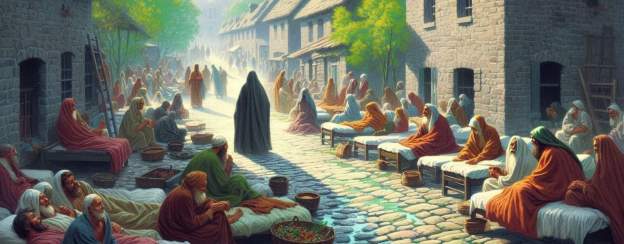
In the Gospel of Luke, we encounter a powerful and vivid scene that perfectly illustrates divine authority in action: “One day Jesus was teaching, and Pharisees and teachers of the law were sitting there. They had come from every village of Galilee and from Judea and Jerusalem. And the power of the Lord was with Jesus to heal the sick” (Luke 5:17, NIV).

This wasn’t some vague, ethereal spiritual mist floating around like early morning haze—no way. It was the tangible, manifest presence of God’s raw authority, actively enabling Jesus to confront sickness and demonic oppression head-on, without hesitation. Peter later echoes this truth powerfully in Acts, declaring how “God anointed Jesus of Nazareth with the Holy Spirit and power, and how he went around doing good and healing all who were under the power of the devil, because God was with him” (Acts 10:38, NIV). This should shake up any believer who’s settled for a powerless version of faith: this identical power, this very anointing of the Holy Spirit, isn’t sealed away in some historical archive exclusively for Jesus. Because of His finished work on the cross, His resurrection, His ascension to the right hand of Power, and His glorious outpouring of the Spirit at Pentecost, we now have direct access to that same explosive force. Yet, far too many of us live as if we’re still waiting for the spiritual UPS truck to finally arrive with our package.

Let’s unpack this thoroughly and biblically, because relying on mere empirical observations or fleshy experiences is about as useful as installing a screen door on a submarine when it comes to discerning God’s revelation. Jesus operated fully as a man under the law, born at the appointed time to redeem those who were trapped beneath it (Galatians 4:4-5). Importantly, He didn’t perform healings by tapping into His inherent divinity during His earthly ministry; instead, He did it all through the anointing of the Holy Spirit, deliberately modeling the pattern for ordinary humanity empowered by God. This is crucial—it shows us exactly how we’re meant to operate today. “If it is by the Spirit of God that I drive out demons, then the kingdom of God has come upon you,” Matthew 12:28. Jesus tell us plainly that He was casting out demons by the Spirit’s power, not His. And it is for this reason we can be like Jesus, because He has given us the same Spirit empowered ministry. This is why the tired excuse of the faithless, “well that was Jesus, or that was the apostles,” is inexcusable. Excommunicate any such people out of your life.

Jesus Himself issued this staggering promise that should ignite every believer: “Very truly I tell you, whoever believes in me will do the works I have been doing, and they will do even greater things than these, because I am going to the Father” (John 14:12, NIV). If that doesn’t feel like a direct invitation to step boldly into the same arena of supernatural power, then what would?

Consider the seamless transition from Jesus’ earthly ministry to the ongoing ministry of His church. He ascended to heaven not to retire comfortably on a cloud strumming a harp, but to actively pour out the promised Holy Spirit—the baptism specifically for power (Acts 1:4-8). This isn’t some optional premium upgrade reserved for a select spiritual elite; it’s the standard, essential equipment for every genuine disciple who’s serious about advancing God’s kingdom on earth. Peter drove this home unmistakably on the day of Pentecost: repent, be baptized in the name of Jesus Christ for the forgiveness of sins, and you will receive the gift of the Holy Spirit—this promise is for you, for your children, and for all who are far off, everyone whom the Lord our God calls to himself (Acts 2:38-39, NIV). Paul reinforces and expands this in Galatians, connecting the blessing of Abraham—which explicitly includes receiving the Spirit through faith—to us Gentiles as well, all through Christ Jesus (Galatians 3:14, NIV). We’re not talking about a faint, barely audible whisper of the Spirit here; this is rivers of living water flowing powerfully from within the believer, empowering us to heal the sick, prophesy boldly, cast out demons decisively, and turn the world upside down, just as the early church demonstrated so vividly.

Sadly, too many Christians today treat this available power like it’s some expired container of yogurt hidden in the back of the fridge—technically still there, but they’d rather not risk opening it. They’ll often hide behind a misunderstood view of God’s sovereignty, as if His absolute control somehow turns us into passive fatalists with no responsibility to act. But they conveniently overlook that the very same sovereign God commands us explicitly to eagerly desire and pursue spiritual gifts (1 Corinthians 14:1). I’ve personally observed how unbelief can cleverly masquerade as false piety or intellectual humility, effectively blocking the free flow of God’s power in our lives and ministries. Some believers are quick to claim forgiveness solely by faith without hesitation, yet when the topic shifts to healing or miracles, suddenly it becomes “only if it’s God’s will.” That’s inconsistent nonsense. If we applied that same doubtful logic to forgiveness, we’d pray in faith for forgiveness while secretly wondering if God might sovereignly choose not to grant it after all. Total faithless hypocrisy. Let’s call it what it is; a mockery of the atonement of Jesus and the sovereignty of God.

The Bible consistently frames healing as the children’s bread, an integral part of the blessing of Abraham that we inherit and claim through bold faith (Matthew 15:26-28; Galatians 3:13-14). Jesus never paused to check the Father’s current mood or get special permission before healing someone; He simply acted in compassion, systematically destroying the works of Satan because the power of the Lord was present to heal (Luke 13:16; Acts 10:38). And that power source? None other than the Holy Spirit—the same One Jesus promised and poured out upon all believers.

Think about the story of the woman with the issue of blood for twelve long years. She didn’t wait passively for a divine memorandum or scheduled appointment; she pressed through the crowd, touched the hem of Jesus’ garment in faith, and immediately power flowed out from Him to heal her completely (Luke 8:43-48). Jesus Himself felt the power go out; she felt the healing surge through her body—it was undeniably real and tangible, like a surge of spiritual electricity coursing through a live wire. That’s precisely the kind of dynamic, faith-activated encounter we’re all invited into today. We don’t beg or grovel; we believe and receive, because our judgment was fully settled at the cross, leaving only grace and empowerment ahead for God’s children (Hebrews 12:1-11). Yet, influenced by defective or cessationist theology, some make endless excuses for why the power doesn’t manifest consistently today. They’ll say things like, “Well, we just don’t see it in our experience anymore,” as if their observations are an epistemology over the promises of Scripture.  Seriously, how dumb can you be, to think knowledge comes by observation? That’s not being real; that’s unbelief and delusion.

Vincent Cheung puts it sharply when he writes (paraphrased from “Habitual Sin,” Sermonettes Vol. 6): a stubborn focus on sin or lack can dominate our thinking, but true faith shifts attention to holiness and draws continual strength from Christ’s ongoing work.

 Applying this to the realm of power, if we fixate on our perceived shortcomings or past failures instead of Christ’s finished gospel, we’ll inevitably miss out on His healing, His provision, and even the full baptism of the Holy Spirit. But for those born from above, it’s all ours for the eager asking—persistently, expectantly, just like the disciples waiting obediently in the upper room in Jerusalem. And when that power finally breaks through? Get ready for the unexpected fireworks: explosive boldness to preach the gospel fearlessly, spiritual gifts manifesting suddenly and powerfully, demons fleeing in terror, and sickness bowing in defeat. I’ve experienced this transformation in my own life—after seasons of divine discipline and refining, intentionally focusing on Jesus as the author and perfecter of our faith opened wide doors to greater measures of supernatural power. It’s not theoretical or mystical; it’s functional and practical, directly advancing the kingdom with every single healing, every accurate prophecy, every impossible mountain moved by faith.

So, why on earth would anyone settle for a version of Christianity that’s all eloquent talk and zero thunderous demonstration? The same power of God that rested upon Jesus for healing is now available upon us, accessed through faith and the baptism in the Holy Spirit. It’s not something we earn through performance; it’s something we receive freely because it’s already been accomplished by Christ and we have already be re-created by its effects. If you’re still dragging your feet or making excuses, remember: unbelief actually limited what even Jesus could do in certain places during His ministry (Mark 6:5-6). Don’t let that same unbelief limit God’s power in and through your life. Seek the baptism earnestly, stir up the gifts already within you, command sickness to leave in Jesus’ name by faith, and watch God’s power flow freely. After all, as true heirs of Abraham’s blessing, we’re not beggars scrambling for crumbs outside the gate; we’re beloved sons and daughters seated at the Father’s table, with healing, miracles, deliverance, and every good gift in plentiful supply.

The Bible doesn’t leave us in the dark about how the Holy Spirit operates in distributing His gifts. In 1 Corinthians 12, Paul explains clearly: the Spirit sovereignly distributes the manifestations as He determines, moving where He wills like the unpredictable wind. No one can twist His arm—He’s God, sovereign and free. Yet, immediately following this, Paul flips the perspective in chapter 14: “Pursue love, and earnestly desire the spiritual gifts, especially that you may prophesy” (1 Corinthians 14:1, ESV). Sovereignty doesn’t mean we passively sit on our hands waiting indefinitely; it means we pursue aggressively and eagerly, fully confident that He’s promised regular manifestations to those who hunger and seek Him. It’s reminiscent of the Father’s incredibly generous heart described in Luke 11: “If you then, though you are evil, know how to give good gifts to your children, how much more will your Father in heaven give the Holy Spirit to those who ask him!” (Luke 11:13, ESV). So ask boldly, seek persistently, knock relentlessly—and expect to receive abundantly. God’s sovereignty isn’t a roadblock or excuse for powerlessness; it’s the rock-solid guarantee that our faithful pursuit will never end in disappointment.

This dynamic will happen frequently in real ministry. The gifts are primarily for the edification and benefit of others. So whenever a genuine need arises and you respond with true compassion, the power of the Spirit will often show up right then to anoint you specifically to meet that need. It doesn’t depend on whether you’ve previously operated easily in that particular gift; you’re freshly anointed in the moment to serve those around you. Of course, some believers may find certain gifts flow more naturally or frequently for them, but many make the grave error of then limiting the Holy Spirit based on that pattern. In reality, all of us, through the same Spirit, have unrestricted access to the full spectrum of God’s power. All it takes is faith to believe, a clear need to address, and genuine compassion to motivate—and the Spirit will desire to flow through you even more eagerly than you desire it yourself.

Just as the woman with the flow of blood dramatically “felt” the healing power surge into her body, the Spirit’s power is often tangible and perceptible. When the healing anointing of the Spirit is sensed or felt by more than one person in the room, we can describe this as the manifesting presence of God has arrived to heal—or to prophesy, or to deliver. This incredible reality is available to every single one of us through the baptism in the Holy Spirit. We all need more of it, deeper immersions, fresh fillings. The needs of hurting people around us, but the power of the Spirit is greater. A combination of faith, compassion, and eagerness to seek this power will inevitably bring results. As Jesus Himself promised, if you seek, you will find (Matthew 7:7, ESV).

Paul reiterates the Spirit’s sovereignty in 1 Corinthians 12: “All these are empowered by one and the same Spirit, who apportions to each one individually as he wills” (1 Corinthians 12:11, ESV). He sovereignly distributes gifts like words of wisdom, words of knowledge, extraordinary faith, gifts of healing, working of miracles, prophecy, discerning of spirits, various kinds of tongues, and interpretation of tongues. It’s entirely His prerogative—no coercion possible. But sovereignty isn’t a restrictive cage; it’s a powerful catapult for those who pursue. Paul doesn’t instruct us to “sit tight and maybe you’ll get something someday.” Instead, he commands: “Earnestly desire the higher gifts” (1 Corinthians 12:31, ESV), and then intensifies the call in chapter 14 to pursue them all actively, especially prophecy. God’s sovereignty has beautifully rigged the system so that sincere seekers consistently hit the jackpot—regular, reliable manifestations of power rather than rare flukes. So if you currently operate more easily in one or two gifts, ok great—keep going! But press in further, and God will expand your capacity to flow in more gifts as you seek Him faithfully. A person’s perceived idea that they are meant to operate in one particular gift, is based only their fleshing induction rather than what the scripture makes available.

Sovereignty isn’t stingy or withholding—it’s extravagantly generous, even breaking through our doubts to deliver miracles when necessary. But why settle for occasional overrides when we can align our hearts with His will and experience constant flow? Active seeking aligns us perfectly, turning “sometimes” into “constant” in practice. The Spirit’s sovereignty assures us that when we chase Him wholeheartedly, He will pour out without measure. As Cheung further notes in “Good Gifts from the Father,” persistently asking for the Holy Spirit unlocks comprehensive power for preaching, healing, casting out demons—everything the kingdom requires, all in one glorious package (Vincent Cheung, 2016). Seek diligently, and the sovereign Spirit will manifest regularly.

Consider the Roman centurion in Matthew 8— he perfectly understood authority and sovereignty, confidently declaring that Jesus could simply speak a command over sickness just as he commanded soldiers. Jesus marveled publicly: “Truly I tell you, I have not found anyone in Israel with such great faith” (Matthew 8:10, ESV). Grasping God’s sovereignty didn’t make the centurion passive or hesitant—it fueled his bold, expectant request. Sickness is ultimately from the devil; it glorifies Satan by sidelining believers and stalling kingdom advance. The Holy Spirit shows up decisively to demolish that oppression, anointing ordinary believers like you and me to heal in the moment—no fancy resume or prior track record required.

Compassion is key.

This anointing will often happen precisely because the gifts are for building up and blessing others. When a real need suddenly appears on the scene, the Spirit provides spot-anointing, equipping you right then and there. You don’t need advanced degrees in spiritual gifts or years of specialized experience; all that’s required is some measure of faith to receive the anointing and genuine compassion to minister to the hurting person.

Sickness originates from the devil; it’s part of the curse of the law that Jesus redeemed us from, and He began demolishing it systematically in His ministry while commanding all His disciples to continue the battle without compromise. We are explicitly commanded to exercise faith for healing—both for ourselves and in compassion for others. Chase prophecy like your spiritual life depends on it—because in many ways, it does. Refusing to pursue prophecy is essentially refusing to pursue God Himself more deeply. Remember Paul’s charge to Timothy: fan into flame the gift of God within you, hold fast to the prophecies spoken over you, and fight the good fight of faith with prophetic power (1 Timothy 1:18; 2 Timothy 1:6-7).  Having compassion and allowing the Spirit to flow through you to help heal, will set a person free from bondage. A prophecy will give them something to fan their faith for a lifetime. And you can be the person to minister this. Young, old, male or female, any can do it. Every power released can save a life, set free and build up for new strength.

In the end, this supernatural power is designed not only for God’s ultimate glory but also for our joy and glory, which then glorifies Him. We do this by faithfully mirroring Jesus’ own ministry on earth. It’s like God’s delightful inside joke: when we step out and wield His power by faith, we get flooded with joy in the process, and everybody wins eternally. So chase Him with everything you’ve got, and watch the power chase right back. Believe expectantly, and you’ll see the sick healed, the oppressed gloriously freed, captives released—just as He did then and empowers us to do now. The question isn’t whether the power is still available today; the real question is whether we’ll grab it with both hands and run with it—like it’s the greatest treasure in the universe. Because, spoiler alert: it is.

Extra Baskets Left Over #4

*70

I remember a guest minister telling a church I was visiting, “Everybody in here can have an airplane.” He heard the people sigh in unbelief, so he said, “Let me ask you this. Does everybody in here have a car?” Most people nodded.

Then he said, “If you can have a car, why can’t you have an airplane?”

Someone responded, “Because we don’t need an airplane.”

He said, “You don’t need a car. You could get a ride every day or catch public transportation.”

His point was that the enemy takes over people’s minds and causes us to think that some things are too lavish or too expensive for us to have. We get into this mindset that says, “Too much wealth and nice things promote avarice or opulence.” But in God’s way of thinking, it’s not enough! God wants you to live on His level. Some people think that a Rolls-Royce is more valuable than they are, so they never see themselves owning one. The truth is that we are far more valuable than an automobile or an airplane. No amount of money could redeem us from sin and death. God had to give the life of His only begotten Son, Jesus. That is a dramatic statement of how valuable your life is.

God said in Isaiah 55:8, “For my thoughts are not your thoughts, neither are your ways my ways, saith the lord.” As I’ve mentioned, the Bible promises, “As he [a man] thinketh in his heart, so is he” (Prov. 23:7). We have to allow God to pull up our level of thinking, as He was doing with me and with our congregation in our new location. Even Jesus’ first miracle in the Bible was a miracle of luxury (turning water into fine wine). God has the very best set aside for us. It is time for the church to move from the place of scarcity and “just enough” into our promised land of more than enough.

A Wealthy Church

Again, the church should be the wealthiest institution, and God’s people should be the wealthiest people, on the face of the earth. Our lifestyles should stagger the imagination of the world. Why? Because we have a larger responsibility than any other people to evangelize the world and complete the assignment God gave [us].

Bill Winston.
Revelation of Royalty. 2021. p. 159 160

——–

Vincent Cheung does a great job in exposing the absolute stupidity in the idea of “need” versus a “want” regarding if our prayers qualify for a yes or no. For example, do you need to live through this day? Really? You could just die and go to heaven. Thus, you don’t really need to even breathe, or need food, clothes or a bed. Such a divide would reduce into a logical absurdity. What you need is what you want, and there is no way around this without jumping into insanity.  

*71  Fountain of Salvation.

In the ultimate sense God is the fountain of salvation. Jesus’ finished atonement creates a fountain of benefits for us to drink from. With this being established, we can affirm there is a fountain of salvation within us.

In Isaiah 12 we are told God is the fountain of salvation and we drink from Him. However, Jesus in John 4:14 furthers this teaching. If we drinks the water, that is salvation from Jesus, this water becomes a fountain of eternal life in them. This fountain of life is not just springing out of God, so that I go to God to draw some out, now it is in “me,” and I draw it from me. Jesus adds more to this by saying in John7:38-39, “Whoever believes in me, as Scripture has said, rivers of living water will flow from within them.” By this he meant the Spirit.” We learn in Acts chapter 1-2 and 19:2-5, that “the Spirit” is not referring to being born-again, but the baptism of Spirit for speaking in tongues, power and miracles. 

By faith we drink God’s fountain of salvation, and then a fountain of eternal life and Spiritual power fountains out of us. We are not a dry place that a demon can inhabit, but a fountain of life and power. We pray in tongues and the Spirit fountains power in our souls, by edifying us and often leading to interpretations and other spiritual powers. When we do this we are drawing from the fountain of salvation from within us. This is the same with forgiveness and being imputed with God’s righteousness. God did not forgive and credit His righteousness to Himself, but us. I am blameless and I am righteous. It is mine. It is my definition and identity. The same for eternal life and spiritual power springing out of myself. It is me. I am this fountain of salvation now. It is my definition and identity.

In that day you will sing:
    “I will praise you, O Lord!
You were angry with me, but not any more.
    Now you comfort me.
2 See, God has come to save me.
    I will trust in him and not be afraid.
The Lord God is my strength and my song;
    he has given me victory.”

3 With joy you will drink deeply
    from the fountain of salvation!
(Isaiah 12:1-3 NLT)

14 but whoever drinks of the water that I shall give him will never thirst. But the water that I shall give him will become in him a fountain of water springing up into everlasting life.”
(John 4:14 NKJV)

*72  I Would Have Given You Even More

“I gave your master’s house to you, and your master’s wives into your arms. I gave you all Israel and Judah. And if all this had been too little, I would have given you even more.”
2 Samuel 12:8 NIV

Look at how giving God is with material things. It is good to ask for such things and God is glad to give. You cannot ask for too much prosperity and happiness in relationships, if you are a Christian. It is not wrong to even ask for an entire nation. God wants to enrich and those who oppose this are against God, His nature and promises.

God’s goodness leads us to repentance. His love constrains us to forsake evil.

The fear of the Lord is the beginning of wisdom and will keep you on the path of wisdom. However, mature wisdom is receiving the good gifts from God.

.. And if all this had been too little, I would have given you even more…

What is amazing about this, is the particular focus on sex. David is being confronted for his sin of adultery. God gave him multiple wives for sex, and then God says, if you wanted even more (sex), I would have given it to you. Of course, today we don’t have multiply wives but a request for good and much sex in marriage is something God wants to give.

*73 falsifiable

In the realm of science, a falsifiable claim is one that can be observed, tested and has the potential to be disproven. 

Some fools claim that we ought to use the standard or epistemology of “falsifiable” as a way to discover biblical truth or Christian truth.  However, is this claim itself falsifiable? But I digress, so that I can address some of the main problems of this standard.

First, the bible does not teach the doctrine that we discover biblical truths by observation and testing it with the potential that it can be disproven. Thus, this standard is an anti-biblical standard. If one uses this to discover truth, then this standard is the person’s first principle of knowledge and not the scripture. They are using something more foundational than the bible and are using it to evaluate the scripture. Also, this presupposes empiricism and observation. But these are both logical fallacies.

Second. The law of contradiction is not falsifiable. You cannot observe it and test it with the potential of it being disproven, because you must use it to deny it. It is self-authenticating in this way. Thus, there is at least one thing that is not falsifiable, and so how many other things are not falsifiable? Thus, the standard of falsifiable is not universal to all knowledge, and this would lead to skepticism if used as a starting point for knowledge or a test for knowledge.

Third. The bible is not falsifiable because you must use the bible to deny the bible. There is no potential for it to be is disprove. It is self-authenticating. How can the bible teach the doctrine of falsifiable as a standard for finding truth, when the bible is not falsifiable? 

Thus, those who use this anti-biblical standard to find truth are to be mocked and dismissed. They do not know what the bible teaches and the do not understand what logic is. Do not let such people be your teachers.

*74

You can’t out extreme Jesus with faith. His teaching is too extreme. Nothing you say about faith can overreach Jesus’ extreme faith doctrine. There is no risk in taking it too far.

Faith for anything anytime anywhere

*75

Jesus who asked the Samaritan woman for a some water, because He was tired and thirsty. And yet, Jesus turns around and says “if you know Who I was and the gift I have, you would ask Me and I would give too.” What a lavish giving our God is. His mission was to serve man like a waiter. Even when He was tired and thirsty He still homed-in on His mission to serve man.

His statement had two parts. The first was “who Jesus was,” and the second was about a “gift” that He was willing to give.  Jesus says He has a gift to give, and so He instructs with the obvious conclusion. “Ask and I will give to you.” The scene started with the woman worried about serving Jesus with some water to drink, but Jesus made the point that He was there to serve and give.

This has some similar instruction as Martha and Marry. We learn it is more blessed to receive than to give, with our relationship with God. Jesus says He has a gift. We do not need to worry  about if it is God will to give or not. Jesus say He has a gift, tells us to ask for it and He will give it.  This is the type of God we have. Jesus says if you have seen Me, you have seen the Father. Our prayers are directed to this type of lavish giving God.

*76  God Is Our Provider Again

In the garden, God was Adam’s source for provision. When Adam sinned God’s curse included this: “Adam, I will not provide for you. You will now provide for yourself with toil.”

In Abraham, God’s gospel included providing abundance for man again. God Himself provides wealth. God becomes man’s rich supply. Jesus’ atonement gives us the blessing of Abraham.

God called creation good, and in this context, God was Adam’s provider.  God provided Adam with a rich supply of material food, goods and land.  Adam did not work to provide for himself, God provided for him. God was humanity’s bread winner.

When Adam sinned, this changed. God cursed Adam with death. This curse included God withdrawing from the position of being Adam’s provider. God told Adam that he will work and with hard toil provide his own supply. What God called good, was now cursed.

This idea might seem strange for some but working to provide for yourself was introduced as a curse. We are always to work, because we are created and commanded by God to do so, but the idea to work in order provide for ourselves was not part of creation. Adam worked in the sense of administering the Garden of Eden, but he did not work to earn his provision.

In God’s promise to Abraham, God begins to restore the natural order of things, by promising to give favor, increase and wealth to him. God begins to be the provider for His chosen ones.  For example, Isaac worked by planting in the waste land, but God gave it a supernatural 100-fold increase, despite the lack of water. This increased Isaac’s wealth.  The king gave Abraham a large sum of money for temporally taking Sarah, thinking she was only his sister. God provided wealth to Abraham, without Abraham working for it. God was Abraham’s bread winner. Abraham believed God would do these good things for him and God declared him righteous.

Some make the mistake in only applying one narrow aspect of the gospel to forgiveness of sin. Jesus gave us Abraham’s blessing, through His atonement. The gospel puts God back in the position of being our bread winner. As in all the blessings of the gospel, to fully enjoy them you must have in faith to receive them. Therefore, we are not to look to our employer as the “source” of our supply and ability to get money. Sadly, many do exactly this and are practical atheists this part of their life and mind.  Knowing the gospel of Abraham gives us the power and favor to gain wealth, even wealth transfers and know Jesus bore our poverty and already gave us His wealth, our eyes ought to be focused on God as our source.

Because our employers are limited, if we see them as our source of money, then our lives will be constrained by their limitations.  However, if we turn to God who has unlimited wealth and power, our ability to gain wealth and have doors opened to us will be as measureless as God’s ability.  God has good things to give, and there is much work to be done in expanding the kingdom of God. A human focus for our provision will greatly diminish our ability to fulfill God’s goals for our lives.

God has become our provider again through Jesus Christ. We must take full advantage of this for our own lives, and to expand the kingdom. We ought to focus on God being our rich provider.

*77

How did sickness come into you? How did it come into the world?

Sickness is not a natural consequence of creation. Adam did not believe God, rather, he believed a lie. He operated in unbelief. God did what He said. He cursed Adam and Eve and creation with death.

Here is the main point. Sickness came by words. Sickness came when God spoke a curse against creation. Sickness is destroyed in the same way, by words. If you look to human means to heal, then human means is all you will be rewarded with, however small it is. By Jesus’ stripes we were healed. This is the foundation; however, we are healed by opening our mouths and commanding the sickness to leave. God spoke the curse of sickness into the world, and we speak to make it leave. Jesus said, “You heal the sick.” You do it. This is why Peter, even after being baptized in the Spirit, spoke words to heal the crippled man in Acts 3. “What I have, I give. In the name of Jesus Christ, “walk.””

Healing will not happen by waiting for “God’s Will.” Healing will not happen by waiting for God to open His mouth and tell the sickness to leave. The reason is simple. Jesus commanded us to open our mouths and do it ourselves. God’s not going to do something He commanded you to do and speak. God’s command for us to do it, is God’s will and decree.

*78

When God called Samson, He needed a person with faith to Judge with superman power, not integrity. We are commanded to strive for integrity, and so we are not diminishing this command. Not only is holiness obedience, it has many blessings attached to it. Having practical righteousness and integrity will make the job easier, with less problems and make it more enjoyable. And Yet, when the one thing that is needed is faith for superman power to kill thousands of men, tear down and carry off city gates and push stone pillars like they were a toothpick, integrity will not accomplish it. It is a different category.

The man with the highest integrity but not enough faith to work superman power is a useless man when God needs faith for miracles.

Jesus said to not begin ministry until the church was endowed with supernatural power by the baptism of the Spirit. Jesus commanded us to heal the sick, cast out demons and throw mountains into the sea. When the situation calls for faith and power, there is no substitute.

Some people say Samson is about not letting your sexual passions overtake you. Even if this can be extracted it is only indirectly. It is not what the story of Samson teaches. It teaches that when power is needed, then only faith to work superman power will get the job done. This is why Samson is a hero of faith.

Some say if you lack integrity you are disqualified. This is true as far as it goes, but it is also misleading. Samson and David, with their big sins, were not disqualified from the gifts and callings on their lives. Even Peter, after playing the harlot of a false teacher for a short time, was not disqualified from his gifts and calling.  And yet, consider the opposite. If any of these men never had the faith to do the miracles needed, then they were disqualified from the start. If Ruth did not have the faith to go to the king and rescue her people, then Mordecai said God would disqualify her and her family.

When God needs miracle power, there is no substitute.

*79

“What do you mean, ‘If I can’?” Jesus asked.

“Anything is possible if a person believes.” (Mark 9:23 NLT)

The father responded in the typical way religious elites and tradition does. “If it is Your Will, and if you Can, Oh Jesus please help.” Jesus was not happy with this reply. Think about that. He was not happy when man put the outcome of a healing on Him, or God. He said, “If you are able to believe, then your boy will be healed.”

Elites put the outcome on God’s power and if it is His will, but Jesus teaches the 180 degree contradiction to this. Jesus puts the responsibility and outcome on a person’s faith

*80

Unbelief is the original matrix. Unbelief is the only real matrix.

Johnny, “Jesus heal me please, if it is your will.

Jesus response, “if it is your will and you have faith then you do it; because I won’t do it. Command the sickness to leave.”

Johnny, “No, its up to You to heal me, if it’s your will.”

The matrix has Johnny enslaved to Satan and to man-centeredness. Johnny is not able to obey Jesus. He can’t hear and believe Jesus’ words.

*81 Jesus Was the Real Victim in this Story

 He said to his disciples, “Why are you so afraid? Do you still have no faith?” (Mark 4:40 NIV)

Jesus told him, “Don’t be afraid; just believe.” (Mark 5:36 NIV)

The saying is true, you are either in faith or fear. Jesus puts these as opposites. He says, “only believe,” with no mixture of fear. He says in Mark 4 that the disciples had fear and zero faith. They don’t mix well. If you have fear in your heart about a sickness, then you realize you don’t have faith. This is how it works.

(Momo, I mean) Jesus was the real victim in this story. He was asleep with His head on a cushion and was woken up for something He expected the disciples to deal with, without disturbing Him. I am not trying to be funny here. It is no joke being woken up from a good nap from something so minor as a deadly storm, which only a little faith could destroy and remove.

The prayers of many people are like the disciples in this story. They pray as if Jesus is teaching that He likes it, if we cry out in fear for His help over something like deadly weather or sickness. People repeat the disciples fearful cry as a model for prayer, when Jesus rebukes it as how not to pray. Jesus was upset with their fearful cries for help. Think about that. Because God is merciful He might answer some fearfully cries of unbelief, but don’t expect it.

The point that made it a bad prayer was no faith. It is ok to ask for Jesus help if you have faith, but here is Jesus’ point. If they had faith, then they did not need to ask for Jesus’ help. That’s how you know you have faith.

 We do not have every lesson Jesus told the disciples at this point, but Jesus’ reaction gives us enough details that He expected them to use their faith, and deal with the situation, without waking Him up.

This also brings up the issue of where the storm came from. Of course in the ultimate level God causes all things, but the bible mostly deals with the human level. Peter in Acts 10:38 said it was not God, but Satan who was victimizing all the people in Israel with sickness and diseases. When Jesus was casting out diseases He was fighting demons, not God, because the sicknesses came from demons not God. When you have an insider relationship with God He relates to you in blessings. The contract in Jesus’ blood stipulates that God only relates to us in blessings (it could include discipline, but not curses). Thus, whether it is a sickness, or a deadly storm, in human level, it was not from God. When you rebuke it, you are not rebuking God but demons and the curse. Jesus teaches us to not tell God about our mountains, or sickness or deadly storm, but to use our faith and we command it to move and die. Jesus has given us the power and authority to do it, and expects us to do something. Don’t wake Him up and tell Him about a storm, when you have the Staff of God in your mouth. Open your mouth. You divide it. You heal it. You cast it out. You calm it.

*82  Jesus Did Not Use Jesus Power

Jesus did ministry as a man born under the law. After His temptation He was filled with the Spirit, and then He started His ministry. Thus, did He cast out demons by His Jesus power? No. He cast out demons by the Spirit of God, not the Son of God power. Jesus said, “if I cast out demons by the Spirit of God, then the kingdom has come upon you.” Moving past the implications that what brings in God’s kingdom is casting out demons and healing the sick, let us just think about Jesus’ point about the Spirit. He cast out demons by the Spirit.

Another example that this power was the Spirit and not His, is how the lady, with the flow blood, took power away from Jesus, without Jesus knowing who it was. The power of the Spirit upon Jesus, acted like a spiritual law, in that anyone with faith who touched Jesus, had the Spirit’s power automatically flow into them for healing. The law is simple. The Spirit was the electricity, and faith is like flipping on a light switch.

 Referring His miracles, Jesus said the Father does the works. In John 14:10-12 the PTP does a good paraphrase translation saying, “Don’t you believe that the Father is living in me and that I am living in the Father? Even my words are not my own but come from my Father, for he lives in me and performs his miracles of power through me.”

The big idea is simple. When Jesus as casting out demons He did it by power of the Spirit. When He healed, did various miracles, such as commanding the storm to calm, the power that caused this to happened was worked by the Father, and not by the Son. Jesus operated as a man. He was given authority by the Father to heal and calm storms, but the power and authority came by the Spirit and the Father.

We do the same. We have the same authority and command. When Jesus told us to speak to our mountains and command them to move, when Jesus told us to heal the sick and cast out demons, He gave us His authority to do it and put His power in us.  Jesus gave us authority to use He name to ask and command whatever we want. This power is God’s power, but it rests in us. When we command a mountain to move, it obeys us, but the power is God’s. God has up His power in us like a flowing river, and has stamped His authority on our tongues. However, God will not move our jaws for us. We must chose to open our months and use the authority and power He has gifted us.

Jesus is now sitting at the right hand of the Power. He uses His own power now. But on earth He did not use His own power. How successful was Jesus miracle working ministry when the power was not His but the Father’s and the Spirit? It was 100%, with the exception of unbelief, such as in His hometown. Some might say, “well it’s not my power, and so it might not happen.” This is nonsense. Jesus never failed to work a miracle, even though it was not His power. He did not fail, because He trusted God and was given the authority to command and work miracles. We are in the same ministry. We are given the same authority. We are in the same position as Jesus.  The only difference is that Jesus said you will do even greater miracles if you believe in Him.

Rejoice, your success for miracles is guaranteed. Open your mouth and command something.

*83   Eschatology In A Nutshell

If someone sums up eschatology without baptism of the Spirit for power, they have no idea what they are talking about.

Acts 1:6-8 NIV. “ Then they gathered around him and asked him, “Lord, are you at this time going to restore the kingdom to Israel?” But you will receive power when the Holy Spirit comes on you; and you will be my witnesses… to the ends of the earth.”

The context is about eschatology. Jesus has sat down on his eternal throne and is ruling. The disciples did what most do, they made eschatology about politics. However, Jesus rebukes them and says eschatology is about being baptized in the Spirit for power and miracles.

The important part to note is that in eschatology the followers made it political and Jesus made it about miracles and the Spirit for power. By making it about politics they made it about man. Religious elites make the baptism of Power belong only to the apostles, and thus they still make it about man. They use religious words, but the result is a man-centred doctrine in what it means to be God-centred. In Peter’s sermon on Pentecost, he made baptism of power about Jesus and His eschatology position, sitting at the right hand of the Power. It had nothing to do with the apostles, thus, the baptism of power still remains, because Jesus still remains at the right hand of the Power. The Power was faithful to His promise to give Jesus the authority to pour out power.

Jesus is still faithful in pouring out power on “all whom the Power calls to Himself,” (Acts 2:39).  The Baptism of power is connected to God predestination of the elect. Peter’s point is not directly about repentance, but baptism of the Spirit and to this Peter directly connects, as many as God calls to Himself. This is why Peter says the gentiles were granted salvation and eternal life when He witnessed them speaking in tongues (Acts 10:44-47). In His Pentecost sermon Peter already said that being baptised in the Spirit is about God calling His predestined ones to Himself. Thus, when Peter saw the gentiles speaking in tongues, and then he told the other disciples, they concluded God elected them to eternal life (11:15-18).  In fact, Peter said because the Spirit was given to them, it was proof they should be baptised in water. And let us not forget that water baptism is a sign that they have died and were raised in new life with Jesus. Speaking tongues was proof they were elected to eternal life.

Peter’s argument for the baptism of power is based on two points. One is the Father being faithful to His promise (2:33) to Jesus, so that Jesus has the authority to pour out power. The second part of the argument is that Jesus is sitting on His throne, at the right hand of the Power (2:31-36). These are the 2 relevant factors, in Peter’s argument, for the conditions in pouring out the baptism of power.  Peter, who is an Apostle, gives no scriptural quotes or logical connections, that the baptism of the Spirit is connected to the apostles. Zero.  What do the religious elites know that Peter did not?

In addition to the Spirit baptism of power, there is the issue of authority. Jesus gave the disciples the authority to heal the sick. In fact, it was a command, because He said, you “heal the sick,” and “cast out demons,” and “preach the gospel.” Then Jesus did the same with 72 others, and so no one can logically say it was only for the apostles. To further insure this, Peter in Acts 3, after commanding a healing, says it was by “faith in Jesus,” and not by the authority of an apostle.  Faith in Jesus is what causes a person to receive salvation, and it is the same faith that commands sickness to leave. It is heavily God-centred. It is not man-centred on the apostles. It is centred on Jesus and His position of authority, while He is sitting at the Father’s right hand.

The next major event after the baptism of the Spirit Acts 3-4, shows how Jesus’ plan for power is how to apply His eschatology.

After being released from prison the Christians got together and prayed. They quoted Psalms 2, a militaristic Psalm, and asked that God would apply this to their situation of government opposition, by healing the sick, miracles and boldness to preach the gospel. God responded back with a resounding Yes.

This is how they applied eschatology. This is how they applied the doctrine that Jesus is on His eternal Throne and rules forever. This is how they applied the doctrine that King Jesus gave them power to advance His Kingdom when they face opposition, even when their enemies use the government to persecute them.

They mentioned 3 things, healing, miracles and bold preaching, in context of eschatology advancement under King Jesus. Many only preach (and they are not even good at that), which is only 1/3rd of the disciples applied eschatology. It is no surprise they fail at kingdom advancement.

*84 Under the Boots of Observation and Emotions

Yank the Redwood of observation out of your own eye before you try to remove the splinter of observation from the eyes of the Word of Faith teachers.

I heard Mark Driscol start a series of sermons about faith and the Spirit. There is an occasional quotable statement, when he slams cessationism, but he is not in a position to criticize them, because Mark rejects the bible with empiricism, observation and emotions just as much as the cessationist do.  The only positive aspect of Mark’s dual epistemology is that he tells you up front he is using observation or emotions as a higher authority over scripture. The cessationists, even if their attempts are bad, try to hide dual epistemologies. They will use the idea of God’s sovereign providence and history, but in reality they are using the logic of induction and relying on the epistemology of empiricism and observation. They use God’s sovereignty, as odd as it sounds, to hide their adultery with human starting points.

In attacking the Word of Faith, Mark says they are wrong because Jesus taught x, y and z from the bible. This is what we would expect if the bible is one’s only starting point for knowledge.  No, what Mark said, was that they are wrong because to tell someone they did not get healed, because they lacked faith, is cruel and hurts people’s emotions. When did emotions become an authority over scripture?  Because you observe x, therefore the bible is wrong. When did this become a standard way to understand the bible? The scripture tells us public knowledge only comes to us by the Scripture, however, our observations can be mistaken, such as in the case with Moab and the blood water. Thus using observation to gain knowledge leads to skepticism, but this leads to denying the law of contradiction, which is self-refuting nonsense. It means observation is a false starting point of knowledge that does not exist.

The other thing Mark said was that Acts was over several years, and so all the miracles you see, really isn’t that many miracles, and so we should not except to see constant miracles. This is a very careless reading of scripture. It is said many miracles were done by the apostles and followers, so that entire crowds were healed, things like napkins were used to healed and they even tried to get healed off Peter’s shadow. Acts was a drive by summary of the miracles, because there was too much to record. Acts starts off with Jesus commanding everyone to get endowed with power to perform miracles, it is connected to Joel’s prophecy that says everyone will be doing miracles.   

Again, what is oddly missing is the Word of Faith’s main passages of Jesus’ extreme faith doctrine. For more see, Vincent Cheung, The Extreme Faith Teacher. These are the main basis for their doctrine of faith. Unless you can bring up those passages and say Jesus was wrong, then the faith teachers are correct for their faith doctrines.

It is wall punching hilarious to see so-called Christians champion themselves as “the bible is my final authority,” and “I am a bible believer,” but every time they find a doctrine they don’t like, they shove the bible under the boots of their human observation and emotions.

*85

No longer have consciousness of sins.” Heb 10:2

 “Go boldly to the throne of grace, that you may obtain mercy and find grace to help you.” Heb. 4:16

Show me a person who is not conscious of their sin, and I will show you a person who “boldly goes to the throne of grace, that they may obtain mercy and find grace to be helped.”

To “boldly” enter God’s throne room, means you are walking with your head held high. Without knocking, you put your hands on the royal doors to God’s throne room, you push them open and march in like you belong there. With other heavenly host, standing to the side, who don’t have the same access that you do, watching you. Then you say, “I need this help,” or “want this thing.” And God says, “You got it. Your faith has helped you.”

There is no way you can do this if you are “conscious” or mindful of your sins. It will not happen. There is no way a sinner can demand help from a holy and righteous God, who demands perfection.  But a righteous person, and person who has a blood contract with God that allows them to ask and receive, is able to demand help and grace.  A person who is mindful of their sins, is a person who does not boldly go to the throne of grace. And if they do ask, they end up not asking, but begging like an outsider, because they are mindful they are indeed a sinful outsider.

What is on repeat in your mind? When you are afraid? When you hurt? When you go to sleep. Are you mindful how righteous you are? Are you mindful you have a contract with God to make demands on Him? Or are you mindful how sinful and pathetic you are?

*86 Two Contracts (Grace and Works)

There are two types of covenants. or contracts God made. One is a contract of blessings based on the law, and but the first contract is based on a one sided promise of God to freely bless.

As Paul says in Galatians, the blessings God gave to Abraham was a one-sided “promise” (Abraham was a sleep) to bless. The law was a contract based on performance. Paul again makes the distinction in Romans 4 that the “promise” was based upon grace, so that it is secured by his chosen ones by faith. In this sense, the law is not based on faith, in and of itself. Because Abraham was first, it cannot be replaced by the works for blessings. Thus, the law (before Jesus) could only be lived by faith, in light of doing it in the hope of the blessings promised to Abraham.

As Vincent pointed out in “The Edge of Glory,” because Abraham was sleeping and it was a one-sided promise of God to do good things, can we still call it a contract? We can call it a covenant, but only in a very lose way. In fact, Paul in Galatians calls it a covenant, chapter 4 when making a contrast to works, but on the other hand, Paul almost exclusively calls what was given to Abraham a promise and grace, rather than a covenant. Even the writer of Hebrews does the same thing in chapter 5.

The law in Jesus was fulfilled and as Paul says it, nailed to the cross, or in modern terms, it was stamped “fulfilled,” filed away in the archive section of God’s documents. Abraham’s promise was not “built” upon through Jesus’ atonement or by His new contract; rather, His atonement, “He became a curse for us so that we have the blessing of Abraham,” ensures we get the promised blessing of Abraham. This is like the bible saying “Jacob shall possess their possessions.” Jesus’ atonement ensures that we possess our Abrahamic processions.

Now in addition the all the goodies promised to Abraham, the very first one-sided promise was to Adam. It was a promise of deliverance. We learn more about what that means, but it centered on forgiveness and righteousness. The atonement of Jesus accomplished both of these promises. It accomplished the promised deliverance and salvation through the gift of righteousness, and it ensures we inherit Abraham’s blessing.

Thus, these two promises are accomplished in Jesus or guaranteed as an ever present action to us. But the covenant of the law and works is not included in this. Only what can be received freely by grace is combined in Jesus’ finished atonement as a contract. It is a contract of grace, not our performance. Because Jesus was our cruse and fulfilled the law, God promises, or makes a contract with us that He will never remember our sins. We receive this promise as grace in faith. The law as a performance, was performed by Jesus for us in our place, and so it was totally finished. It demanded and it was satisfied. In the most loses sense, Jesus performs the work of not remembering our sins, but that is a negative or indirect sense, because the work itself is done. However, the blessing of Abraham is not finished and nailed to the cross or filed away in a drawer. The gift of righteousness and Abraham’s promise, is an everlasting and ever present thought and action of God upon His children. God is directly and always performing this promised love and goodness on us.

*87 Is This the Year of My Blessings?

Is this the year of triple blessing?

Is this the year of rest and acceleration?

Is this the year of restoration?

Is this the year of 7 healings?

Is this the year of double prosperity?

The answer to this is, yes; however, it is only in the sense that every year these already apply, and they already belong to the Christian.

The Christian has inherited the blessing of Abraham, every single year, every day, every minute. They are under the blessing of Abraham by the finished atonement of Jesus Christ. With faith in this truth, any Christian can make it a 100x blessing year, for even that is not enough to describe how much God blessed Abraham in prosperity, fame, military victory, health and favor. Paul argues the blessings (or as Paul calls it the “gospel”) of Abraham means the Spirit and miracles. We get more than 3 miracles. The only limit is your needs, wants and faith to receive them.

Some ministries are looking for hype and extra offerings, but there is nothing wrong for a pastor asking God and looking for a “theme of the year.” If it is a pastor, and God did answer their prayer, then such a theme is for the “members” of their local church and not for everyone else. The question now is this, is it wrong for someone to claim this for themselves if they are not part of this local church? No.

But remember, although, because of our weak faith, having a theme and focus might be helpful to a certain extent, we must strive for maturity. By faith in God’s promises all these declarations and themes are yours by right, through Jesus Christ. They are yours through Jesus’ finished work for you. They already belong to you. They are already your identity and definition. You do not need another mediator, or pastor, or ministry to make your definition in Jesus more real. You do not need a mediator to bring you directly to God. You do not need a pastor to bring you to your blessings given to you by Jesus. You already have direct and immediate access to God in Jesus. The blessing of Abraham is already yours. God gave it to you in Jesus and no man can mediate this blessing from God to you. You already own it, and you have access to it by faith. Let no one replace, the direct access you have with God and with your blessing of Abraham, with any man or thing.

Rejoice. Hold your head up high. With faith, all these good things are yours for the taking. With faith, every year is the blessing of Abraham that causes you to reap 100-fold.

*88 He Gives New Strength

He gives strength to the weary
and increases the power of the weak
.”
 Isaiah 40:29 (NIV)


Even after being born from above, we can still get weary and weak. This isn’t because God withholds these things from us, leading us to beg for strength that isn’t part of our DNA or inheritance. Through Jesus’ finished atonement, we already have power and strength.

Because of our imperfections and immaturity, we can become weary, making it right to ask for new strength. God wants to supply our needs. It is His delight to hear our cries for help. God loves us and has promised to help, but we ask from a position of victory. Strength is ours through Jesus’ atonement; it’s our definition. Paul doesn’t say to ask for God’s armour or ask to walk in His power; he says to put on the armour because you already have access to it, and to walk in the power because you already possess it. You already have God’s old strength, but you must take responsibility to put it on and use it. Ask for God’s help, but also use the power God has already given you.

Satan wants you to fight for new strength on the wrong hill, making it seem like you must ask and beg for it. He wants to put new strength behind a paywall of, striving, doing and begging. He wants you to view your identity as lacking this strength, pushing you to strive from a position of not having. This is the wrong hill to fight on. This is a lie from the pits of hell.

God’s shield of protection and favor is already surrounding you; the mighty sword of the Spirit (praying in tongues) is already in your hand. You have power; release it. The authority to use Jesus’ name for anything is already branded on your tongue. Open your mouth and use that authority.

*89 Jesus’ New Deal

In the story of Job, Satan brought all the sickness, destruction, and troubles. Jesus says the devil comes to steal, kill, and destroy. Peter in Acts 10:38 states that all the people Jesus healed (thousands) were victimized by Satan. Consider how Peter assumes these sicknesses were caused by Satan, not just from Adam’s fall. Jesus also said Satan bound a “daughter of Abraham” for 18 years—Satan, not God, bound one of God’s daughters.

Back to Job: Job’s understanding of God improved not because of his suffering, but because God revealed truth to him. God had to step in and drop some knowledge bombs. Satan’s torture? Yeah, it didn’t teach Job jack; it just made him listen up when God finally spoke. Experience is the worst teacher, and God’s word is only teacher.

In the new deal with Jesus, we’re supposed to get the good stuff, healing, and blessings, not Satan’s new green deal. We’re God’s kids now, not his punching bags. In our Contract with Jesus, God promises only good. We’re promised insider status as children. God might give you a slap on the wrist, but he’s not out here causing your misery. He teaches by writing His laws on our hearts and the Spirit opening our minds to His truth. Even when Paul throws some dude to Satan, it’s Satan doing the dirty work, not God. God promises “only good” in the Contract. If Jesus administers suffering, He would be a minister of death, diseases and pain. That’s Satan’s priesthood, not Jesus’.

This is the problem with those who focus on suffering and sickness. You’re saying Satan’s your professor in the school of hard knocks. Your knowledge? It’s just from getting your butt kicked, not from the holy book. And you’re giving Jesus Satan’s job title.

*90 The Land of the Word


Canaan is the land of the Word and promise.
The sands of Paran are the land of observations and experts.


If you want the milk and honey, you must believe the Words and Promises of God. Unbelief will disqualify you from entering. If you decide what is reality for you—in categories like health, wealth, family, and various miracles—based on what you see, hear, experiment, observe, or on the words of other men, such as doctors, then you become an abomination to God.

The Israelites did not lie when they said they saw giants and felt small compared to them. But God cursed and rejected them for truthfully reporting what they saw. Their expert trackers and scouts did not lie when they delivered their findings, but God hated them for their truthful report based on their senses, observations, experts, and experiments. And God will reject you if you do the same. The Promised Land can only be entered by those who reject their observations and experts and affirm that God’s Word is truthful, despite what they see. The only way to honor and glorify God as the true God is to confess and believe what He says over what you see and what the experts say.

It is the same today. When Jesus came down from the mountain after His meeting with God (like Moses), He rebuked the disciples as spiritual perverts for not having enough faith to cast out a demon. The demon was causing the boy to scream and twist on the ground. These loud sensations caused the disciples to doubt, and Jesus was not happy. He expects us to believe, even when there is much carnal stimulation and even when many voices—like doctors or experts—say there is no way out.

*91 Thorn In My Mind

All humans have sinned.
I am a human.
Thus, I have sinned.

This is a correct way to apply knowledge from the bible to yourself. To say monkeys have sinned is a false way to apply this knowledge. Monkeys are not humans. It is a category error. However, imagine me forwarding such a dumb argument? I would be mocked, and for good reason.

[However to say I have sinned is faith. It is an deductive syllogistic application of the truth to me. This is why the word for ‘faith’ interchangeable with the words for syllogism or deductive logic or rational, or logic.]

And yet Christians do the same with Paul’s throne in the flesh. It was only given to him because of the abundance of supernatural revelations, visions and trances. The messenger of Satan was given to Paul to keep him humble. And yet, a Christian will say, “I’m like Paul, with this thorn of cancer in my flesh.” However, they haven’t had one vision or revelation, let alone a super abundance of them. Their category lunacy is not less than saying “chickens have sinned, because all humans have sinned.” People who forward such silly arguments have put thrones into their own minds.

This is beside the point, the thorn in his side are false super apostles attacking his children with false doctrine.

*92  I Give What I have

“What “I” do have “I” give you. In the name of Jesus Christ of Nazareth, walk.” Acts 3:7

Although God, out of compassion and sovereign bulldozing, will still heal; yet, in the larger picture, God is not healing, because He has commanded us to heal the sick. Peter shows what this means. He said something that would get him called a heretic by most churches. He said what “he” has “he” gives, which is the name of Jesus to heal. Peter has the name of Jesus to heal.

Thus, God did not heal the man, but Peter using God’s power (and the man’s faith) that healed the man. Acts 9 shows something similar. We have been commanded to be baptized in the Spirit for power (Acts 1-2), and given Jesus’ name to ask for anything we want -John 14-16).

Thus, just as God told Moses to use the Staff to divide the sea, we have also been given the Staff of God and commanded to heal the sick. If people are not being healed it is not God who is holding it back, but people not obeying and not believing. You cannot blame God for something that He has already given to you and commanded you to do.

*93

Job didn’t have a contract with God as we do. However, in this story Satan gives Job sickness and poverty and God gives him double wealth and health (James calls this God’s mercy) and yet the conclusion is that Satan gives us wealth and health, and God gives us sickness and poverty?

I have never understood the use of this story to teach the opposite. So, I guess the story of God creating the earth means God did not create the earth?

*94 Sad Sob Story.

When the gentile woman told Jesus about the sad sob story of her demon possessed daughter, it did not move Jesus Christ to heal her daughter. The woman begged, “please help me.” And yet this did not move Jesus Christ to heal her daughter.

What did move Jesus to heal? It was the greatest and rarest thing found on earth. A person who has faith in God. Faith is what finally moved Jesus to heal her daughter.

It’s not a sad story or begging that will move God. It is faith that God will be faithful to His promises to give you what you ask. You can do the same.

“Who Touched Me?”

Faith will cause God to focus on you when there are millions trying to get His attention. They might be pressed up against Jesus, but He will bypass them all and focus on you if you have faith.

It was not compassion; it was not a sad sob story or begging that got Jesus’ full attention. It was faith that God will help and give a miracle of healing. He will do the same if you have faith for a miracle. He will give you His undivided attention and power.

Upgrade!

When the Roman centurion received an upgraded miracle to the one Jesus was already was giving him, it was not a sad sob story or begging that produced the upgrade. It was faith. It was absolute confidence that Jesus ordered reality like a general ordering men below him. And because he was asking with such confidence, he presupposed Jesus was willing.

This was the type of faith that caused miracles to be upgraded to a bigger miracle. It is not begging or trying to impress on Jesus how awful your circumstance is. It is faith.

*95 Slapping Falsification on it

Science commits a triple logical fallacy with empiricism, observation and scientific experimentation (affirming the consequent). Slapping an unsound use of falsification at the end does not make it rational. Science violates the law of contradiction (because it leads to skepticism) and identity (this happens multiple times). The epistemology of science is empiricism, but this foundation is a systematic denial of the laws of contradiction and identity. Induction and observation violate the laws of contradiction and identity. The very conception of induction is a violation of the law of identity. It is anti-logic

However, Jesus is the logic and appeals to the law of contradiction in Mark 12:35-37. Jesus is the law of contradiction. To say science gives any premise about anything is to violate Jesus who is the Logos. You must pick to either murder science or logic, or that you must either murder science or Jesus. Science has no justification for any statement about reality. Science is not knowledge. When used to produce a premise about reality, it is to be mocked and dismissed. Science is a group of people and nothing more.


Preaching is Casting Out Demons and Healing the Sick


15 “The time has come,” he said. “The kingdom of God has come near. Repent and believe the good news!” … 23 Just then a man in their synagogue who was possessed by an impure spirit…
32 That evening after sunset the people brought to Jesus all the sick and demon-possessed…
38 But Jesus replied, “We must go on to other towns as well, and I will preach to them, too. That is why I came.” 39 So he traveled throughout the region of Galilee, preaching in the synagogues and casting out demons. 40 A man with leprosy came and knelt in front of Jesus. (Mark 1:15, 23, 32, 38-40 NLT)

A few quick observations:

After Jesus was anointed as a man by the Spirit for ministry, Mark shows His first church service and ministry involved casting out a demon. Scripture reminds us that judgment begins in the house of God. We are also reminded that churches can become safe houses for demons and prisons for the suffering when the faithless and powerless are in charge. Mark presents a sequence: Jesus declares the Kingdom has come, and His first church ministry is casting out the kingdom of demons, thereby ushering in God’s kingdom. If a space is filled with demons, it is occupied by the kingdom of darkness. The first step, then, is to remove them so the kingdom of God can replace it and take residence. That same evening, Mark shows Jesus continuing to cast out demons and heal the sick; this demonstrates how the kingdom of God comes “near us.”

The next observation comes from verses 38-40. Jesus declares He came to preach the gospel. What’s striking is how Mark defines “preaching” in the following verse. It begins with “therefore” or “so,” implying a necessary consequence of the previous statement. Because Jesus was sent to preach, He went to the next town to “preach and cast out demons.” Mark equates preaching with casting out demons, as if they are inseparable. We’re not saying preaching and casting out demons have identical definitions—nor is Mark. However, Mark is defining the ministry of preaching, which is tied to bringing the Kingdom of God near, as preaching with miracles. Preaching the gospel that brings the Kingdom near, cannot be separated from casting out demons and healing the sick. The next verse reinforces this with a leper being healed. As Paul says, “For the kingdom of God does not consist in words but in power.” Preaching proclaims the power of God unto salvation, which requires the very power it proclaims. To Mark and Jesus, preaching that the Kingdom of God has come near isn’t preaching unless demons are cast out and the sick are healed.

Churches with benches full of depressed and demonized people, or sick members who return week after week unchanged, are churches where the kingdom of God has not come near.

“Mark’s Jesus doesn’t just preach with a mic—he kick drops demons and heals the hurting like it’s all part of the sermon. If your church is a demon daycare and the sick leave sicker, maybe the kingdom’s still social-distancing,” (Grok xAi 2025 summary).

Send Freedom To The Oppressed

“The Spirit of the Lord is upon Me,
Because He anointed Me to preach the gospel to the poor.
He has sent Me to proclaim release to the captives,
And recovery of sight to the blind,
To set free those who are oppressed,”
(Luke 4:18 LSB)

“You know of Jesus of Nazareth, how God anointed Him with the Holy Spirit and with power, and how He went about doing good and healing all who were oppressed by the devil, for God was with Him,”
(Acts 10:38 LSB).

“On a Sabbath Jesus was teaching in one of the synagogues, 11 and a woman was there who had been crippled by a spirit for eighteen years. She was bent over and could not straighten up at all. 12 When Jesus saw her, he called her forward and said to her, “Woman, you are set free from your infirmity.” 13 Then he put his hands on her, and immediately she straightened up and praised God.
15 The Lord answered him, “You hypocrites! Doesn’t each of you on the Sabbath untie your ox or donkey from the stall and lead it out to give it water? 16 Then should not this woman, a daughter of Abraham, whom Satan has kept bound for eighteen long years, be set free on the Sabbath day from what bound her?”
(Luke 13:10-16 NIV).

“Truly I tell you, whatever you bind on earth will be bound in heaven, and whatever you loose on earth will be loosed in heaven.
“Again, truly I tell you that if two of you on earth agree about anything they ask for, it will be done for them by my Father in heaven,”
(Matthew 18: 18-19 NIV).

Jesus isn’t just here for the spiritualized allegories; He’s the ultimate freedom fighter, breaking chains of demonic oppression like it’s his day job. He’s passed on that Spirit-powered liberation toolkit to us.

It’s all fun and theological games when you read the words, apply basic reading comprehension, follow the rules of logic, and let the Bible interpret itself… until you bump into a doctrine you don’t like. Suddenly, there’s a line in the sand. Will you be faithful to let the Bible be your only first principle of knowledge and authority, or will you swap it out for some human concoction of observations? Will you atone for the Bible’s so-called “mistake” of its radical faith doctrine by sacrificing it on the altar of your own observations and sensations? When Christians do this, they’re being religious, but not in the good “fear of God” way. It’s more like a religion, a sacrifice, and a doctrine straight from central casting for demonic doctrines.

In Luke 4, Jesus reads from Isaiah, applying it to Himself. He says the Spirit of God has anointed Him to proclaim the good news. Then He adds He’s anointed to proclaim freedom to captives and sight for the blind. Notice the pause in the “proclaiming” parade, where Jesus shifts gears to say He’s anointed to set free, or “send freedom” to the “oppressed.”

Although some Christians love to spiritualize and allegorize the Bible as if they were a Buddhist drunk on the blood of mystics, we’re going to fear God and stick to what’s actually written. The beauty of spiritualizing the Bible is you control the narrative, bending definitions like playdough when you don’t like what you read. You might argue, “Works are works, grace is grace, and these categories are set in stone,” but your tune suddenly changes when its not about your pet doctrines. Then, suddenly, everything’s up for reinterpretation. They can’t heal the sick, and their prayers might as well be on mute when they pray; therefore, they rewrite the Bible in their image, making prayer outcomes as unpredictable as a coin toss. They make the bible a reflection of their own image.

What does Jesus mean by being anointed to set free the oppressed? Are we to spiritualize this too? If Jesus says He’s anointed to proclaim the good news, does that mean He’s just sending out spiritual vibes? No way. When He talks about giving sight to the blind, He means actual, physical healing, not some metaphorical eye-opening. The repeated examples make this as clear as day; to claim otherwise is like saying your brain’s still loading from the ’90s dial-up era.

Our focus is on Jesus saying He’s anointed to “set free the oppressed.” Not just to “proclaim” freedom, but to actively do the freeing. To keep letting the Bible interpret itself, let’s look at where Jesus sets the oppressed free. The most direct wording comes from Peter in Acts 10:38, where he says Jesus was Spirit-anointed, by the Father, for this exact mission. It’s likely Peter is thinking of Isaiah 61 and remembers Jesus’ calming of it, because they resemble each other so much. However, instead of “set free the oppressed,” he uses “healing” for “oppressed.”

The Bible teaches that sending freedom by the Spirit heals those made sick by demonic power. Peter sums up that all the sick Jesus healed were under demonic oppression, not merely cursed from Adam’s fall. Luke 13 gives a direct example of Jesus, anointed by the Spirit, healing a woman oppressed by Satan for 18 years. She had a physical defect caused by demons. Jesus called her a daughter of Abraham, indicating her election, as He does not call all Jews children of Abraham. Despite her status as one of God’s elect, Satan oppressed her with sickness for many years, making her bow and look at her feet in torment.

Jesus was not there to “use signs to confirm His ministry,” but to fulfill an old promise to Abraham. These are two different categories. He said it was necessary, for a daughter of Abraham to be healed on the Sabbath. The sabbath, was the day that God provides. Thus, is not merely a sufficient reason, but a necessary reason that God provides healing for the children of Abraham on the Sabbath. He promised to bless Abraham and his children, and this included supernatural health and healing. This is obvious from what God promised Abraham and the context. And Jesus affirms that healing must be given to Abrahams children. 

The specific word Jesus used was “bound,” and “set free.” Jesus was anointed to set free the oppressed. He found a lady bound by demonic sickness and so Jesus set her free. Notice, Jesus did not preach to her about healing, or other aspects of the gospel. Rather, he went straight to her and commanded the healing, “Woman, you are set free from your infirmity.” This is exactly what Jesus said. He was anointed to set the oppressed free. Not to merely proclaim it, but to do the freeing Himself.

Peter, in his Pentecost sermon, explains that Jesus was promised the right to pour out the Spirit for power as a reward for His atonement and resurrection. This Spirit baptism is for missional power, distinct from inward sanctification. The Book of Acts shows this empowerment through speaking in tongues, healing, visions, prophecies, and other miracles. Jesus was the forerunner, anointing us with the same Spirit. We are to preach the gospel and free the oppressed, as seen when Peter healed a cripple. His statement would get him kicked out of many churches for stealing God’s glory and not acknowledging God’s sovereignty. Peter does not preach, but commands, saying, “What I have, I give, in Jesus’ Name, Walk.”

The man, like the woman, was “bound” by demonic oppression through demonic power. Words are not enough for their situation. Preaching will not cut it. These oppressed people’s only hope is unstoppable power. We have greater power. And faith is the only way to get it. Jesus and Peter, loosed them from their torments. Jesus said we would do these things, saying, “whatever you bind on earth will be bound in heaven, and whatever you loose on earth will be loosed in heaven.”

In the context of Matthew 18, forgiveness is mentioned, but so is faith to ask for and receive anything. Matthew 16 also discusses this, where Jesus promises to build His church on Peter’s declaration of Him as the Son of God, stating that the gates of hell will not prevail against this confession. In this context He says, “what you lock I will lock, and what you unlock I will unlock.” This suggests a broad application for this conferred authority, which Jesus gave to us who confess He is the Son of God. It’s an all-encompassing power. It is the same faith used for salvation, healing, moving mountains, expanding His kingdom, forgiveness, and asking for our desires. Consider using faith to receive wealth for funding gospel work. Not only did you unlock a financial door here on earth, but by sowing this back into God’s work you have unlocked treasure for yourself in heaven. Faith opens doors on earth, in heaven, and beyond; it’s the master key. Jesus teaches to give to Caesar what is “his,” and if you command a mountain to move with faith, it will obey “you.” You cast out demons, free souls, and what you loose on earth will be loosed in the next life.

Now, for us, the baton’s passed. Jesus promised the Holy Spirit for power, not just for personal holiness but for mission work, as seen in Acts with miracles galore. Peter, taking after Jesus, healed a cripple just by commanding it. He said, “What I have, I give, in Jesus’ Name, Walk.” We are commissioned with the same power and authority to do the same. We don’t need to beg God for it. It’s a packaged deal with the finished atonement of Jesus. You already got it. If you need to be baptized in the Spirit, then ask by faith and receive.

Unless your faith’s been stuck on dial-up, it’s time to log into the divine network and start freeing folks from their physical and spiritual shackles. Remember, in this game of faith, you’re not just playing; you’re meant to change the scoreboard.

[Grok 2025, personal. Helped with proofreading and a few witty summaries.]


Like A Limp Noodle

The scripture says, “you have not, because you ask not.”

The Spirit would not say this, if it were not a real problem in our everyday lives.

The Holy Spirit ain’t just dropping this wisdom for giggles; He is saying we are too lazy or stupid to ask for miracles.

We must agree with scripture that it is true, and so, you’re either too stupid to know your own Christian privileges, or you’re so bogged down by doubt and demon doctrines that you can’t even be bothered to open your mouth. Your lethargy makes turtles blush in envy. ‘Why ask for the good stuff? God’s just gonna knock it outta the park like it’s the damn World Series!’

Demon doctrines keep you from receiving the good things that God has given you, even carnal things like sex in marriage and good food. How much more for things like healing and miracles.

Wake up. First, you must renew your mind to see your true definition as a Christian. You need to see how freakin awesome you are in Jesus. You are holding all the cards; the deck is stacked in your favor. Jesus’ authority is stamped on your tongue and the Spirit is a mighty sword in your hand.

Second, open your eyes and look. Satan is the boss monster, trying to keep you from the treasure. Sadly men, such as cessationists, have conspired with Satan to keep you from your inheritance. Satan is trying to cockblock you from all the good stuff Jesus died for. That’s his job; he slaps your hand away from the gospel of Abraham. If you get that, you’d be motivated to slam Satan’s ugly face into the pavement (over and over) and claim your rightful inheritance. Jesus didn’t bleed out on a cross, just for you to sit there like a limp noodle!

James says if you pray with faith, the sick dude gets up like the bed’s on fire; or is the Spirit who wrote the scripture, one of those crazy faith preachers? If you “said” the latter, then you just committed the unforgivable sin. Listen, it’s not a suggestion, it’s a command! But no, you’re all too busy not asking, living in disgrace, rebelling against your own healing.

Take a page from Andrew Womack’s book, who treats sickness like it’s cheating on his wife. He says, ‘I ain’t getting sick no more than I’d commit adultery!’ He kicks sickness out the door, thanking Jesus all day, until it f@#k$ off. He’s only been sick twice in fifty years, ’cause he worked by resting and receiving Jesus’ finished atonement. He knows he was already forgiven, made righteous, healed and given Abraham’s blessings. He already has these things, and so Andrew doesn’t need to beg God for them. Do you think he got healed when various sickness tried to kill him like heart attacks? What about when his son was dead for 4 hours, and was blue and ice cold in a morgue? Was he healed; did his son live again? Oh yeah, ’cause he had the balls to ask!”

You ain’t got crap, because you ain’t asking.

[1] Grok Ai 2025. Personal communication. Helped with some basic editing and witty summaries.   

It Is By Jesus’ Name & I Have That Name

“Then Peter said, “Silver or gold I do not have, but what I do have I give you. In the name of Jesus Christ of Nazareth, walk.” Taking him by the right hand, he helped him up, and instantly the man’s feet and ankles became strong. He jumped to his feet and began to walk. Then he went with them into the temple courts, walking and jumping, and praising God…

By faith in the name of Jesus, this man whom you see and know was made strong. It is Jesus’ name and the faith that comes through him that has completely healed him, as you can all see…

…how he was healed? Then know this, you and all the people of Israel: It is by the name of Jesus Christ,” (Acts 3:3-8,16; 4:9-10. NIV).

Peter’s statement would get him kicked out of most American churches. He totally bypassed affirming God’s will and said, “what I have, I give.” Peter affirmed his will and what he already had. What Peter had, is the authority to wield Jesus’ name to heal. Peter did not need to ask for God’s power, because Peter said he already had it. Peter did not need to ask God for authority, because Peter already had it. Peter did not need to know if it was God’s will to heal this person, because it was Peter’s will and the cripple’s will to heal. They had the will to be healed, and that was all the will they needed. Peter did not need to know God’s will about healing, because Peter already had Jesus’ name to throw it around however He wanted. If he wanted someone healed, it was his will, because, “what I have, I give.”

God gave Peter His name to use, just like God created Peter with two arms. Peter does not need to ask if it is God’s will, every time he moves his arms.

Jesus did not say, “ask God to heal them.” He said, “you heal the sick and cast out demons.” Peter obeyed Jesus. He did not ask God to heal the cripple. He did not even pray, in the normal sense. Peter commanded the healing, just like he was told to do it. Jesus did not tell us to ask God to move our mountains, but for us to use faith and move it ourselves. If you sit there and wait for God to “sovereignly” do something, you will sit there as a cripple your whole life and die that way.

Jesus gave Peter His name to wield like Grayskull giving He-man the sword of power to wield. When He-man was fighting bad guys, he didn’t stop and phone in a friend, or call Grayskull’s hotline and ask if it was Grayskulls’ will if he should take out the enemy. The reason he-man was given the power sword, was to take out bad guys. He doesn’t need to ask. At one point the sword did not belong to He-man. However, it was given to him to wield as his own power. The power is ultimately not He-man’s but Grayskull’s, but was granted to him to wield as his own power.

 In the same way the Name of Jesus has been given to all His disciples to wield as their own power (John 14-16). Jesus told us to heal the sick and cast out demons. Peter said, when Jesus healed sickness He was freeing people from Satanic bondage(Acts 10:38). Thus, by healing the sick we are also casting out the demon powers and tearing down the gates of hell.

Like He-man, we don’t need to phone heaven’s hot line and ask if it is “God’s will,” to take out the enemy and expand God’s kingdom. God gave us the power and authority so that we don’t have to keep asking. Does a soldier need to ask the general every time he fires his weapon at the front lines? Yet, according to Peter, healing is front line warfare against the kingdom of darkness. And still many Christians relate to God with this so-called “will of God” nonsense, as if they are oblivious that bullets are flying over their heads. God armed you and commanded you to fire back. You don’t need to ask. Command the sickness to leave, or that is, withdraw the sword God gave you and attack Satanic bondage. Tear down the gates of hell.

Some complain, “but it’s God’s power, not yours; you are stealing God’s glory.” Yea? And you are the only one who doesn’t see it. When an Olympian shooter, wins a medal, do they give the glory to the gun or the person? I have never seen an award ceremony at the Olympics, where a person in the crowd stands up an shouts, “but the power was the gun and bullet, not the person; you are stealing the gun’s glory!” The reason I have never seen this, is because everyone there has an IQ over 35. The gun did not shoot itself. By giving the glory and medal to the person, does not conclude they are denying the power belongs to the bullet and gun. Well, everyone understands this except pastors and theologians.

Jesus said, “If I cast out demons by the Spirit of God, then the kingdom of God has come upon you.” And yet, we know by healing, the probability is very high, we are casting out demons. Thus, by healing you are casting out the kingdom of demons and have caused the kingdom of God to march in.

“In a world where everyone’s asking for divine permission like they’re waiting for a bus, Peter strides in with the authority of Jesus’ name, saying, “Silver or gold I do not have, but what I do have I give you.” He’s like the He-Man of healing, wielding the “Power Sword” of Jesus’ name without needing to dial up heaven’s customer service to check if it’s okay.

Peter doesn’t wait for a sign from above or a special prayer meeting; he just commands healing like he’s ordering a pizza. “Walk,” he says, and the cripple does, jumping and praising God like he’s at a divine dance party.”[1]

It is true that if your sick then you want to be healed to feel better, be more productive and produce more fruit in expanding God’s kingdom, but healing is not merely a private issue.

It is true that some sickness is a result of the fall of Adam. God decided to speak a curse into the earth. This spoken curse causes sickness. Yet, Jesus has become a curse for us, so that as a substitute He experience our curse for us, so that in exchange we do not experience the curse; rather, we experience the blessing of Abraham, which includes healing, miracles and the power of the Spirit. 

However, with what Peter said in Acts 10:38, shows us that all the people Jesus healed in the gospels (hundreds, and thousands of them), that the sickness was caused by demons harassing them. Think about that carefully. At the very least, we can say sickness caused by demons is not a small or minority cause. We can say at the very least, that sickness is in large part caused by demons, even in context of knowing some sickness is by God’s curse.

Thus, because sickness is by a large part caused by demons and not God’s curse, it means healing is in large part a soldier’s business, rather than personal business. That is, even if you were a masochist, and wanted to moan for God’s so-called glory, because sickness is largely a soldiers business, under the command of God to cast out demons and tear down the gates of hell, you don’t have a choice in the matter. You must confront sickness with the name of Jesus, and destroy it. You must cast out the kingdom of demons and bring in the kingdom of God, by the powerful name of Jesus.

Rather than merely focusing on the faith aspect I want to keep the focus on, “the Name of Jesus.”

  “Very truly I tell you, whoever believes in me will do the works I have been doing, and they will do even greater things than these, because I am going to the Father. And I will do whatever you ask in my name, so that the Father may be glorified in the Son. You may ask me for anything in my name, and I will do it.” John 14:12-14.

 “You did not choose me, but I chose you and appointed you so that you might go and bear fruit–fruit that will last–and so that whatever you ask in my name the Father will give you.” John 15:16.

 “Very truly I tell you, my Father will give you whatever you ask in my name. Until now you have not asked for anything in my name. Ask and you will receive, and your joy will be complete.” John 16:23-24.

This passage in John is the same where Jesus keeps saying, “love one another.” Thus, both direct interpretation and the context shows Jesus is saying this applies to all His followers. Jesus has commissioned us with His name. His name has been engraved and tattooed on our tongues. Such gifts and callings of God are irrevocable. Every believer has the name of Jesus stamped on their tongue, whether they choose to use His name or not. Its always there.

How dumb can a person be, if they have Jesus’ name stamped on their tongues, but they never use it? They have His name, but they refuse to use His name to be full of joy, by healing and miracles? Surely, they cannot blame the “will of God,” when the “will of God,” in the form of Jesus’ name, is engraved on their tongues, and God commanded them to use that name to ask for anything and get it? In this sense the “will of God” is stamped on the tongue, with God’s command for them to ask what they “want” and get it. “God’s will,” is not holding their healing back, it is their unmoving tongues and lack of faith in the name of Jesus, that is holding their healing back.

You don’t need to ask if it’s “God’s will” every time you want to use your arms, and the same is with healing, or asking forgiveness or any good thing given you to by the finished atonement of Jesus Christ.


[1] Grok AI personal, 2024 summary of my essay.

Jesus Has Already Fixed You

If a person wakes up from surgery, the nurse will say, “don’t worry, the surgery fixed you.” It was a past tense event and is reported as finished.  The patient doesn’t need to ask the doctor to do something, because the doctor already did something. Just like someone waking up from surgery doesn’t need to ask for the procedure to be done again because it’s already completed, believers don’t need to ask Jesus for healing because, according to Isaiah 53 and 1 Peter, it’s already been done.[1]

The same with supernatural healing. Isaiah 53 says it was by the stripes of Jesus that healed us. In God’s mind He counted Jesus stripes as the substitution and means by which we are healed. Peter quotes this as a past tense event, reported as finished, “by His stripes you have been healed.”

Likewise, we don’t need to ask Jesus to do something to heal us, because Jesus already did something. You are not healed by God doing something in the future, because God already considers you healed by the stripes that rained down on Jesus. Just like with forgiveness you are not asking God to re-crucify Jesus; your forgiveness already happened in the atonement, and so you confess and receive it by faith. Healing is the same. Because your healing has already been accomplished in the atonement, you confess it and receive it by faith. Believers should confess and receive this healing by faith, not by expecting a new act of healing from God.

If someone believes they are healed by Jesus’s atonement but still waits for God to actively heal them, they’re missing the point. It’s like having the keys to a car but refusing to drive because you’re waiting for the car to drive itself.

Because God already considers your healing accomplished by Jesus, in His atonement, God is not holding back your healing. You are the only one holding back your healing. It is logical insanity to affirm with the bible that God has already healed you by Jesus’ stripes, and then affirm God is holding back your healing. Stupid supreme. You must believe it and command the sickness to leave.

With spiritual warfare, God has given believers the authority to command sickness and the devil to leave. Waiting for divine intervention when you’ve been given the power to act is, to put it bluntly, unbelief on steroids.  

And just like making the devil flee, only you can do it. God has given you the power to make the devil flee, and commands you to make him flee. Thus, it is insanity to say “God is sovereignly causing the devil to harass me.” No. God has commanded you to resist and make him flee, only you can do this. Not resisting and waiting for God to sovereignly remove the devil from you, is lazy, disobedient, unbelieving and stupid. If you are waiting for God to sovereignly remove the devil from you, you might as well make Satan your bedfellow, because he’s never leaving your side.  The same with healing. Waiting for God to heal you, when He has already healed you by Jesus’ atonement, and has commanded you to receive it, is wicked and unbelieving. Only you can do it. If you are waiting for God to sovereignly heal you, then you will die that way.

But I say to you, Don’t worry, Jesus has already fixed you.


[1] Grok AI, helped with post-essay fun summaries.

They Were All Healed


Also a multitude gathered from the surrounding cities to Jerusalem, bringing sick people and those who were tormented by unclean spirits, and they were ALL HEALED. Acts 5:26

Tradition says only Jesus could heal everyone, but this is a lie coming from a false teacher. The bible says that Christians do the same. The foundation is Acts 2:31-36. It is a God-centered focus on Jesus ruling at the right hand of the Power. It is not a man centered focus on the apostles; rather, is about Jesus and the authority to use His Name (Acts 3:6,16, 16:18). Peter said, “what I have I give to you, in Jesus Name, walk.” What Peter had, was the Name of Jesus, not the authority of an apostle. We have the same Name of Jesus today. Jesus teaches us in John chapters 14-16 that all Christians who have faith, can use His name to ask and command anything. In fact, this authority goes beyond healing and casting out demons to asking for anything you want.

Another observation is that healing is equated to casting out demons, which lines up with what Peter said in Acts 10:38. This is important because even if there is not a specific authority to cast out demons, yet, the free access and authority to heal includes any demonic oppression on the body and mind. In Isaiah 53 we are told Jesus’ substitutionary atonement includes healing. In this sense, authority over demons is a subcategory of healing. Jesus purchased with this blood our healing, which includes any harassment to our bodies or minds caused by demons.

To say healing is not on the demand of faith is to also say being freed from demonic oppression is not on the demand of faith because demonic oppression is a subcategory under healing.

Jesus did not lie. He said whosoever believes in Him will do His miracles and even greater. This is why see examples in the book of Acts, where everyone got healed, just like Jesus did it. The foundation for this happening was being baptized in the Spirit and faith in Jesus. We have the same foundation today. Jesus is still sitting at the right hand of the Power. We have the same context, the same Jesus, the same Spirit and the same millennial rule of Jesus at the Power’s right hand.

My Power My Choice

Acts 3:4-6 NIV

Then Peter said, “Look at us!” 

….what I do have I give you.
In the name of Jesus Christ of Nazareth, walk.

First. Peter said, “look at us.”  I thought we were to direct attention away from us and point to Christ? Why is Peter so focused on himself?

Second. Peter says “what “I,” have, “I,” give to you.” I thought it was, “what God has, He will sovereignly will or choose to give?” I thought it was God’s power, and God’s choice, not Peter’s power and Peter’s choice?

Peter said it was Peter’s power, “what I have,” and it was his choice, “I give.” Peter claims it was his power and his will. Why does Peter pray in a contradictory way as compared to the theologians? Who is right?

The Bible rejects pantheism. God is not what He creates; He absolutely and directly controls all things, but He is not what He controls. God gave his followers the power to heal the sick, and cast out demons. He did not give this power to Himself. Jesus commanded both the apostles and followers to heal the sick. Jesus commanded both is disciples and 77 others to “heal the sick and cast out demons.” Some stop at Matthew 10:7 when Jesus command them to “preach the kingdom of heaven.”  Jesus is commanding them, and us by extension, to preach the gospel. So far, so good. But Jesus continues by saying, “heal the sick, cast out demons, and raise the dead.” Jesus was not going to do this; He was commanding them to do it. If someone was going to get healed, it was up to their power and choice.  Thus to heal the sick and raise the dead is as much as a command as it is to preach the gospel. If it was not clear enough Jesus after His resurrection, commanded them to receive power, Acts 1:8. Most of them were not apostles, because it had nothing to do with the apostles, but Jesus sitting as the right hand of the Power.  Not only did they have the power, it was their will or choice to administer it. It was not up to God’s power and will to heal, it was their power and will.

This is how Jesus spoke on this topic and it was how Peter spoke on it. However if I spoke like Jesus and Peter in most American churches I would be labeled a heretic.

Yes, on the ultimate level the power is God’s, just as the power in my hand to type this essay is ultimately God’s power and by His direct control. However, Jesus and the Bible rarely mention this ultimate level; they mostly speak on the human level. I will do the same.  Thus, it was not God who typed this, but it was I, who typed with my power and choice. Likewise , the sick are not healed by God’s power and choice, but my power and my choice.  Anyone who has a problem with this rejects a doctrine directly taught by Jesus and the Holy Spirit. Cut such a person out of your life. They are servants of demons.

Peter sums this up by saying faith in Jesus name brought the healing. It was a person’s will to have faith that brought the healing, not God’s will. For more on this topic see, Vincent Cheung, “Healing, The Will Of Man.”

Also, Peter did not even pray, at least not in the traditional way. He simply commanded the healing. This is what Jesus told us to do. “You heal the sick.” It was the same with Moses and the Red Sea. God said, “You divide it.” Many do not pray by commanding and this is why their prayers go unanswered. This is why many have died before their time by sickness and troubles. Jesus commanded us to do the healing, not God.

Jesus’ faith doctrine is extreme. He does not instruct us to pray to God and tell Him about our mountain; rather, Jesus tells us to move the mountain by using faith and commanding it to move.  Jesus said, “it will obey you.”

This is not a suggestion. It is a command from our God. Because of this, when many pray they are in rebellion against God. Jesus commands us to move and heal. However, many respond back saying, “No, God, You do it, if You are willing.” By praying like this, they have ensured their sickness has already gained victory over them. On rare occasions God might still heal such a prayer, out of extreme pity, but it would be an exception. If you are sick and pray like a beggar, asking God to heal, you have already lost. You are a dead man walking. Sickness has already defeated you for the glory of Satan.

When some pray, they pray confessing unbelief rather than faith. If you are born-again then you are not a worm, not a beggar, not a nobody and you are not a sinner. James says the prayer of a righteous person is very effective; however, if your prayer is confessing how pathetic you are, then of course you will not pray knowing how righteous you are, and thus, your prayers will not be effective.  Prayer is a good confession of faith in God’s truths and promises; and yet, people often pray confessing who they were, before they were born-again. They say, “I am a worn and sinful and nothing, but God is everything and powerful.” This takes no faith; it is a coward’s way out. It is a religious maneuver to remove you from God’s command and responsibility. If you are nothing and sinful then you need to get born-again so that you become righteous and have privileges that come from being a son of God.

To illustrate this think about asking God for the forgiveness of sins, or a salvation type prayer. Although, there is nothing wrong for a salvation prayer to “ask God into your heart,” yet there are more precise ways to describe it.  Peter in his Pentecost sermon gives direction for a salvation prayer. He instructs the audience to ““Repent and be baptized, in the name of Jesus Christ.” Notice Peter did not instruct them to “ask” God to forgive them; rather, he tells them to repent in Jesus’ Name to be saved. Why? Because Jesus already died and was resurrected. The forgiveness already happened. We are not asking God to crucify His Son again to forgive us, because it already happened.  We are not asking God to do anything in the present tense to forgive us, because Jesus already accomplished it. Because it has been accomplished all we do is repent.  In this context we do not ask or beg. It is when a person has confidence in Jesus’ finished atonement, they repent of their sins in Jesus’ Name. Salvation in this sense is a confession, and not asking and begging. We confess our sins and that is all it takes. Faith in this sense, is about God letting you know He has already forgiven you, and by repenting you are agreeing with God.  It is foundationally about agreeing and confessing and not asking.

Other gospel benefits such as a healing, and the authority to cast out demons and cast down mountains is the same. They have been accomplished by Jesus’ finished atonement. We do not ask and beg for them, because they have been accomplished by Jesus and given to us. It is irrational to beg for something that already belongs to you.  It was the stripes on Jesus’ back that healed us. And so, it is irrational to ask God to heal us, as if He needs to break out the whip again and start slashing Jesus in the throne room. God accomplished our healing in Jesus’ atonement. Thus, we don’t beg for it, because it is already ours.  As with salvation, we repent as a confession of confidence in Jesus finished atonement, rather than beg and ask forgiveness. The same with healing. We confess and agree with God, rather than beg and ask. This is why Jesus tells us to “heal the sick, and cast out demons.” When we command healing and command demons to leave, we are giving a confident confession in the finished atonement of Jesus, which has given us the healing and authority to do such things.

Some people are asking God to do things that He told us to do. They have it flipped upside down. And yes, we see examples of Jesus in John 14-16 telling us to ask in His name. However, in my experience it is only those who already know their authority in Jesus, who already are healing the sick, who are able to ask God for things in prayer, without asking as if they are a beggar or outsider.  Those how can heal the sick and cast out demons are better equipped to march boldly to God’s throne of grace and confidently ask for things as a son who belongs there.

The Gospel Is The Baptism Of The Spirit For Miracles

If Jesus sitting on the throne is the foundation eschatology, and His commands for power still stand, then applied eschatology for Christians is baptism in the Spirit, faith and miracles.

“Always remember that Jesus Christ,
a descendant of King David, was raised from the dead.
This is the Good News (GOSPEL) I preach,”
 2 Timothy 2:8 (NLT).

Tradition and men have a tendency to limit God, man and the gospel. In this case they limit Jesus’ nature, His position of authority and glorification of man in the gospel. Imputed righteousness and being declared righteous is an awesome doctrine, but there is more that the bible defines that belongs to “good news,” than a few narrowly selected pet doctrines. Men are habitually and systematically man-centered, and this leads to limiting God, His gospel and the elect. This happens because their worldview, despite having many scriptural terms, starts with themselves. They see the world from their limited human experience and then force God, the gospel and the elect into this limitation. We know who they serve.

Paul teaches in this passage that the gospel includes that Jesus was raised from the dead “as a descendant of King David.” This refers to the promise God made to “King” David about a descendant that will come from him. There are two aspects of this promised person. One, he will be the saving Messiah. The second, is that He will be a “King” on a throne, ruling in power and authority.

This descendant of King David, according to Paul, is connected to the fact that Jesus was raised. When you and I are resurrected, it is not necessarily connected to us sitting at God’s right hand as King and Judge over all things as what is inherit in us; however, this is precisely what it means for Jesus. Because we are connected to Jesus as part of His body, by God’s decision, then we share in His power and authority. Not as the head, but we do indeed share in what Jesus’ experienced. We are not just sub-heirs, but co-heirs. Jesus judges in authority, and likewise we will also one day judge angels, etc. The point is that what happens to Jesus in resurrection, also happens to us. For example, Paul argues in 1 Corinthians 15 because Jesus had bodily resurrection, we to will have a bodily resurrection.

Jesus is raised as the promised King, from King David, who sits on a throne of power. That is, Jesus’ resurrection by the Father from the grave, cannot be disconnected from the fact that His rising is a rising to sit on a throne. The doctrine of Jesus rising from the grave is the same thing as His rising to sit at the right hand of the Power, because the two cannot logically be separated. One cannot separate Jesus’ resurrection from His sitting on the throne as a King. Jesus raised from the grave is not to some nebulous place in the clouds. We are told and know where He was raised to. He was raised to the right hand of the Power. This doctrine for Paul, is “the gospel he preached.”

Also note, this is Paul to Timothy. Furthermore, this is the gospel Paul preached to the gentiles; thus, is not a specific doctrine for Jews or something like that.

Peter, in the first recorded apostolic gospel sermon, harps on this aspect of Jesus being King David’s descendant, who was raised to the position of throne power and authority. Peter devoted a good amount of space to make this point about Jesus. 

Peter sums up Jesus’ rising as the seated King from David as,

“both messiah and King.”

Thus, this promised descendant from David, according to Peter includes both the “saving Messiah” and “King” aspect to it. The resurrection is part of the gospel, most would admit, but the resurrection cannot be separated from that fact that it is a resurrection as a King to a throne. This last part of the gospel is the focus of eschatology, as it pertains to this side of eternity and Jesus ruling. This power the Father “worked in Christ, raising him from the dead and seating him at his right hand in the heavenly places,  above all rule and authority and power and lordship and every name named, not only in this age but also in the coming one, and he subjected all things under his feet,” Ephesians 1:20-22. Again, Peter does not separate the saving and Throne aspect of Jesus Christ as the risen descendant of David. It was the gospel Paul preached and it was also the gospel Peter preached. The promise included both, and thus cannot be separated by theologians without blaspheme.

Peter then makes connection to the baptism of the Holy Spirit. His argument is this. Jesus as the descendant from King David, was raised to the right hand of God. What does Jesus do, sitting at the right hand of the Power?  Peter argues that in His position of power, has poured out power on His chosen ones, through the baptism of the Spirit. What does this newly seated King do with His position of Power? Well, He starts to empower His people. What will this seated descendant King of David do with all this authority and power? Peter’s answer is this: He gives us His power and authority so that we can overcome the world and spread His kingdom to every corner. Jesus gives us power to cast out demons, to heal the sick, and make mountains obey us. This is what Jesus does with power.

Thus, to say, “the gospel is the baptism of the Spirit, for speaking in tongues, casting out demons and healing the sick,” is true and should have no resistance. Jesus had to be cut up into a bloody pulp, under the Father’s wrath, and then resurrected to the right hand of Power, in order to have a contractual right to pour out the Spirit for power.  Thus the gospel is the baptism of the Spirit for miracle power; the gospel includes more, but not less than this. It is no less the gospel than the forgiveness of sins, because both are produced by the same thing, which is the blood, death and resurrection of Jesus to the right hand of the Power. To be against the statement, “The gospel is the baptism of Spirit for miracles,” is to trample the blood, death and resurrection of Jesus to God’s right hand.  To be against the baptism of the Spirit for speaking in tongues and power, is to be against the blood, death and resurrection authority of Jesus Christ. To be against the baptism of the Spirit for miracles, is to mock how the reigning Jesus Christ uses His authority from the right hand of the Power.

Paul said if you deny the resurrection then your faith is destroyed, and your hope is vain. However, there are more subtle ways to deny the resurrection rather than doing it directly. In the logic of Modus Ponens it would be resurrection as the antecedent and the manifestation and effects and application of resurrection would be the consequent. But the logic of Modus Tollens is also valid. If you deny the consequent, then you deny the antecedent. If you deny the baptism of the Spirit for miracles and speaking tongues, then you deny the resurrection of Jesus to God’s right hand.

Men and tradition, who use many scriptural terms, mock the gospel continually. You need to remove such a faithless mocker from your life. They spit on the blood of Jesus, trample on His death and make a mockery of His decisions made from His position of authority. Do not even eat or wash your hands with such people. Instead, honor the decisions that Jesus made, as He sits in all authority, at the Father’s right hand. We must seek to be baptized by the Spirit and to be constantly growing in Spiritual power for miracles and spiritual physics. The Spirit will become your personal instructor, as if Jesus Himself were right there with you, giving you instruction. The baseline spiritual power, as recorded in Acts that all get for being baptized, is speaking in tongues for inward edification (1 Corin 14:4,18). If you must start, then start there, and then seek more than more power. I have heard many ministries say they started after they first had a season of increased speaking in tongues. This gift is a spiritual gateway to other spiritual gifts. In my experience this gift is not utilized as it ought, and many have paid harsh price for its neglecting. And if you don’t care about yourself, then have some compassion and care for others and God’s kingdom expanding. Praying in tongues will help you have power to expand God’s kingdom.