Tag Archives: sick

God Took My Son!

Uh..no, He didn’t

Jesus already took care of all the bad stuff once and for all (Acts 10:38)—things like sickness (Isaiah 53), sin (Isaiah 53), poverty (2 Corinthians 8:9 and 9:8), and every curse (Galatians 3). In exchange, He hooked us up with riches, righteousness, healing, and the full blessings of Abraham’s gospel! So when someone says about a Christian who left this earth too soon (before that long, satisfying life we’re promised, Psalm 91, Abraham’s gospel), “God took my child” or “God took my spouse”… they’re missing the mark. If that person was truly in Christ, God “received” them with open arms, sure, but He didn’t “take” them from you. The real culprit who did the taking was Satan, using the curse and unbelief as his sneaky weapons of choice.

Quick reminder: the only truly unforgivable sin is blasphemy against the Holy Spirit. And even though healing is a straight-up command (James 5), just as believing the gospel is commanded, and Jesus straight-up invited us to pray for anything we want and actually receive it—failing to get healed is not the unpardonable sin. Thus, if you died before your time, because you sinned by not having faith to get healed, it is not the unforgivable sin. A Christian can die sick and still be saved. But let’s be crystal clear: it wasn’t God who cut their time short. It was Satan and unbelief that opened the door. Taking your health and life is Satan’s priesthood, not Jesus’. Premature death is Satan’s middle finger at Jesus’ atonement. Jesus is not flipping the bird at his own gospel; that’s Satan’s job.

Because here’s the deal: our God is the Giver, not a Taker. It is correct, in a broad sense of God’s ultimate causality, you could say God “takes away,” but in relationship to His elect? Jesus stood in our place so that the Father “takes away from Him,” so that God doesn’t “take away” from us. God took away health, love, wealth, every good thing from Jesus; and finally, the Father took away Jesus’ very life. That’s the whole point of substitution. God did some taking from me, but it was at the cross. Jesus was substituted to let God take away from Him, so that God now only gives to us. That’s how the gospel of substitution works.

Look at the cross again, because the atonement is not some fuzzy feeling—it is a precise, legal exchange sealed in blood. Isaiah 53:4-5 declares, “Surely he took up our pain and bore our suffering… and by his wounds we are healed.” The Hebrew word for “took up” and “bore” is the same one used for the scapegoat on the Day of Atonement: the priest laid the sins on the goat, and the goat carried them away into the wilderness. Jesus carried our sicknesses away the exact same way. He became poor so we could become rich (2 Corinthians 8:9). He became a curse so we could receive the blessing of Abraham (Galatians 3:13-14). In the mind of the sovereign God, the transaction is finished: all the bad is gone from us, all the good is credited to us.

To turn around and say “God took my child or spouse” after that is to spit on the finished work and act as if the cross never happened.

On the relative level where the Bible mostly speaks to us day to day—God relates to His covenant children as a Father who supplies, not a cosmic leg-breaker. Peter tells us in Acts 10:38 that “Jesus… went around doing good and healing all who were under the power of the devil.” Satan is the one oppressing with sickness; Jesus is the one delivering. When Paul handed the incestuous man over to Satan for the destruction of his flesh (1 Corinthians 5), who did the destroying? Satan. When the woman was bent over for eighteen years, who did Jesus blame? Did Jesus blame God’s sovereignty? No. He blamed Satan (Luke 13:16). When Job suffered, who brought the boils? Satan. God sovereignly permitted the trial in the ultimate sense, but on the human level He never ministered the evil—Satan did. And Job was without a Contract with God, and thus there is much with respect to Job that is not relevant to me. The New Contract flips the script entirely. God is now our Exceedingly Great Reward who only pours out good.

Thus, to say “God took my child,” is a sin.

So yes, if you are not healed by faith, you are sinning by not getting healed, just as you are sinning if you do not get wisdom by faith. James says if you lack wisdom, ask God, who gives generously to all without finding fault, and it will be given to you (James 1:5). But then he immediately warns: the one who doubts is like a wave of the sea, blown and tossed by the wind, and should not expect to receive anything from the Lord (James 1:6-7). Notice the logic here—deductive, airtight, no wiggle room. God commands supernatural wisdom to be imparted directly by Him when you lack it. This is not self-generated insight scraped together from your own brain; it is God pouring it in by faith. If you ask while doubting, you have disobeyed the command. The act of asking becomes sin because faith is required, not optional. The same ironclad pattern holds for forgiveness. Paul declares in Acts 17:30 that God “commands all people everywhere to repent.” Repentance is not a half-hearted shrug or emotional tears mixed with lingering doubt; it is turning in full intellectual assent to God’s promise of pardon. If you confess your sins while secretly doubting the Jesus’ finished work to cleanse you right then, you have sinned in the very act of confessing. Even if you tried “really hard” to believe, the moment doubt creeps in you have violated the command. There is never an excuse for not obeying God, period. Faith for forgiveness, healing, wisdom, or wealth is not a suggestion tucked in the back of the Bible like some optional devotional—it is a direct order from the throne.

Thus, it is a sin to die sick. It is even a sin to say “God made me sick, or God took my child,” if the context is about your faith in God’s promise. The bible presupposes and appeals to the law of identity, when Paul explained that grace is grace and works are works, and grace is not works and works is not grace. When the Bible is talking about one category A, but you keep bringing category B into category A’s context, then you are twisting and mishandling the word of God, and thus you are sinning. The bible denies pantheism, and so the category of God and creation are not the same. Even if there is a necessary connection between an antecedent to a consequent, the category of the one is not the same as the other.

Jesus both made comments about God’s absolute and direct sovereignty over all things (the ultimate level—“you are not my sheep” in John 10) and also talked about the relative level, saying “your faith saved you from your sins, and your faith healed you of your sickness” (Luke 7:50, 8:48). Because all material blessings first start as spiritual blessings (God is Spirit and we already have all spiritual blessings in Christ, Ephesians 1:3), and because God’s sovereignty is ultimate over the relative level, you can always answer any question with a spiritual or sovereignty-based answer, no matter the context. But—and there is a big but here—if the context is the category of relative level or the material level, and you keep dragging in the spiritual or ultimate level, you are sinning. At the very best you are misleading or more likely, you are twisting and abusing the word of God to justify your unbelief.

Think of it like this: mixing water with motor oil does not make your engine run on miracles—it just wrecks the car and leaves you stranded. Theologians and pastors commit these category errors constantly, and it is not cute; it is dangerous. They take the ultimate metaphysical truth—God decrees all things—and shove it into the relative context where the Bible commands us to resist Satan and receive healing by faith. That is not clever theology; it is deductive failure dressed up in pious robes. It violates the law of identity: the promise of healing is not the same thing as the decree of sovereignty in the way the Bible applies them. It violates non-contradiction: you cannot say “God sovereignly made me sick” in the same breath as “by His wounds I am healed” without turning Scripture into a contradiction. And it commits the fallacy of the undistributed middle—treating the ultimate cause as if it erases the relative command by having no necessary connection to it. Result? Believers sit passively while Satan robs them, thinking they are being “God-centered.” No. That is unbelief with a religious accent.

Let me illustrate. The centurion in Matthew 8. He understood sovereignty better than most theologians: “I am a man under authority… just say the word and my servant will be healed.” Jesus marvelled and declared, “I have not found such great faith in Israel.” The centurion did not say, “Well, God sovereignly decreed the sickness, so who am I to ask?” He applied sovereignty to receive an immediate miracle. Second, Peter on the Day of Pentecost. He preached election and predestination, then immediately commanded repentance so people could receive the baptism of the Spirit and forgiveness. He did not blur categories; he used the ultimate truth of God’s call to fuel the relative command to believe and be filled with power. Third, Jesus Himself with the woman bent double for eighteen years (Luke 13). He said, “Woman, you are loosed from your infirmity,” and then explained it was Satan who had bound her—not the Father. He healed her on the spot and rebuked the religious leaders for their unbelief and tradition. Jesus never once comforted anyone with “God made you sick for His glory.” He smashed sickness because it was the enemy’s work.

So tell me… are you finally catching what the gospel is really all about? Stop letting bad theology turn the Father into a taker. Jesus took the taking. Now the Father only gives. Reclaim what the enemy stole—by faith, by command, by the finished work of Jesus. Your loved one who died in Christ is safe in the Father’s house, but the years stolen from you and them were never God’s doing. They were the devil’s heist. Repent and correct yourself. Direct your anger at Satan and his perverted theologians who sell the theology of unbelief that killed your family member. Rise up. Resist. Receive. The gospel is total victory, and faith still moves mountains—including the mountain of premature loss.

The cross was not a partial deal. Jesus did not bear 90 percent of the curse and leave 10 percent for you to carry “for God’s glory.” No. He bore it all. The same love the Father has for the Son, He has poured into you (John 17:23). That love does not take; it gives. That love does not shorten life; it commands abundant life. Stop saying “God took” and start declaring “Satan tried, but Jesus already won.” Then watch the same power that raised Christ from the dead flood your body, your family, and your future. Because that is what the atonement already secured and deposited into your account by grace.

Jesus the Healing Hero – IS the Gospel

Right from the opening pages of the Bible, God doesn’t ease in with pleasantries. He drops the declaration of war and victory in the same breath. After the fall, He turns to the serpent and says, “I will put enmity between you and the woman, and between your offspring and hers; he will crush your head, and you will strike his heel” (Genesis 3:15). Think about that for a second. Before Adam and Eve even finish sewing their fig leaves, God is already pointing to Jesus—the promised Seed—and saying, “This Hero is coming to end you.” Satan gets a bruised heel. Jesus gets total conquest. That’s the opening scene of the whole story. The protoevangelium is not some poetic footnote; it is the explosive launch sequence of redemptive history, the first unmistakable shout that the Seed of the woman would march straight into the fight and settle the score once and for all.

Satan didn’t charge in like some obvious monster. The coward used lies. “Did God really say?” he whispered, and the doubt took root (Genesis 3:1). They ate, and God kept His word exactly as He said He would. The curse hit creation hard—thorns, pain, death, the whole mess (Genesis 3:16-19). And from that day forward the devil has exploited it nonstop, hammering people with his favorite dirty weapon: sickness. It’s how he oppresses, how he victimizes, how he keeps humans under his thumb. Sickness isn’t neutral. It’s bad. Straight-up evil. Let’s be real—Scripture never once calls disease a helpful life coach or a mysterious divine favor. Jesus looked at that woman bent double for eighteen years and named the culprit outright: “Satan has kept her bound” (Luke 13:16). John 10:10 draws the battle line with zero ambiguity: the thief steals, kills, and destroys; Jesus brings life to the full. The fingerprints don’t lie.

That’s why when Peter stands up for the very first official gospel sermon to Gentiles in Acts 10, he doesn’t start with abstract theology. As Vincent Cheung points out in “The Dividing Line,” Peter tells the classic hero-versus-villain story God loves telling. “God anointed Jesus of Nazareth with the Holy Spirit and power, and how he went about doing good and healing all who were oppressed by the devil, for God was with him” (Acts 10:38). Satan is the bad guy. Sickness is his bad tool. Jesus the Hero shows up anointed with power and starts setting people free from it—one healing after another. God is perfectly happy framing the good news this way. No need to complicate it. The simple showdown works just fine. Peter could have opened with justification by faith or the doctrine of election—glorious truths, no argument there—but the Spirit led him to lead with power and healing, because that is how the gospel first detonated into the Gentile world. Goodness and healing are welded together in the same sentence. Oppression and the devil are welded together in the same sentence. The Bible refuses to separate them, and frankly, neither should we.

Peace comes through violence and conquest, not some polite negotiation. The Son of God appeared for this very reason—to destroy the works of the devil (1 John 3:8). He didn’t just rescue us from the judgment we deserved; He yanked us out of the original villain’s grip too. Forgiveness? Yes. But also tangible freedom right now. Notice Satan’s go-to weapon is always sickness. That’s bad. Healing is good. Jesus healing every single person oppressed by the devil is the Bible’s hero story preached at the launch of Gentile ministry. Matthew 8:16-17 makes the connection unmistakable: “He drove out the spirits with a word and healed all the sick. This was to fulfill what was spoken through the prophet Isaiah: ‘He took up our infirmities and bore our diseases.’” The cross wasn’t only about sin. The same atoning work that substituted guilt for righteousness, substituted sickness for healing. Isaiah 53:4-5 and 1 Peter 2:24 stand shoulder to shoulder—by His wounds you have been healed. The Greek tenses shout finished reality. Not “maybe someday.” Not “if it’s God’s will in some vague sense.” Healed. Period.

Picture the devil showing up at the cross like a landlord waving an overdue rent notice marked “sickness stays forever,” and Jesus just rips the contract in half, spikes it to the wood with the nails, and laughs out loud while every demon in the vicinity does the fastest tactical retreat in history. The same Spirit and power that rested on Him to destroy oppression now rests on us. Stop playing victim to a defeated snake. You’re seated with the Hero who crushed his head (Romans 16:20). The devil is not your personal trainer. He is a conquered foe whose only remaining strategy is to convince you the fight is still fair. It isn’t—come on, the head is already crushed.

The faithless try to muddy the water with their “maybe God is using sickness to teach you” nonsense. That’s like cheering for the villain in the movie because it “builds character.” Dumb. Jesus already bore our sicknesses and carried our pains so we wouldn’t have to. By His stripes we are healed. It’s like the devil is still trying to collect rent on a house Jesus already foreclosed on, burned to the ground, and turned into a victory bonfire while the angels roasted marshmallows over the flames. The same Spirit and power that rested on Him to destroy oppression now rests on us. Stop playing victim to a defeated snake. You’re seated with the Hero who crushed his head (Romans 16:20).

Command that sickness to leave in Jesus’ name. Lay hands on the sick and expect recovery (Mark 16:17-18). Believe like the victory is already yours—because it is. The gospel is still advancing through power, healing, and authority in Christ. Live it out loud. The Hero won the war. Now go enforce the victory.

Let me press this a little deeper, because the stakes are eternal. When Jesus sent out the Twelve and then the Seventy-two, He gave them authority over all the power of the enemy and told them to heal the sick (Luke 9:1-2; 10:9). That commission did not expire at the end of the first century. The same Jesus who walked the shores of Galilee is the same yesterday, today, and forever (Hebrews 13:8). The same Spirit who raised Him from the dead lives in every believer (Romans 8:11). If sickness were somehow God’s loving tool, then Jesus would have been working against the Father every time He healed someone. That is theological insanity. The Father anointed the Son precisely to destroy what the devil had built. Every miracle was a preview of the age to come crashing into the present. Every healing was a declaration: the kingdom is here, the curse is broken, the Hero has arrived.

When Christians remain in sickness, besetting sins, broken relationships and poverty, it is Satan’s middle finger at God shouting, that Jesus’ kingdom is not here and the curse is not broken and the Hero did not arrive.

Some will object that not everyone gets healed instantly. Fair observation, however, because it is based on observation it is logically irrelevant for knoweldge. Notice what Jesus never did: He never blamed the Father for the delay. He never told the sick to embrace their condition as a gift. He blamed unbelief when it blocked the flow (Mark 6:5-6), and He trained His disciples to keep pressing until faith rose. Paul left Trophimus sick, not because sickness was God’s will, but because the apostolic team was on mission and timing mattered (2 Timothy 4:20). Yet the same Paul commanded the church at Corinth to examine itself so they would not be weak or sick (1 Corinthians 11:29-30). Sickness was the exception to be judged and removed, not the rule to be celebrated. The New Testament pattern is relentless: preach the gospel, heal the sick, cast out demons, raise the dead. That is not optional flavor. That is the normal Christian life.

Think about the woman with the issue of blood. She had suffered for twelve years, spent everything on doctors, and grew worse (Mark 5:25-26). The doctors could not help because the real oppressor was not a germ or a hormone—it was the kingdom of darkness. She touched the hem of Jesus’ garment and was healed instantly. Jesus called her “daughter” and sent her away in peace. That is the gospel in miniature. The Hero sees the victim, feels compassion, and ends the oppression on the spot. He is still doing it. The same power that flowed through His robe now flows through His body on earth—you and me. The same power that raised Jesus from the dead and put Him above all names, times and places is the same power the works in us who believe (Eph 1:19-21).

So grab your spiritual eviction notice, look that defeated snake square in the eye, and say, “Not today, not tomorrow, not ever again—your lease was canceled at Calvary, and the new Landlord is moving in with healing, power, and zero tolerance for your sh@t.” The gospel is not a theory to be debated in seminaries. It is power to be demonstrated in streets, homes, and everywhere. Peter preached it that way to Cornelius’ house, and the Holy Spirit fell while he was still speaking (Acts 10:44). The same thing can happen when you open your mouth with the same message.

The devil has had two thousand years to refine his lies, but the Hero has already crushed his head, and God’s truth is indomitable. The blood still speaks. The name still works. The Spirit still moves. Sickness is still bad. Healing is still good. And Jesus the Healing Hero is still the gospel.

 Watch the kingdom advance exactly as it did in the book of Acts. The victory is already yours. Now go enforce it with joy, with boldness, and with the full expectation that the same HERO who healed all who were oppressed by the devil, is now sitting at the Power’s right hand, doing it through you.

The Devil Is Making You Sick, Not God

I’ve heard that tired tale more times than I care to count: Jesus is the kind of shepherd who snaps the legs of a wandering sheep to keep it from straying. Sounds compassionate if you’re into Eastern pagan mysticism, but crack open your Bible and you won’t find it. Not once.

Some folks picture God up there playing cosmic orthopedic surgeon, breaking legs to “teach lessons.” Not in my Bible. The script flips hard: it’s not the Father handing out fractures. It’s Satan slinging sickness like cheap candy on Halloween.

Let me hit you with a straight question. When Paul dealt with the man sleeping with his mother-in-law, who did he hand that guy over to? Paul said he delivered him “to Satan for the destruction of the flesh, so that his spirit may be saved” (1 Corinthians 5:5). Paul was letting the guy’s “legs get broken,” so to speak. But who actually did the breaking? Who ministered the sickness? God or Satan? Paul handed him straight to Satan. The devil was the one swinging the wrecking ball. The sickness, on the human level, was Satan’s will—not God’s.

God’s not your sickness Santa Claus. That’s the devil’s gig.

This was an extreme case—an outlier sin among believers. Same with the Corinthians who trashed the Lord’s Supper and dishonored the blood of Jesus. Paul brought discipline, and you could say God worked through Paul, yet even then God wasn’t the one dishing out the sickness. Satan was.

God sovereign? Absolutely. He controls every atom, every thought, every faith, every unbelief, every election and reprobation with the same direct, absolute power a programmer has over his code—only infinitely more. He is the metaphysical author of all things, including sin and evil. But Scripture denies pantheism. On the human, relative level—the level Jesus and the apostles mostly preach from—God doesn’t minister sickness to His own. If you don’t mostly speak on the human level in theology and doctrine, then you stop talking like the Bible.

Jesus never said, “God willed this boy blind.” He said, “Your faith has healed you.” We say the same.

Take Job. No New Covenant, no Abrahamic blessing yet. God sovereignly pointed Satan at Job—essentially baiting the fight. God orchestrated it all. But who actually inflicted the boils, the loss, the destruction? Satan. God didn’t swing the hammer. Satan did. Same with King David’s census. Scripture says both God and Satan “incited” David. Two categories. Metaphysically, God is the only real cause. On the human level, Satan ministered the sin.

Even in Job’s story—where God plays the ultimate Director of “Temptation Island”—Satan’s still the one holding the wrecking ball. Jesus never walks around saying, “Here’s a cold for your sins.” He says, “Your faith got this. Now walk.”

Remember the woman bent over for eighteen years? Jesus didn’t blame the Father. He said it was Satan who bound her. Satan ministered the sickness; God, faithful to Abraham’s promise, ministered the healing. Peter nails it in Acts 10:38: Jesus “went about doing good and healing all who were oppressed by the devil, for God was with him.” Satan is the priest of darkness—his ministry is sin and sickness. Jesus is the High Priest of God—His ministry is righteousness, wealth, and healing. If you’re inside the Contract with Jesus, He pours out good things, not evil ones.

“But God sometimes gives sickness!” some bark. True in one narrow sense, but check the category. Who does God personally strike? His enemies. He didn’t send Satan after Egypt’s firstborn—He sent His own angel. Why the switch? Egypt wasn’t a Contract insider. They were outsiders, under condemnation. God wanted to destroy them Himself. Same with the Philistines and their tumors after stealing the Ark. Outsiders. Enemies. God cursed them directly. Their sickness was God’s will.

That’s huge. If you stand up and say, “God gave me this sickness,” you’re identifying yourself as a reprobate Egyptian or a cursed Philistine. You’re claiming to be God’s enemy, under His curse, not His salvation. If God is attacking you with disease, your first concern isn’t healing—it’s escaping hell.

There’s one more category: sickness as the curse of Adam’s Fall or the law of Moses. But Galatians 3 shouts it: Jesus became that curse for us so that, in substitutionary exchange, we receive the blessing of Abraham—miracles and the baptism of the Spirit. We don’t carry curses anymore. We carry blessings. Just like forgiveness, you receive it by faith. Doubt it, and James and Jesus both say don’t expect the exchange.

If you’re on Team Jesus, you’re in the healing line, not the disease queue. Claiming God gave you the flu is like saying you’re still on the naughty list. Spoiler: that’s not the team you signed up for.

As a Contract insider, God doesn’t minister sickness to me. He ministers healing and miracles. Sickness only hits me two ways: Satan’s direct attack or lingering curses I’ve already been redeemed from. I’ve been rescued from both.

This matters. When you see sickness as Satan’s will—not God’s—you’re not only free to fight it, you’re commanded to. Jesus didn’t suggest, “Maybe cast out a demon if you feel like it.” He commanded it. James didn’t whisper, “Resist the devil… if it’s convenient.” He commanded, “Resist the devil and he will flee from you.” Even if the sickness came as discipline, the standing order is still the same: cast it out. Resist. Make Satan run.

You do not have permission to let the enemy bulldoze you. As a soldier in God’s kingdom, you don’t get to sit there while Satan’s kingdom beats you down. You’re commanded to expand God’s kingdom with truth and power. They retreat. We advance. The only way? Faith and power. Take the authority Jesus already gave you. Heal the sick. Cast out demons. Command mountains to move.

In my Systematic Theology 2025, I lay out the full deductive case: God authors all things metaphysically, yet on the relative level we fight like the victors we are. Sickness is Satan’s glory, not God’s. Healing is Jesus slamming His fist into the devil’s smug face—again and again.

So if you’re sick right now, blame the right culprit. Satan’s your unwanted health advisor. As a card-carrying member of the Jesus Club, you’re commanded to kick him to the curb, resist like you’re in a cosmic tug-of-war you were rigged to win, and heal like you’ve got divine health insurance that never lapses.

In this divine comedy, you’re strengthened to be the victor, not the victim. Now go expand the kingdom. The devil’s already lost—make him feel it.

Sickness Is Satan’s Glory, Not God’s

Oshea Davis.

The Arminians are wrong about God’s sovereignty. God does directly and absolutely control and predestine all things. However, this is about ultimate metaphysics, which the Bible speak on less, while it mostly speaks on the human level—the level where God commands us, relates to us, and where we slug it out day-to-day. It’s how the Bible mainly talks to us, so we’ll follow that pattern here. Talking any other way most of the time just means you’re not talking like the Bible.

God says in Isaiah 54:15, “They will surely gather against you, but not by me.” He quietly assumes His own sovereignty but speaks straight to us on our level. God is more God-centered than anyone, yet He has zero problem saying, “I didn’t cause them to gather.” Jesus—the most God-centered man who ever walked the earth—said about both healing and forgiveness, “Your faith has saved you.” In Acts 10:38, Peter says all the sick people Jesus healed were oppressed by the devil. So the Bible has no problem declaring that sickness isn’t from God. It’s from Satan or the curse.

And this matters. Big time. If we think sickness comes from God, we won’t fight it. That’s one reason Jesus went full wrecking-ball mode on sickness while religious tradition sits back and sighs. Jesus saw sickness as Satan’s direct smack in the face to Him, His Father, and His people. So He smashed it wherever He found it. The only time He didn’t obliterate the sickness (which Satan was causing) was when unbelief got in the way. Let that sink in: unbelief could stop Jesus, but Satan couldn’t. Jesus was a one-man divine demolition crew against every disease the devil hurled.

So here’s the truth: sickness is Satan flipping the bird at Jesus’ atonement. Healing is Jesus slamming His fist—again and again—into Satan’s smug face. There’s a real war here. You’re either with Jesus in this fight or you’re against Him.

In the substitutionary atonement, Jesus took those 39 stripes in exchange for our healing. It’s already done. In the Father’s mind, our sicknesses were lifted off us and slammed onto Jesus with every lash. Jesus carried our sicknesses in our place. The verse right before it (as the Spirit explains through Matthew) says He “bore” (Hebrew nasa) our sicknesses and diseases and took them away. It’s the exact same word used in verse 12 for Jesus bearing our sins, and in Leviticus 16 for the scapegoat when the high priest transferred the people’s sins onto it and sent it off into the wilderness. Pure substitutionary atonement language—and Isaiah 53 applies it straight to our sickness and healing.

Yet many still pin sickness on God—not just in some ultimate metaphysical decree sense, but right here on the everyday, relational level. That’s flat-out wrong. In our New Contract with God, sealed by oath and blood, God promises to always deal with us in certain ways. We’re promised forgiveness, imputed righteousness, and healing—the blessing of Abraham and constant good. It’s fish for fish, healing for healing. If Jesus is my High Priest and Mediator forever, He doesn’t flip in and out of the role. If He gave me sickness, He’d be a minister of sickness. If Jesus hands out sickness, then His gospel ministry turns into one of pain and torment. But Jesus is only a minister of healing—He takes sickness away. He doesn’t dish it out.

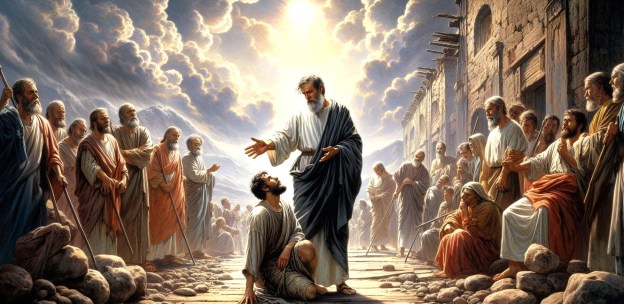
This stands out sharply in one powerful example. Jesus sometimes told certain Jews they weren’t Abraham’s children because they refused to believe—proof they didn’t belong. So when He calls someone a daughter of Abraham, it’s a big deal. Remember the woman bent over for 18 years? Jesus declared she was a daughter of Abraham—not an outsider, but an insider to the blessings in God’s contract with Abraham. In that very context, He said Satan had bound her, not God. God’s contract with Abraham included supernatural blessing and healing, not sickness. It was the opposite. So in God’s relationship with her, Satan delivered the sickness, not God. Jesus used the Abrahamic contract as the reason she had to be healed. It wasn’t optional—it was necessary. God keeps His contracts. He doesn’t break them.

Because she had a legal standing in God’s contract for healing, and because Satan had inflicted the sickness as a curse and weapon against God’s kingdom, Jesus wiped it out. Unless we see things the way Jesus did, we won’t hit sickness hard with God’s healing power. If we don’t recognize our insider status with God—or realize sickness is Satan’s attack to ruin us (and by extension, God’s kingdom)—we’ll just let Satan roll right over us. We’ll take his cheap shot, slap a shiny “For God’s Glory” sticker on it, and call it a day.

That’s not just wrong. That’s demonic.

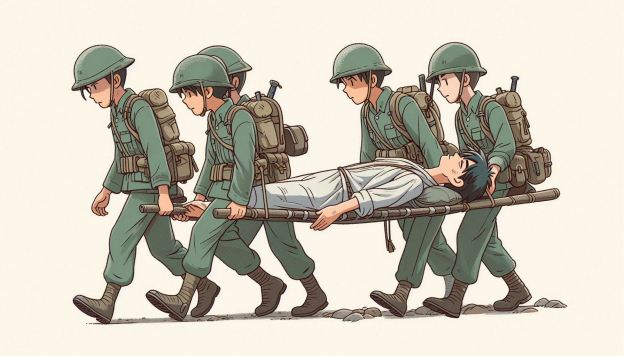
When Satan attacks a believer with sickness, he sidelines a soldier and stalls God’s kingdom advance. Just like in earthly warfare, an injured soldier pulls other soldiers off the front lines to carry and care for him. This is why it’s often smarter in war to injure than to kill. Satan plays the exact same dirty tactics with Christians. Injuries in our army are the enemy’s glory. Sickness in Christians is Satan’s glory—not God’s.

A person’s mind is seriously broken when they can’t tell good from evil, or God’s glory from Satan’s victory lap. When a so-called Christian refuses to attack sickness with God’s healing power, they’re letting Satan hammer God’s kingdom—and they’re strangely okay with it.

My Power My Choice

Acts 3:4-6 NIV

Then Peter said, “Look at us!” 

….what I do have I give you.
In the name of Jesus Christ of Nazareth, walk.

First. Peter said, “look at us.”  I thought we were to direct attention away from us and point to Christ? Why is Peter so focused on himself?

Second. Peter says “what “I,” have, “I,” give to you.” I thought it was, “what God has, He will sovereignly will or choose to give?” I thought it was God’s power, and God’s choice, not Peter’s power and Peter’s choice?

Peter said it was Peter’s power, “what I have,” and it was his choice, “I give.” Peter claims it was his power and his will. Why does Peter pray in a contradictory way as compared to the theologians? Who is right?

The Bible rejects pantheism. God is not what He creates; He absolutely and directly controls all things, but He is not what He controls. God gave his followers the power to heal the sick, and cast out demons. He did not give this power to Himself. Jesus commanded both the apostles and followers to heal the sick. Jesus commanded both is disciples and 77 others to “heal the sick and cast out demons.” Some stop at Matthew 10:7 when Jesus command them to “preach the kingdom of heaven.”  Jesus is commanding them, and us by extension, to preach the gospel. So far, so good. But Jesus continues by saying, “heal the sick, cast out demons, and raise the dead.” Jesus was not going to do this; He was commanding them to do it. If someone was going to get healed, it was up to their power and choice.  Thus to heal the sick and raise the dead is as much as a command as it is to preach the gospel. If it was not clear enough Jesus after His resurrection, commanded them to receive power, Acts 1:8. Most of them were not apostles, because it had nothing to do with the apostles, but Jesus sitting as the right hand of the Power.  Not only did they have the power, it was their will or choice to administer it. It was not up to God’s power and will to heal, it was their power and will.

This is how Jesus spoke on this topic and it was how Peter spoke on it. However if I spoke like Jesus and Peter in most American churches I would be labeled a heretic.

Yes, on the ultimate level the power is God’s, just as the power in my hand to type this essay is ultimately God’s power and by His direct control. However, Jesus and the Bible rarely mention this ultimate level; they mostly speak on the human level. I will do the same.  Thus, it was not God who typed this, but it was I, who typed with my power and choice. Likewise , the sick are not healed by God’s power and choice, but my power and my choice.  Anyone who has a problem with this rejects a doctrine directly taught by Jesus and the Holy Spirit. Cut such a person out of your life. They are servants of demons.

Peter sums this up by saying faith in Jesus name brought the healing. It was a person’s will to have faith that brought the healing, not God’s will. For more on this topic see, Vincent Cheung, “Healing, The Will Of Man.”

Also, Peter did not even pray, at least not in the traditional way. He simply commanded the healing. This is what Jesus told us to do. “You heal the sick.” It was the same with Moses and the Red Sea. God said, “You divide it.” Many do not pray by commanding and this is why their prayers go unanswered. This is why many have died before their time by sickness and troubles. Jesus commanded us to do the healing, not God.

Jesus’ faith doctrine is extreme. He does not instruct us to pray to God and tell Him about our mountain; rather, Jesus tells us to move the mountain by using faith and commanding it to move.  Jesus said, “it will obey you.”

This is not a suggestion. It is a command from our God. Because of this, when many pray they are in rebellion against God. Jesus commands us to move and heal. However, many respond back saying, “No, God, You do it, if You are willing.” By praying like this, they have ensured their sickness has already gained victory over them. On rare occasions God might still heal such a prayer, out of extreme pity, but it would be an exception. If you are sick and pray like a beggar, asking God to heal, you have already lost. You are a dead man walking. Sickness has already defeated you for the glory of Satan.

When some pray, they pray confessing unbelief rather than faith. If you are born-again then you are not a worm, not a beggar, not a nobody and you are not a sinner. James says the prayer of a righteous person is very effective; however, if your prayer is confessing how pathetic you are, then of course you will not pray knowing how righteous you are, and thus, your prayers will not be effective.  Prayer is a good confession of faith in God’s truths and promises; and yet, people often pray confessing who they were, before they were born-again. They say, “I am a worn and sinful and nothing, but God is everything and powerful.” This takes no faith; it is a coward’s way out. It is a religious maneuver to remove you from God’s command and responsibility. If you are nothing and sinful then you need to get born-again so that you become righteous and have privileges that come from being a son of God.

To illustrate this think about asking God for the forgiveness of sins, or a salvation type prayer. Although, there is nothing wrong for a salvation prayer to “ask God into your heart,” yet there are more precise ways to describe it.  Peter in his Pentecost sermon gives direction for a salvation prayer. He instructs the audience to ““Repent and be baptized, in the name of Jesus Christ.” Notice Peter did not instruct them to “ask” God to forgive them; rather, he tells them to repent in Jesus’ Name to be saved. Why? Because Jesus already died and was resurrected. The forgiveness already happened. We are not asking God to crucify His Son again to forgive us, because it already happened.  We are not asking God to do anything in the present tense to forgive us, because Jesus already accomplished it. Because it has been accomplished all we do is repent.  In this context we do not ask or beg. It is when a person has confidence in Jesus’ finished atonement, they repent of their sins in Jesus’ Name. Salvation in this sense is a confession, and not asking and begging. We confess our sins and that is all it takes. Faith in this sense, is about God letting you know He has already forgiven you, and by repenting you are agreeing with God.  It is foundationally about agreeing and confessing and not asking.

Other gospel benefits such as a healing, and the authority to cast out demons and cast down mountains is the same. They have been accomplished by Jesus’ finished atonement. We do not ask and beg for them, because they have been accomplished by Jesus and given to us. It is irrational to beg for something that already belongs to you.  It was the stripes on Jesus’ back that healed us. And so, it is irrational to ask God to heal us, as if He needs to break out the whip again and start slashing Jesus in the throne room. God accomplished our healing in Jesus’ atonement. Thus, we don’t beg for it, because it is already ours.  As with salvation, we repent as a confession of confidence in Jesus finished atonement, rather than beg and ask forgiveness. The same with healing. We confess and agree with God, rather than beg and ask. This is why Jesus tells us to “heal the sick, and cast out demons.” When we command healing and command demons to leave, we are giving a confident confession in the finished atonement of Jesus, which has given us the healing and authority to do such things.

Some people are asking God to do things that He told us to do. They have it flipped upside down. And yes, we see examples of Jesus in John 14-16 telling us to ask in His name. However, in my experience it is only those who already know their authority in Jesus, who already are healing the sick, who are able to ask God for things in prayer, without asking as if they are a beggar or outsider.  Those how can heal the sick and cast out demons are better equipped to march boldly to God’s throne of grace and confidently ask for things as a son who belongs there.