Tag Archives: ontology

My Power My Choice

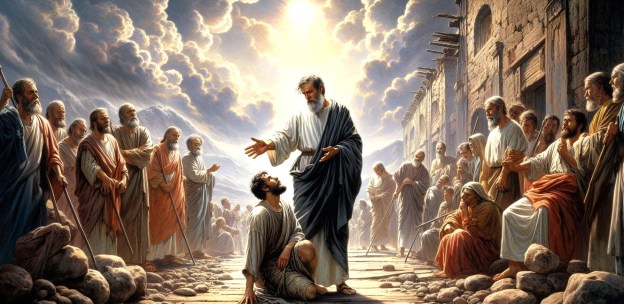
Acts 3:4-6 NIV

Then Peter said, “Look at us!” 

….what I do have I give you.
In the name of Jesus Christ of Nazareth, walk.

First. Peter said, “look at us.”  I thought we were to direct attention away from us and point to Christ? Why is Peter so focused on himself?

Second. Peter says “what “I,” have, “I,” give to you.” I thought it was, “what God has, He will sovereignly will or choose to give?” I thought it was God’s power, and God’s choice, not Peter’s power and Peter’s choice?

Peter said it was Peter’s power, “what I have,” and it was his choice, “I give.” Peter claims it was his power and his will. Why does Peter pray in a contradictory way as compared to the theologians? Who is right?

The Bible rejects pantheism. God is not what He creates; He absolutely and directly controls all things, but He is not what He controls. God gave his followers the power to heal the sick, and cast out demons. He did not give this power to Himself. Jesus commanded both the apostles and followers to heal the sick. Jesus commanded both is disciples and 77 others to “heal the sick and cast out demons.” Some stop at Matthew 10:7 when Jesus command them to “preach the kingdom of heaven.”  Jesus is commanding them, and us by extension, to preach the gospel. So far, so good. But Jesus continues by saying, “heal the sick, cast out demons, and raise the dead.” Jesus was not going to do this; He was commanding them to do it. If someone was going to get healed, it was up to their power and choice.  Thus to heal the sick and raise the dead is as much as a command as it is to preach the gospel. If it was not clear enough Jesus after His resurrection, commanded them to receive power, Acts 1:8. Most of them were not apostles, because it had nothing to do with the apostles, but Jesus sitting as the right hand of the Power.  Not only did they have the power, it was their will or choice to administer it. It was not up to God’s power and will to heal, it was their power and will.

This is how Jesus spoke on this topic and it was how Peter spoke on it. However if I spoke like Jesus and Peter in most American churches I would be labeled a heretic.

Yes, on the ultimate level the power is God’s, just as the power in my hand to type this essay is ultimately God’s power and by His direct control. However, Jesus and the Bible rarely mention this ultimate level; they mostly speak on the human level. I will do the same.  Thus, it was not God who typed this, but it was I, who typed with my power and choice. Likewise , the sick are not healed by God’s power and choice, but my power and my choice.  Anyone who has a problem with this rejects a doctrine directly taught by Jesus and the Holy Spirit. Cut such a person out of your life. They are servants of demons.

Peter sums this up by saying faith in Jesus name brought the healing. It was a person’s will to have faith that brought the healing, not God’s will. For more on this topic see, Vincent Cheung, “Healing, The Will Of Man.”

Also, Peter did not even pray, at least not in the traditional way. He simply commanded the healing. This is what Jesus told us to do. “You heal the sick.” It was the same with Moses and the Red Sea. God said, “You divide it.” Many do not pray by commanding and this is why their prayers go unanswered. This is why many have died before their time by sickness and troubles. Jesus commanded us to do the healing, not God.

Jesus’ faith doctrine is extreme. He does not instruct us to pray to God and tell Him about our mountain; rather, Jesus tells us to move the mountain by using faith and commanding it to move.  Jesus said, “it will obey you.”

This is not a suggestion. It is a command from our God. Because of this, when many pray they are in rebellion against God. Jesus commands us to move and heal. However, many respond back saying, “No, God, You do it, if You are willing.” By praying like this, they have ensured their sickness has already gained victory over them. On rare occasions God might still heal such a prayer, out of extreme pity, but it would be an exception. If you are sick and pray like a beggar, asking God to heal, you have already lost. You are a dead man walking. Sickness has already defeated you for the glory of Satan.

When some pray, they pray confessing unbelief rather than faith. If you are born-again then you are not a worm, not a beggar, not a nobody and you are not a sinner. James says the prayer of a righteous person is very effective; however, if your prayer is confessing how pathetic you are, then of course you will not pray knowing how righteous you are, and thus, your prayers will not be effective.  Prayer is a good confession of faith in God’s truths and promises; and yet, people often pray confessing who they were, before they were born-again. They say, “I am a worn and sinful and nothing, but God is everything and powerful.” This takes no faith; it is a coward’s way out. It is a religious maneuver to remove you from God’s command and responsibility. If you are nothing and sinful then you need to get born-again so that you become righteous and have privileges that come from being a son of God.

To illustrate this think about asking God for the forgiveness of sins, or a salvation type prayer. Although, there is nothing wrong for a salvation prayer to “ask God into your heart,” yet there are more precise ways to describe it.  Peter in his Pentecost sermon gives direction for a salvation prayer. He instructs the audience to ““Repent and be baptized, in the name of Jesus Christ.” Notice Peter did not instruct them to “ask” God to forgive them; rather, he tells them to repent in Jesus’ Name to be saved. Why? Because Jesus already died and was resurrected. The forgiveness already happened. We are not asking God to crucify His Son again to forgive us, because it already happened.  We are not asking God to do anything in the present tense to forgive us, because Jesus already accomplished it. Because it has been accomplished all we do is repent.  In this context we do not ask or beg. It is when a person has confidence in Jesus’ finished atonement, they repent of their sins in Jesus’ Name. Salvation in this sense is a confession, and not asking and begging. We confess our sins and that is all it takes. Faith in this sense, is about God letting you know He has already forgiven you, and by repenting you are agreeing with God.  It is foundationally about agreeing and confessing and not asking.

Other gospel benefits such as a healing, and the authority to cast out demons and cast down mountains is the same. They have been accomplished by Jesus’ finished atonement. We do not ask and beg for them, because they have been accomplished by Jesus and given to us. It is irrational to beg for something that already belongs to you.  It was the stripes on Jesus’ back that healed us. And so, it is irrational to ask God to heal us, as if He needs to break out the whip again and start slashing Jesus in the throne room. God accomplished our healing in Jesus’ atonement. Thus, we don’t beg for it, because it is already ours.  As with salvation, we repent as a confession of confidence in Jesus finished atonement, rather than beg and ask forgiveness. The same with healing. We confess and agree with God, rather than beg and ask. This is why Jesus tells us to “heal the sick, and cast out demons.” When we command healing and command demons to leave, we are giving a confident confession in the finished atonement of Jesus, which has given us the healing and authority to do such things.

Some people are asking God to do things that He told us to do. They have it flipped upside down. And yes, we see examples of Jesus in John 14-16 telling us to ask in His name. However, in my experience it is only those who already know their authority in Jesus, who already are healing the sick, who are able to ask God for things in prayer, without asking as if they are a beggar or outsider.  Those how can heal the sick and cast out demons are better equipped to march boldly to God’s throne of grace and confidently ask for things as a son who belongs there.


You Said Something

There is nothing wrong in the statement, “I was once a sinner who was saved by grace.” However, if you stop there it is unbelief. The same gospel that saves is the same gospel that gives me a new identity in Jesus and baptizes me in the Spirit. Therefore, I am the righteousness of God. I am not affirming God is God’s righteousness, but that “I,” am God’s righteousness. God gave it to me and it is now mine. I am righteous like God is righteous. This is who I am.  This is important because the gospel is not mainly a negative belief. It is not mainly about past forgiveness. It is mainly a positive belief. I am righteous. I am empowered by the Spirit for miracles. I have authority to cast out demons and heal the sick. I am a child of God. I boldly march in God’s throne room and ask and then receive.

This is important for prayer. James says that the prayer of a righteous man is effective. If your focus is that “I am a sinner saved by grace,” then according to James, your prayers will not be effective. I am not a sinner. I am righteous. The focus is that I am present tense, righteous. The focus is not a negative belief of my past forgiveness, but a positive declaration of my present righteousness. It is to this type of Christian who will have effective prayers.

Jesus teaches on prayer in Mark 11:22-24, saying, “ Say to this mountain; and, whatever you ask, believe you have received it, and it will be yours.” The focus is not God’s goodness. The focus is not begging and crawling to God, waiting to see what God does. The focus is not God, but you. Jesus puts the focus on “believe you have received it,” when you said it.  As with James only a person who knows they are righteous in God’s sight, God’s child and has contractual rights, is able to put the focus on them and get answers to prayers. The focus is not problems. The focus is not telling God your problems, trying to prick His heart and see what He does. No.

Jesus did not instruct you to tell God about your mountain. Jesus commanded you to open your mouth and tell the mountain to move. The focus is on your mouth to say it, and your mind to believe it. Your mouth is Moses’ Staff of God. Stretch out your mouth and say something. Say it. What you want, say it. Jesus’ says the focus is not waiting to see what God does, but believe (past tense) you have received. The focus is not your problem or God. The focus is that someone so righteous as you, just spoke something in faith. The focus is that you opened your mouth. It is that simple.

This is Jesus’ teaching on prayer. Jesus is the extreme faith preacher.

The Bible Distinguishes The Elect From Reprobate Trash, By Praying In Tongues

Jude 1:18-21
“In the end time there will be scoffers…”
These…not having the Spirit.
But you, building yourselves up in your most holy faith, by praying in the Holy Spirit, keep yourselves in the love of God.”

Jude says mockers (and this is a continuation of his condemnation of false teachers) do not have the Spirit, which is referring to the baptism of the Spirit (Acts 1-2, Paul in 19:2 refers to “The Spirit” as the baptism of the Spirit and speaking in tongues (v.5)). Jude refers to those born again as “the called,(v.1).” In conversion the Spirit works on you to receive Jesus. In this sense you have Jesus, or you do not have Jesus. In baptism of the Spirit, Jesus works on you to receive the Spirit. In this sense you do have the Spirit, or do not have the Spirit.

In contrast to mockers, who do not have the baptism of the Spirit, Jude instructs the saints to pray in the Spirit, which is the baptism of the Spirit, which refers to praying in tongues. By praying in tongues, you keep yourself in God’s love. Think about that. Consider the consequence for not praying in tongues.

Paul says something similar in Ephesians 6:17-18. He says to “receive” the helmet of salvation and the sword of the Spirit by “praying in the Spirit.” Receiving the helmet of salvation and the sword of the Spirit are important. Paul says to do this by always praying, by praying in the Spirit. We know what Paul means by praying in the Spirit, because in 1 Corinthians 14 he defines “praying in the Spirit,” as “praying in tongues.” Thus, we continually receive the helmet of salvation and the offensive power of the Spirit, by praying in tongues.

Lastly, Paul says in Corinthians 14 that by praying in the Spirit we edify and encourage our inner man. This was one way Paul was able to encourage himself in context of all his hardships.

Paul therefore says I thank God I pray in tongues more than you all, to the Corinthians.

By praying in tongues, we keep ourselves in God’s love, strengthen our inner man, and keep receiving the helmet of salvation  and are continually empowered with the sword of the Spirit.

This does not mean a person cannot be saved without the baptism of the Spirit. However the same unstoppable God who causes an elect to receive Jesus for salvation will cause the same to have faith to receive the Spirit. Peter argues in Acts 2 that forgiveness is a stepping stone to receive the Spirit. To this Peter brings in the doctrine of election and predestination making the connection to the baptism of the Spirit. Some might think Peter’s connection is this: Those whom God calls to Himself are those born-again, however, this is not correct. Rather, Peter’s connection is, those whom God calls to Himself He gives them the baptism of the Spirit, with speaking in tongues. This isn’t how religious elites use predestination, but it is how the scripture uses the doctrine. And so God is faithful to call his elect to Himself, by causing them to receive the Spirit.

If a Christian has not received the Spirit, they do so by ignorance and unbelief. By unbelief and disobedience the Christian has pragmatically caused their Christian experience to be second class. The baptism of the Spirit enables one to fight with power to expand God’s kingdom. Praying in tongues causes one to continually receive the sword of the Spirit. To not have this while others are doing the hard work is spiritual negligence.

This is something mockers cannot do, and refuse to do. First of all, they are two busy mocking and making fun of the faith teachers, who are praying in tongues, to keep themselves in God’s love. Secondly, they hate the Spirit and so they refuse His gifts and powers.  False teachers and heresy hunters mock the very thing which the bible uses to distinguish the Called, from the reprobate.

Christology Overlords

I dislike having to give this note of warning on such a wonderful topic and focus, but it needs to be said. The forceful way some people use the hermeneutic and focus of Christ-o-centric, or Christ-centered or the redemptive historical reading of scripture is wrong and heretical. For some people the bible is not Christ-centered enough for them. As odd as it sounds, Christ is not Christ centered enough for them. And so they invent man-made theories to force most or all of the bible to be Christ-centered in a way that the bible is not. By doing this they exalt themselves and exalt man focused theories over the scripture and how the bible interprets itself.

This is pathetic, because when reading the bible with a redemptive historical approach, in a correct way, it can yield some beautiful insights.  However, if you take it too far you end up making Jesus and the Father fight one another, and cause the scripture to devour itself.  

For example the story of David and Goliath is not mainly about Jesus and His defeat of sin and death. This passage is not Christ-o-centric. There can be an additional insight taken from this story about Jesus and His defeat of sin, but it does not replace the original story as the main thing. Because the bible teaches us to moralize the bible for ourselves, then an additional insight or application of this story is to inspire us to use courageous faith to defeat Goliaths in our lives; however, this is not the main point.

There is an important reason for why this story is the main story and why there are grave consequences if you try to make the Christ-o-centric the main thing. David prays to God (a Word of Faith Confession), and thus, God is already the main power and author in the story. David even says by his actions everyone will know there is a God in Israel. The point of the story is for all to know there is a God who has chosen Israel.  Now, carefully think about the implication if you were say that a story where God is already the main power and author, is not the main story, but Jesus is, because Jesus is more central and important.  

The implication is that God is not the main thing, but rather God is. It is contradictive nonsense. Or, God the Father is not the main thing, but Jesus is. This is blaspheme. This is to make the scripture devour and fight itself.  This story with David and Goliath is a story already about God. You cannot therefore make it more God-centered. It is already God-centered to the max. A story where God is already the main author and displayed power does not need your help to make it more God-centered. A story where God is already the main author and power does not need your help by allegorizing God into it, as if God was not already there.

If a person did not already see God as the main author and power of this story, then I understand why they would feel the need to allegorize God into the story by making it Christ-centered. They are reading the story as if they are an atheist. God is not there and so they need to allegorize God into a story where God is not present.  This happens because their Christ-o-centric theories have become so all consuming that when they read the bible they do not even recognize the Father or the Spirit. They do not see God already in the passages, and so they need to allegorize Jesus into it so that the passage now becomes God-centered.  

Vincent Cheung even noticed a pastor bragging about this.

“A well-known pastor and professor was teaching a group of children something about biblical theology. They came upon a passage in which Christ performed a healing miracle. The pastor persisted with one of the children until the poor thing finally surrendered to the interpretation that the passage was not about the healing miracle, but about Jesus Christ. But the passage was already about Jesus. Why did the pastor forbid the child’s initial understanding? The advocates of biblical theology and the redemptive-historical approach are fond of boasting that they find Jesus on every page of the Bible. The problem was that this particular page revealed Jesus Christ the healer, and as one who would heal those who ask by faith. You see, this is what the theologians resent. This is the thing that the pastor and professor refused to permit. He had to destroy it before faith in this Jesus grew in the heart of the child. He had to murder this Jesus before he could take root in the next generation. And so he did it. And then he wrote a book and boasted about it. But Jesus said that someone like this should go kill himself (Matthew 18:6).

He claimed a miracle is only a “sign” that points to Jesus Christ. But which Christ? What does the sign tell us about this Christ? Does the sign “Christ is a healer” point to a Christ who is not a healer? Does the sign “Christ heals those who come in faith” point to a Christ who does not heal those who come in faith? How do you pull this off? Magic! What would a sign have to say to actually tell you that “Christ is a healer” and “Christ heals those who come in faith”? You just won’t let it happen, will you? You will allow Christ to be only that one thing about him you still believe in and nothing else. You will let Christ be only as big as your microscopic faith, instead of increasing your faith to embrace all of Christ. When the Bible reveals a Christ that is bigger than your faith, you cry heresy. This is what you mean by Christ-centered, but you make everything, including Jesus himself, centered on what you decide…”[1]

The issue with their Christ-o-centric theory is that the Father, the Spirit, the Scripture, and even Jesus Christ Himself are not Christ-centered enough.  The scripture is not God-centered or Christ-centered enough for them. Jesus is not Christ-centered enough for them, and so they even end up correcting Jesus by allegorizing passages directly about Jesus to not be about Jesus and what Jesus is doing and teaching, but instead be about Jesus. Nonsense. This nonsense occurs because they have a version of Jesus they like and allegorize all scripture, even Jesus and His own words into this version.

Christ-o-centric theology has become a smoke-screen to allow elites to practice liberal theology by covering it up with the most gospel sounding words possible. They have a doctrine of Jesus that is liberated from the confinement of scripture. They do not like the Christ that the scriptures reveal and so they create a false doctrine of Christ and then force the entire bible into this false doctrine of Jesus. They call it Christ-o-centric and then accuse others for not being Christ-centered when they do not adhere to this anti-Christ version of Jesus they allow. They are the worst of the worst of religious elites.

A Jesus who says, “your faith saved you” (regarding forgiveness of sin) and “your faith healed you,” is a Jesus that they cannot allow to live. If I teach on these verses, then I will get corrected by them, saying I am too man-centered. Since this is a direct teaching from Jesus’, they are correcting Him not me. And if they think, if they were put back in Jesus’ time that they would not correct Him, then they are delusional. They would correct Him with great zeal. Since Jesus it the main protagonist of His own existence, then Jesus serving man, healing man and praising man for their faith, is as Christ-centered as it gets. It is already Jesus to the max. It is already Christ-centered on steroids. The issue for many, is that the Jesus revealed by scripture is a Jesus they hate.

At that time the argument seemed so pious. The church had strayed from the path by paying too much attention to men, holding services for healing, prosperity and marriage, when the purpose of worship should be the glory of God, not the needs of men.

Liturgical music should talk less about us, and more about God and Christ. Preaching should be focused on the person and work of Christ, and not on our instruction for healing and prosperity, for example.

Men need to be degraded and humiliated. God should be the only one to receive glory. That was the message.

It was through Vincent Cheung’s writings that I began to realize the hypocrisy of these people. To paraphrase, if you are more Christ-centered than JESUS Himself, then this whole time you have been only self-centered, and still marveling at being so Christ-centered!…

When a church holds an event to restore marriages or heal the sick. The immediate purpose of such meetings is to use divine resources to meet human needs, and in this sense it seems that God is being used as a springboard.

However, since people are being saved by divine means rather than by human tools, it is clear that the meetings are theocentric. They would be completely man-centered if psychology were used to heal relationships and medicine to heal bodies.

Because it is the wisdom and power of God that is in action — exactly as God wants it to be — it is not God who is being used, it is he who uses human needs and the activities of the church as a springboard to magnify his attributes and results in the world.

Christocentrism is a hermeneutical and liturgical principle that lacks a biblical basis. Nothing in the Bible suggests that the word of God should be interpreted in a Christocentric way or that everything in worship should be Christocentric. The Bible is messianic, not Christocentric. Some things in it are about Christ, others are not. It is not correct to say that Jesus is the subject of the Bible, if by that we mean that every sentence in the Book is about him. It isn’t, and we don’t need to pretend it is. Some sentences, paragraphs, chapters and even books are not about him — although they can be read in his light and may contain specific references to him, whether literal or figurative. For the Bible to be Christocentric to the standard demanded by those who make a big deal about this need, it would have to be a book about Christ and not about us, but the Bible is a book about us too, therefore, it is not Christocentric. Defenders of Christocentrism consider it Christocentric only because they distort it to fit their standards..

This shows that Psalm 24 is not Christocentric. The second part can be taken as referring to Jesus Christ, but in the poem as a whole Jesus shares space with the believer. The Christocentric preacher was forced to distort the passage so that the man would not have space in his exposition. In the process he ended up saying that God’s people are made up of people with dirty hands, impure hearts, who turn to other gods and swear by idols. This is probably true of him and those who approve of him, but it is not true of anyone who actually belongs to God’s people.

Advocates of this principle are often eager to humiliate man, even man who has already believed in Christ. They say, for example, that the believer’s righteousness is like filthy rags, and that our best works are nothing. However, the Bible says that we do good works by the power of Christ and the Holy Spirit. When they denigrate our good works, they are attacking the righteousness that God produces in us. In their zeal to offend man they end up offending God.…[2]

In a galaxy not so far away, there exists a breed of theological overlords who wield the “Christ-centered” hermeneutic like a lightsaber, slicing through scriptures with a zeal that would make even Darth Vader blush. These folks have decided that not only is the Bible not Christ-centered enough, but apparently, Christ Himself isn’t Christ-centered enough for their taste.

Picture this: David and Goliath, the ultimate underdog story, gets hijacked. Instead of a tale of faith and divine power, these overlords twist it into a convoluted allegory where Jesus is both the slingshot and the stone, leaving poor Goliath to symbolize… well, who knows? Sin, bureaucracy, or perhaps bad WiFi?

These scripture-twisting maestros have turned the Bible into a one-man show starring Jesus, where even God the Father gets sidelined like an understudy. They’ve created a Christological echo chamber where every story, prophecy, and proverb must echo “Christ” or be deemed heretical.

In their quest for ultimate Christocentrism, they’ve managed to argue that when Jesus heals or teaches, it’s not really about what Jesus is doing but about some abstract version of Jesus they’ve concocted. It’s like saying the main character of a movie isn’t the main character because he doesn’t fit the sequel they’ve already written in their minds.

So here we are, caught in a theological tug-of-war where the Bible’s rich tapestry is reduced to a single thread, and that thread must be Christ, even if it means tying the scriptures into knots. Let us  return to sanity, where logic and categories are not turned into a child’s playdough; let us leave this mono-themed Christ-fest where every page must scream “Jesus!” or be cast into the outer darkness of “not Christ-centered enough.”

Let’s return to scripture and logic and leave these elitist zealots who can’t different that clouds and rocks aren’t the same thing. While Christ is central, He doesn’t need to be the center of every verse to validate His divinity or our faith.

(AI Grok, 2024, summarizing my essay.)


[1] Vincent Cheung. All Things Are Yours.  Sermonettes Vol.9. 2016.  Pg. 16-17

[2] Gabrial Arauto. Translated to English by Google Translate.

Provoking the Jews with Jealousy

Paul first quotes (Rom. 10:19) “provoke them to Jealousy,” from Deuteronomy 32:21. This was Moses’ prophecy in how God was going to deal with Israel’s unfaithful heart. In Romans 11:11 and verse 14 Paul repeats this and says his plan to save the Jews is to provoke them to jealousy.

This isn’t some cult leader. This is the scripture. This is Moses and Paul under the inspiration of the Holy Spirit writing scripture. They think the best way to save the Jews is the provoke them by making them jealous of the gentiles. Some elitist fool might think there is a better way, but God’s way is always the best way.

How does jealousy work? You become jealous when someone has something you want or you think rightly belongs to you. The Jews became the Jews because of Abraham. The Jews started with God singling out Abraham and blessing him with the gospel (Galatians 3) of health, wealth, fame, favor, blessings, military victories, supernatural healing and promising to do the same for Abraham’s descendants.

The blessing of Abraham, which we have today through Jesus, (Galatians 3) includes the baptism of the Spirit and healing. Healing, long and strong life, the Spirit and miracles is part of the ancient promise of God, and not even the law, which came after, or the atonement of Jesus can negate it; rather, Jesus’ resurrection makes it accessible to the whole world. Jesus also carried our curses on the cross, so that we have the blessing of Abraham today.
The blessings and curses of the law teach us about the blessing of Abraham, they do not negate it. The blessings of the law is nothing less than the Blessing of Abraham based on works and merit, rather than grace and promise. Yet, the blessing of Abraham came first, based on grace. In Christ the curses are gone and the blessing of Abraham is already active for the believer.

What is the blessing of Abraham when spelled out in the law? It is the Deuteronic blessings as seen in Deuteronomy 28. In Exodus it says God will turn off sickness, so that sickness doesn’t even happen. Another good summary of these blessings is in Leviticus 26: 3-13,

 “If you follow my decrees and are careful to obey my commands,  I will send you the seasonal rains. The land will then yield its crops, and the trees of the field will produce their fruit.  Your threshing season will overlap with the grape harvest, and your grape harvest will overlap with the season of planting grain. You will eat your fill and live securely in your own land.

 “I will give you peace in the land, and you will be able to sleep with no cause for fear. I will rid the land of wild animals and keep your enemies out of your land.  In fact, you will chase down your enemies and slaughter them with your swords.  Five of you will chase a hundred, and a hundred of you will chase ten thousand! All your enemies will fall beneath your sword.

 “I will look favorably upon you, making you fertile and multiplying your people. And I will fulfill my covenant with you.  You will have such a surplus of crops that you will need to clear out the old grain to make room for the new harvest! 11 I will live among you, and I will not despise you.  I will walk among you; I will be your God, and you will be my people.  I am the Lord your God, who brought you out of the land of Egypt so you would no longer be their slaves. I broke the yoke of slavery from your neck so you can walk with your heads held high.”

Yet, in Jesus Christ the law is fulfilled and the curse is taken away. We are forgiven, which by this alone makes us righteous(because the law is both commission and omission) and we are also declared to be God’s righteousness. If we want to see the full manifestations of these blessings we must take them in faith and obedience, but Jesus alone has already purchased them and given to us by unmerited favor.

Jesus gives us the blessing of Abraham. When Jesus was healing people, He would make remarks that healing was daily bread as part of the Abrahamic blessing. This is how the Jews understand themselves as children of Abraham.

Yes, it includes things like forgiveness, a peaceful home, pleasure with your spouse, joy with your children and communion with God.  But it also includes all the miracles of health, wealth and various miracles to overcome troubles and be victorious in life.  

Paul’s strategy is for the gentiles to be so full of Abraham’s blessing manifesting in their lives with being declared righteous, healed, healthy, wealthy, victorious, favored, peaceful homes, famous, and regular miracles from God that the Jews become Jealous and envious. Paul wants the Jews seeing God lavishing so much attention and good things on the gentiles that they turn green with envy.

Thus, the only way to provoke the Jews to jealousy is to have the full blessing of Abraham manifested in your life. The only people who have the potential to do this are Expansionist. The cessationist reject the blessing of Abraham that includes the baptism of the Spirit and miracles on the demand of faith, thus, it is impossible for them to provoke the Jew to jealously because they cannot produce the full blessing of Abraham in their lives.  The charismatics are better, but their weak stance on the gifts and faith make it only slightly better. Only those who in principle believe Matthew 21:21, John 14:12, Acts 1:8, 2:39, Gal. 3:5,13-14, have the potential to provoke the Jews to Jealousy.

Thus, those who understand this have the honor and responsibility to do it. Only Expansionist have the ability to bring an end to this age, by provoking the Jews to jealousy.

Predestination & No Freewill: Means Healing, Speaking in Tongues & Miracles

“When they were released, they went to their friends and reported what the chief priests and the elders had said to them. And when they heard it, they lifted their voices together to God and said,

“Sovereign Lord, who made the heaven and the earth and the sea and everything in them, who through the mouth of our father David, your servant, said by the Holy Spirit, ‘Why did the Gentiles rage, and the peoples plot in vain? The kings of the earth set themselves, and the rulers were gathered together, against the Lord and against his Anointed’ – for truly in this city there were gathered together against your holy servant Jesus, whom you anointed, both Herod and Pontius Pilate, along with the Gentiles and the peoples of Israel, to do whatever your hand and your plan had predestined to take place.

 And now, Lord, look upon their threats and grant to your servants to continue to speak your word with all boldness, while you stretch out your hand to heal, and signs and wonders are performed through the name of your holy servant Jesus.”

And when they had prayed, the place in which they were gathered together was shaken, and they were all filled with the Holy Spirit and continued to speak the word of God with boldness. (Acts 4:23-31)

Unless you go directly to Romans chapter 9, its difficult to find a stronger focus on Calvinism, predestination and that God controls man’s choices, more than a programmer writing his code.

This passage starts by affirming God is sovereign in creating everything. Then it affirms that God sovereignly foretells the future. Then it affirms that God is sitting on a throne and laughs at people who try to work against His dominion. Then it affirms that God predestined the Jews and gentiles to kill and crucify His only Son. To kill and crucify God’s Son took many individual choices of men to make this happen. The apostles said God predestined all of this; and so, the choices of men are at God’s disposal to do what He decides. There is nothing free “relative” to God.

After the apostles affirmed and praised God for his sovereign predestination over everything, how do you suppose they responded to such knowledge? They do not respond the way the Reformed respond to God’s predestination. The Arminians do not affirm the sovereignty of God that the apostles affirmed in this passage, and so they cannot rationally respond to it. Even if some Arminians concluded with a similar response the apostles did, it is only by dumb luck and God’s kindness, because they cannot do it by following the scripture.

The apostles conclude by asking God to consider their threats by empowering them to preach, heal the sick and perform various miracles. God responds with a resounding “yes,” by flooding their meeting place with the anointing presence of the Holy Spirit.  

In my experience when I hear a traditionalist preach on God’s sovereignty, predestination and that man does not have free will (which are the doctrines the apostles above affirmed), they usually conclude by saying, because God caused these things to happened, then it is God’s will (His command) that we go along with it and let Satan steamroll over us, and then praise God as we die of cancer. And if they do suggest action, it is usually something political or cultural, or just keep going to church and watch the world burn. This is the opposite that the apostles do.

After affirming God controls the actions and choices of men, in context of Jesus atonement and of political powers, the apostles conclude that it is time to attack back with preaching, healing the sick and more miracles.

Even though the Reformed, might have a few top-level statements about God’s sovereignty correct, because they conclude the opposite from the scripture, then it shows they have no idea how to apply the doctrine.  They have no idea what is in their hands. On the other hand, the Arminian charismatics sweep the whole issue of God’s predestination and election under a rug, and then just skip straight to the conclusion or practical application. Both are wrong, but the reformed are more so, because at least with the charismatics you still have a small chance to get healed and find a miracle to help you.

The Apostles affirmed God’s predestination over men’s choices and political struggles. In response to this, they put in a military request to attack back with preaching, healing and miracles. God said, Yes!  Thus we already know God likes and will answer such requests when faced with political difficulties, which He caused. Think about that. The apostles affirmed the political problems they were facing was by God’s predestination that led the Jews and gentiles against His only Son. They are with Jesus, and so now the Jews have turned against them.  They did not say, “well, God predestined this, and so we can’t fight against them.” Rather, they asked to fight against their opponents with preaching, miracles, and healing.

They did not respond with a cultural or political reaction, when faced with political problems. They put in a request to God, as their military power, to attack back with preaching, healing and miracles. God the king, approved of their attack plan.

Thus, the doctrines of God’s absolute sovereignty, predestination and control over men’s choices, is to conclude with more preaching, more healing, more miracles, and more with God responding with outpourings of the Holy Spirit upon our meetings. Deviations from this are to be mocked and dismissed.

Any Form of Cessationism is Anti-Christ

Mark Driscoll criticizes cessationism, but his position is still cessationism. Mark says that we can pray but it is determined by a case by case sovereign choice from God, even if we have faith.

There are degrees of cessationism, but all forms deny the biblical doctrine of Expansionism (See Vincent Cheung for more); thus, all forms of cessationism is an excommunicable sin.

Cessationism denies the baptism of the Spirit for spiritual power, which includes the gifts as portrayed in 1 Corinthians 12-14 (etc.). They deny Scripture’s command to seek all of these gifts. Thus cessationism is a contradiction to the text.

It denies Abraham’s blessing. Abraham’s blessing makes it necessary for its heirs to be healed (Luke 13:12-15). Abraham’s blessing makes miracles a regular activity in the church by faith, made possible by Jesus’ substitutionary death (Gal.3). God’s promise to Abraham makes it necessary for miracles to happen on the demand of faith. Cessationism denies this and so it denies God’s faithfulness to His Promise to Abraham and tramples the blood of Christ.

Jesus’ substitutionary atonement included things like healing (Isaiah 53:4-5 James 5:15), and so, healing always happens by the will of man through faith. By denying this cessationism denies the substitutionary atonement of Jesus, and/or its effectiveness, and thus by logical implication it denies the forgiveness of sins.

It denies Jesus’ faith doctrine that says, whatever you ask in faith, will be given to you. Jesus says this many times in many ways. This is Jesus’ direct teaching and command but it also deals with our identity in Him that we have such authority to command demons, sickness and mountains out of our way. No one is as extreme as Jesus when it comes to faith. Your theology must include Jesus’ extreme faith doctrine. Jesus also uses His faith doctrine as a test for orthodoxy (John 15:7-8); thus, any Creed that does not include Jesus’ test, cannot claim to be orthodox. By denying this, cessationism denies Jesus’ command and faith doctrine itself, our identity in Christ and Jesus’ personal test of orthodoxy.

Your theology must include “man’s will being done on earth by faith,” is as God-centered as Jesus Christ is God-centered, because He is the one who taught the doctrine. The issue people have man’s will being done on earth by faith in God’s promise, is that Jesus is too God-centered for them. There is just too much God involved. They hate that God gets to do whatever He wants, and what He wants is man’s will to be done on earth, by faith.

Cessationism is an anti-Christ, anti-scriptural, anti-gospel and and anti-God doctrine.

How Does Jesus Apply Predestination ?

“You did not choose me, but I chose you and appointed you so that you might go and bear fruit–fruit that will last–and so that whatever you ask in my name the Father will give you,” (John 15:16).

Jesus is talking in the topic of election and predestination. We did not choose Him; rather, He chose us (Romans 9-11).

What is interesting, (as, Vincent Cheung, points out in “Predestination and Miracles”) is how Jesus applies the doctrine of election and predestination. Jesus’ application of God’s sovereign predestination is not how most apply it. In fact, Jesus, the most God centered man who ever lived, applies God’s predestination in the opposite way most apply God’s sovereignty. Those who champion themselves as experts on God’s predestination when they are in context of prayer apply it by saying, “you can pray, but based on the Father’s choice, He might or might not grant it.” Jesus does the exact opposite of this. He says, God chose you, or that is “predestined you so that you can ask whatever you want, and the Father will give it to you.”

Why does Jesus and the self-appointed experts on God’s predestination say the opposite? Who is wrong, and who is right? And if Jesus is right, then be free to use God’s predestination and election to embolden you to pray and get whatever you ask for. Let Jesus’ teaching on God’s sovereignty be an encouragement to build faith and grant your request. Mark those who contradict Jesus’ application of predestination as servants of the faithless and remove them from your life.

Did not Enter God’s Rest, Because they disbelieved in Health and Wealth.

Hebrews 3 says that it was their unbelief that stopped them from entering the Promise Land.  God did the saving and brought them out of sin and slavery under the Egyptians. This is mirrored with Jesus saving us from our sin and death. They did nothing when God did this, and we did nothing when Jesus saved us. But when they were baptized in the Jordon, God put a sword in their hands and said, “you do it.” God would empower them, but they had to step out in faith and do it themselves. God promised them milk and honey, or health and wealth, but they would have to use their hands to grab it. These good promises are just a continuation of the blessing of Abraham, which God promised. God promised fruitfulness, power, health and wealth, among other things to Abraham and his descendants. However, this became a choking point for the Israelites’ faith. They refused to believe God was able to strengthen them to conquer the Promise Land. Hebrews said they did not mix faith with God’s promise. God cursed them and let their bodies litter the desert for 40 years.

They had enough faith to cross over the red sea on dry land. They had enough faith, if just barely, to let God save them from slavery and let His wrath pass over them, as it destroyed their slave masters. This is like having some faith that Jesus forgives and delivers. However, when God wanted to empower them to be blessed with the riches of milk and honey from the Promise Land, they had no faith. Being empowered and receiving good things was a choke point for them, with the exception of Joshua and Caleb. It is this unbelief in God empowering them to receive good things, like health and wealth and military power, that Hebrews 3 says because of unbelief they did not enter God’s rest. It was not unbelief in God saving them from slavery, which disallowed them from entering God’s rest. No. Not until they could believe God would empower them and enrich them with health and wealth, would it qualify them to enter God’s rest. Hebrews said God was “angry” against them and so He killed them. We are warned not to repeat their mistake.

The same is today. Their baptism into the Jordon is mirrored with us being baptized in the Spirit for power. (See Vincent Cheung, “The Edge of Glory,” who helped me understand this.) The preacher of Hebrews is using Israels’ example in connection to the gospel of Jesus Christ. Having some faith that Jesus forgives is not enough, if you disbelieve God empowers you to expand His kingdom and empowers you with things such as health and wealth, which are part of the blessing of Abraham. As with the ancient Israelites, their faith in God to save them, was proven to be half-baked, when they could not believe God would empower them to receive good material blessings. God was angry with them and disregarded them by not allowing them to enter His rest. The same is for “Today.” People expose their faith as half-baked if they refuse the baptism of the Spirit and refuse to believe God for material good things. God will not allow such people to enter His rest.  

The warning about “not mixed with faith,” was about faith for God to empower “them” with strength and material blessings. It is this connection the writer of Hebrews warns us is the type of unbelief that will keep you from Gods rest. Most would not preach the gospel in this way, but it is scripture. It does not say, “they did not have faith in God’s promise to pass His wrath over them, so they refused to put the blood on the door. Thus they are not saved, and will not enter God’s rest.” This is true as far as it goes, but it is not the gospel which Hebrews is preaching. It says they did not enter God’s rest because they disbelieved God’s promises of power and blessings. This is the gospel which Hebrews preaches.

They did not enter God’s rest because they did not believe God’s promise of health and wealth. This is precisely the warning from Hebrews chapter 3. We are warned that “Today,” the promise still stands to enter God’s rest, therefore, do not disbelieve God’s promises for power, health and wealth.  

Children of Abraham act like their father, and imposters lack the faith to do so. It is not as though Abraham believed God declared him righteous, but disbelieved God to make him famous, give him miracle health and excessive wealth. Yet, this is the so-called gospel that some preach; a gospel of only believing you are righteous, without the miracles of power, health and wealth. This half gospel caused the Israelites to be discarded by God by rejecting them from entering His rest. This half-gospel was not preached to Abraham, not preached by the prophets (Isaiah 53:4-5), not preached by the Apostles (James 5:15, Acts 2), and not preached by Jesus Christ (Matthew 21:21). Those who are children of Abraham have faith to believe the gospel preached to Abraham, not just the righteousness part. Either you have Abraham’s faith or you do not.  By not believing in God’s promise for power, health and wealth, the Israelites exposed themselves not to be children of Abraham, and people today are also exposing themselves as the same.

Because faith is what kept the Israelites out, guess what Satan is focused on attacking? He attacks faith to believe God’s good promises of power, health and wealth, which is what will cause them to enter God’s rest. Guess who is attacking such doctrine today? Whose side are they on? If they fight to keep people from entering God’s rest, how are they not servants of the Faithless One?

Jesus Was our Money Substitute

“For He made Him who knew no sin to be sin for us, that we might become the righteousness of God in Him.” (2 Corin.5:21 LEB).

“Though (Jesus) was rich, yet for your sakes he became poor, so that by his poverty he could make you rich.” (2 Corin. 8:9 NLT).

The context of 2 Corinthians 8 and 9 is about money. Paul wants the Corinthians to give money so that Paul can give the money to other Christians. Paul even encourages them by saying, “God will generously provide all you need. Then you will always have everything you need and plenty left over to share with others(9:8).” God will provide you with enough money for yourself and even with extra money left over so that you can give money to others. So simple and a child and understand this.

In this context Paul says, Jesus became poor FOR US, so that by His poverty we become rich. Poverty and wealth both deal with money directly, and the context is about giving money to Paul so that Paul can give the money to others. The only way to say this is not about money is to be delusional and unrighteous.

As is always the case, if you try to kill God’s promises, you end up pointing the shotgun at your own face. When you try to kill God’s promises, you cannot do it, without destroying your own salvation and spitting on the blood of Jesus Christ.

The idea of substitution is that someone takes my place for something. Notice this is the same apostle Paul, in the same Epistle, using the same substitutionary language for both sin and righteousness (chapter 5) and poverty and wealth (chapter 8).

That is, if Jesus being my poverty in exchange to give me His wealth is ineffective, or is not a substitutionary atonement, then Jesus being my sin to give me His righteousness is also in effective and cannot be a substitutionary atonement. Paul’s description of substitutionary atonement is the same for both instances and so neither can be separated from substitutionary atonement without destroying the other.

If you deny Jesus was a money substitution then you logically deny Jesus was a sin substitute. It is futile to attack the promises of wealth, if you must destroy your salvation and trample the blood of Christ in the process.