Category Archives: Extra Thoughts

Sickness by Words, Healing By Words

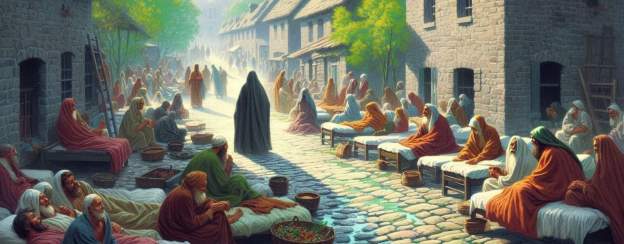
Sickness, cancers, diabetes arthritis and the like, did not come into the world because people were not eating the right foods or not getting their 10,000 daily steps. They came into the world because God opened His mouth and spoke a curse against all reality, because Adam and Eve refused to believe what God said.  Sickness and health problems is a result of sin and God speaking a curse against mankind.

The main point is that sickness is a result of words spoken, not a result of eating or exercising. Sickness and health problems is not a natural aspect of reality. Sickness came by words spoken by God with power.

Now, take a guess how sickness is removed? It is removed by the same way it came into existence. It is removed by words, spoken with power. The bible never condemns medicine or doctors, but it never endorses it either. The bible exclusively says health comes by righteousness and faith. The only exception is a command not to be a glutton. Thus, if you eat 10,000 calories of donuts and sugary drinks, you are being unrighteous. Proverbs and the Psalms says over and over, that health comes by righteousness and faith. It never attributes health to how you eat.  

The bible does not condemn doctors or supplements. And so, there is nothing wrong in taking a vitamin, or changing your diet because it seems to make you feel better; however, the bible always endorses supernatural healing and never endorses doctors or medicine. Some need to meditate on this truth for many days to let it sink in. On this foundation think about how much time you spend on thinking about doctors, medicine and health reports and how much money a year you spend on human help that the scripture never endorses? Now think about how much time you spend on thinking about all passages in the bible that talk about healing by miracle power and how much time and money you spend on developing your faith to perform supernatural healing? You probably give more money to humans to save your health than you give to God in all your tithes and offerings. It is no wonder why you are still suffering.

Because many so-called Christians use their observations as a greater starting point for knowledge over the scripture, they end up being man-focused. They focus on what other men tell them about what they observe, or what they see and feel about health and sickness. For every one time they read a verse about health being related to righteousness, and faith in God’s promise, they think about food, doctors and their observations relating to health 1000 times more. They are the pinnacle of man focused. It’s all they think about, when it comes to health and sickness. And then they wonder why they still hurt. As in all things, God is our foundation, not man. He is our healer. He is our savior. He will deliver and heal.

Jesus Christ became a curse for us by substitutionary exchange, and by this we are also given the blessing of Abraham. This blessing includes health and supernatural healing, among other things.  The curses of the law included all sickness not recorded (Duet 28). Thus, every sickness, every arthritis and every pain is a curse from God Almighty.  But Jesus became our curse for us. We receive the removing of God’s curses by faith in Jesus Christ, just as we receive forgiveness and righteousness by faith in Jesus.

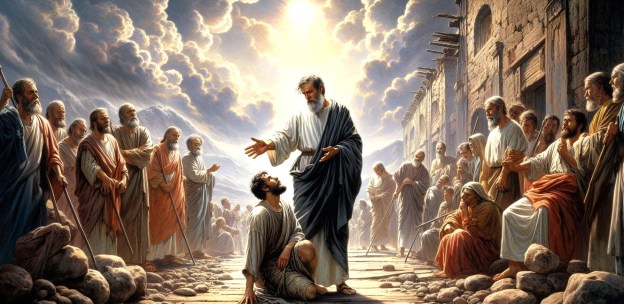
How did we receive forgiveness, by faith in the heart and confession with the mouth. The same is for healing. We believe Christ was already our curse for us, we believe by His stripes we are already healed, and then we confess it in faith. Jesus in John 14-16 says many times and in different ways, we have been given His authority, given His spiritual power, and given the right to use His name to ask for anything, which includes healing. This is why Peter said, “What I have, I give, in Jesus Name, Walk.” We have the same.

Jesus went so far as to teach us that we do not tell God about our mountain, but to use our authority in Him to open our mouths and command the mountain to move.

And now we are full circle. We started with God opening His mouth to speak a curse on reality, which brought sickness into our bodies. But now in Jesus Christ, God has put His words and authority in our mouths. Thus, we remove sickness by opening our mouths and commanding the sickness to get out. If you act sinfully, by not speaking in faith and asking God, or commanding the sickness to leave, then it will not, because you are acting in unrighteousness. Sickness came into our bodies by words spoken with power, and they also leave our bodies by words spoken in power.  

The Devil Is Making You Sick, Not God

I have heard the example that Jesus is the type of shepherd who breaks the legs of a straying sheep, to keep it from straying. This might sound compassionate in teachings found in eastern paganism, but it is nowhere found in the bible.

Some have this idea that God’s out there playing orthopedic surgeon with sheep, breaking legs to teach ’em a lesson, right? Well, not in my Bible. Rather, the bible flips the script, telling us it’s not God playing the cosmic chiropractor; it’s Satan who’s out there handing out sickness like it’s candy on Halloween.

Let me ask a simple question. When Paul handed the man who was sleeping with his mother-in-law, who did he hand him to? Paul said he handed this man over, to have his flesh destroyed so that his spirit might be preserved. Paul was handing him over to have his legs broken. But who did Paul hand him over to? Who was the one breaking this man’s legs? Who was ministering sickness? Was it God or Satan? Paul handed him over to Satan. The devil was the one breaking his legs and making him sick, not God.  The sickness on the human level was therefore, the will of Satan, not the will of God.

And so, Paul handed a guy over to Satan for some serious family drama, letting Satan do the dirty work. The point? God’s not your sickness Santa; that’s Satan’s gig.

This is an interesting example, because it involves an extreme type of sin a believer could do. It is not normal; it is an exception. Another example was the same Corinthians dishonoring the blood of Jesus by dishonoring the Lord’s supper. Paul was “disciplining” the man, and you could say God was disciplining him through Paul, for a severe sin, and yet, God was not the one giving the sickness. It was the devil.

God is sovereign over all things, so much so that He is the metaphysical author of sin and evil. God controls our thoughts and He predestines all things in the same absolute and direct way, whether it is faith or unbelief, reprobation or election. God controls all things, even Satan, more than a programmer controls how and what his program does. However, the bible denies pantheism and the bible mostly deals with us on the human or relative level.  Thus, Jesus would say, “it was God’s will, that healed this boy or blind man.” No, that is not what Jesus said. He said, “Your faith saved you from your sins, and your faith healed you.” We will do the same.

Even in the story of Job, who did not have the New Contract or Abraham’s blessing, God was not the one who ministered sickness and destruction. It was Satan. God is sovereign, in that He was the one who mentioned Job to Satan, in essence enticing Satan to go after Job. God orchestrated the whole thing. But it was Satan who ministered the sickness, not God. Thus, the sickness was the will of Satan, not the will of God. A similar situation with king David. The scripture says it was both God and Satan who caused David to sin by taking a census. These are addressing two different categories. God is the only real cause, but on the human level, it was Satan who ministered the sin, not God.

Therefore, even in Job’s case, where God’s like the director of a reality show called “Temptation Island,” it’s still Satan swinging the wrecking ball. And Jesus? He’s not going around saying, “Here’s a cold for your sins,” nope, he’s all about, “Your faith got you covered, now walk it off!”

The woman who was bent over for 18 years, who did it? Jesus Christ says it was the will of God, right? No. Jesus said it was, the will of Satan. Satan ministered the sickness, and God being faithful to the promise He made to Abraham, was ministering the healing. In fact, in Acts 10:38, Peter says it was the devil who was ministering the sickness to all the sick people, in the gospels, and Jesus was the one ministering the healing. The devil is a priest to the darkness; and so his ministry is one of sin and sickness. Jesus is a high priest to God, and so His ministry is righteousness, wealth and healing. He does not minister sin or minister sickness. He ministers healing and miracles. If you are an insider to Jesus, He ministers good things, not evil things.

Some might bark up and say, “But God does sometimes give sickness.” This is true, as far as it goes, but there is an important context. What category of people does God give sickness to? The answer is God’s enemies. God did not send Satan to kill the first born of Egypt, no, He sent His angel.  Why the sudden change? The category is different. Egypt is not a Contract insider to God. Egypt is God’s enemy and He is there for condemnation and judgment. It is personal for Him. He wants to destroy them Himself, and not use something like the devil.  God cursed the Philistines with cancerous tumors when they took the Ark of the Contract. They were not insiders; they were outsiders and enemies. Thus, God cursed them Himself.  Their sickness was not the will of the devil, it was the will of God.

This is significant because if you claim God, and not Satan, gave you a sickness, then you are identifying yourself as a reprobate Egyptian or Philistine. If you say your sickness, is the will of God, then you are claiming you are God’s enemy. You are identifying yourself as under the curse of God. You are identifying yourself as God’s enemy. If God is giving you sickness, then indeed, God is your enemy not savior. He is attacking you, not saving you. Your immediate concern is to be saved from hell, not healed.  

There is one other category for sickness. Sicknesses come as a curse from the Fall of Adam and as a curse from the law of Moses. However, in Jesus Christ, Paul says in Galatians chapter 3 that Jesus became a curse for us, so that in substitutionary exchange we get miracles and the baptism of the Spirit. We do not bear curses; rather, we bear the blessing of Abraham. Just as with forgiveness of sins, you receive blessings in exchange for sin, by faith. If you doubt it, then do not expect to receive this exchange, as both Jesus Christ and James teach us.  If you claim to have cancers and arthritis as curses from God, you are identifying yourself as still under God’s curses and not under Jesus’ atonement. If you are under the atonement, then you have been removed from being under curses.

If you’re on team Jesus, you’re in the healing line, not the disease queue. Claiming God gave you the flu is like saying you’re on God’s naughty list, which, let’s be honest, is not where you want to be unless you’re auditioning for a role in a divine drama.

This brings us back to the beginning. As a Contract insider, God does not minister sickness, He ministers healing and miracles. Sickness only comes to me in two ways: one is by Satan and the other is by curses. I have been redeemed and rescued from both.

This is important because if you realize sickness is Satan’s will, not God’s, and is from Satan, not God, you are not only freed to fight it, but are commanded to fight it. When Jesus says cast out demons, it is not a suggestion from a spiritual guru. It is a command. When the bible says to resist Satan and make him flee, it is not a suggestion, but a command.  Even if the sickness is from Satan, as a discipline from God, as James says in chapter 5, with faith I will be healed, and I will be forgiven. Because it is Satan’s will, not God, even if it was in the context of discipline, the command to cast out Satan and to resist him and make him flee is a standing command from God. You are to always do this.

Therefore, you do not have the freedom to allow Satan to bulldoze over you with sickness, no matter the context. You always have the standing command to make Satan and the sickness to go away. You are commanded to be victorious over the kingdom of darkness. You do not have the right, as a soldier of God’s kingdom, to allow the kingdom of Satan to beat you. You are commanded to expand God’s kingdom with truth and power. They are the ones who back up from attacks, not you. The only way to do this is with faith and power. You must take the authority and power of God and expand His kingdom by healing the sick, casting out demons and commanding mountains to get out of your way.

In conclusion, if you’re sick, blame Satan, for he is your unwanted health advisor. As a card-carrying member of the Jesus Club, you’re commanded to kick Satan to the curb, to resist like you’re in a cosmic tug-of-war, and to heal like you’ve got divine health insurance. Remember, in this divine comedy, you’re strengthened to be the victor, not the victim![1]


[1] Grok AI (fun mode) personal communication 2024, helped with summaries.

They Were All Healed


Also a multitude gathered from the surrounding cities to Jerusalem, bringing sick people and those who were tormented by unclean spirits, and they were ALL HEALED. Acts 5:26

Tradition says only Jesus could heal everyone, but this is a lie coming from a false teacher. The bible says that Christians do the same. The foundation is Acts 2:31-36. It is a God-centered focus on Jesus ruling at the right hand of the Power. It is not a man centered focus on the apostles; rather, is about Jesus and the authority to use His Name (Acts 3:6,16, 16:18). Peter said, “what I have I give to you, in Jesus Name, walk.” What Peter had, was the Name of Jesus, not the authority of an apostle. We have the same Name of Jesus today. Jesus teaches us in John chapters 14-16 that all Christians who have faith, can use His name to ask and command anything. In fact, this authority goes beyond healing and casting out demons to asking for anything you want.

Another observation is that healing is equated to casting out demons, which lines up with what Peter said in Acts 10:38. This is important because even if there is not a specific authority to cast out demons, yet, the free access and authority to heal includes any demonic oppression on the body and mind. In Isaiah 53 we are told Jesus’ substitutionary atonement includes healing. In this sense, authority over demons is a subcategory of healing. Jesus purchased with this blood our healing, which includes any harassment to our bodies or minds caused by demons.

To say healing is not on the demand of faith is to also say being freed from demonic oppression is not on the demand of faith because demonic oppression is a subcategory under healing.

Jesus did not lie. He said whosoever believes in Him will do His miracles and even greater. This is why see examples in the book of Acts, where everyone got healed, just like Jesus did it. The foundation for this happening was being baptized in the Spirit and faith in Jesus. We have the same foundation today. Jesus is still sitting at the right hand of the Power. We have the same context, the same Jesus, the same Spirit and the same millennial rule of Jesus at the Power’s right hand.

All Things Are Possible for Man

No, this was not taken from Kenneth Copeland or Kenneth Hagin sermon. It came from a more extreme faith teacher than even these infamous teachers. It came from the greatest faith zealot of them all. This was a doctrine taught by the most extreme faith who ever lived. It came from Jesus Christ.

Christians do not let Jesus get in their way, in their goal to formulate doctrine based on their sensations, observations and feelings. Thus, they do not allow lesser faith teachers to inform their doctrines.  Most Christians are carnal, or that is, most Christians formulate doctrine based on their observations and feelings rather than the scripture. They say, “well, I don’t see all being healed, thus, the scripture cannot mean you will get healed, even if you have faith for it.” They hide their epistemology adultery behind phrases such as, “God-centered,” “Christ-centered,” and “gospel-centered,” as if we are too stupid to not see their spiritual perversion. They hump on David Hume’s empiricism in the open streets, march back into the pulpit, wipe off their sweaty faces, and then say, “sola scriptura.” Little do they know the true horror they are doing to their souls.

  “Very truly I tell you, whoever believes in me will do the works I have been doing, and they will do even greater things than these, because I am going to the Father,” John 14:12. NIV

“If you abide in Me, and My words abide in you, ask whatever you wish, and it will be done for you.  by this… you… prove to be My disciples,” John 15:7-8 LSB

“He replied, “Because you have so little faith. Truly I tell you, if you have faith as small as a mustard seed, you can say to this mountain, ‘Move from here to there,’ and it will move. Nothing will be impossible for you,”” Matt.17:20. NIV

Jesus looked at them and said, “With man this is impossible, but with God all things are possible.” Matt.19:26 NIV

“And Jesus answered and said to them, “Truly I say to you, if you have faith and do not doubt, you will not only do what was done to the fig tree, but even if you say to this mountain, ‘Be taken up and cast into the sea,’ it will happen. And all things you ask in prayer, believing, you will receive,”” Matt.21:21-22

“What do you mean, ‘If I can’?” Jesus asked. 
“Anything is possible if a person believes,” Mark 9:23. NLT

“Therefore I tell you, whatever you ask in prayer, believe that you have received it [past tense], and it will be yours” Mark 11:23-24

And the Lord said, “If you have faith like a mustard seed, you would say to this mulberry tree, ‘Be uprooted and be planted in the sea’; and it would obey you,” Luke 17:6. LSB

Jesus’ thesis statement on faith is this, “All things are possible for the man who has faith,” and “Whatever a man asks for in faith, it will be given to him.” Because Jesus said this doctrine many times and in various ways, because He tied this doctrine into believing in Him, proof of connection to Him and proof of discipleship, then it is necessary to make this a proof of Orthodoxy. Because Jesus made this a proof of discipleship (John 15:7-8), then it is indeed a test of orthodoxy.  If any church or creed does not state and affirm this doctrine, they are non-Christians and anti-Jesus. You ought to excommunicate them from your life immediately. If they are a church, then pray a Psalm of Judgement over them and boycott them.

Because many churches would call Jesus’ faith doctrine heresy and excommunicate you over it, they expose themselves as a den of demons. Thus, many churches have already divorced themselves from Jesus Christ. As Vincent Cheung says,

 “The controversy shows that the critics affirm an essentially non-Christian worldview. Any worldview that disagrees with the “faith confession” doctrine is not a Christ-view, and contradicts Christ’s view of reality. Thus it in fact qualifies as one test of orthodoxy…

You want to test people with your stupid creed? I will test you by Matthew 21:21 and crush your creed. You want to cite your idol theologian? I will slap his head off with Mark 11:23. Change your creed to agree with Jesus. Throw your theologian into the dumpster if he does not teach this kind of faith. If Jesus is not your Lord but just your mascot, you will die in your sins and burn in hell. Your church will not save you. Your seminary and denomination are themselves under judgment. Unless you have faith, you will die in your sins.” (The Extreme Faith Teacher)

We will finish this up with the positive doctrine. In my experience I much more hear people say, “All things are possible for God.” This is true. It is a fantastic doctrine, and deserves much meditation and praises. However, if that is all that is said in relation to man, because Jesus said more about it in relation to man, then it is only a half-truth; because it is a half-truth, it is also false. Jesus also said, “All things are possible for man.” Consider Jesus in Matthew 17 saying nothing is impossible for man, who has faith.  This context is not about asking God to do something, and then saying God’s potential to grant your prayer is endless, and so, if He will’s it, then the potential is there. No. That is not what Jesus teaches. He says, if a person with faith commands a mountain to move, it will move and obey them. From this premise, Jesus concludes by saying, “nothing is impossible for man.” Jesus is not talking about mere potential, but is saying with faith, anything you command will happen. Again, this is Jesus, the most God-centered man who ever lived. This was not Kenneth Hagin.

As we continue in a few chapters later in Matthew 19 Jesus says the often-quoted verse, “with man it is impossible, but with God all things are possible.” The context is about a rich man who would not enter the kingdom because he loved his money too much. Thus, the context is about the narrow context of salvation or conversion. This is why Ephesians 2 says that even faith itself is a sovereign gift from God. In our sinful dead state, we do not even have the faith to be saved. This is why in context of salvation it is impossible for man, but possible for God. Jesus’ syllogism is simple. 1. All things are possible for God. 2. Salvation is a thing. 3. Thus, salvation is possible for God.

When we see the two different categories of these passages, it is obvious they do not contradict. A sinner has no possibility to save themselves. However, in the category of a Christian, who is an insider to God, under His New Contract, all things are possible for them. Jesus’ statement of man’s impossibility, deals with a category about salvation, but a Christian is already saved, and thus, all things are now possible for them.  If a so-called Christian views the world in limitations and impossibilities, they have an anti-Christian worldview. They still view themselves as a non-Christian, within a non-Christian view of reality. They still see themselves as outsiders to God and to His contract.

As we progress a few more chapters in Matthew 21 Jesus again says “all things you ask, will be given to you.” This is just another way to say, “all things are possible for man, with faith.” Jesus’ statement here is more extreme and emphatic. Some fools might think, “all things are possible for man,” is just about mere possibility, but Jesus’ statement here gives no room for that. “All things you ask in faith, will be given.” Seriously, how could I or anyone teaching about faith and prayer say it more extreme than that?

This statement is really a conclusion from Jesus’ two examples. One is His cursing of fig tree. Jesus says you will do the same with faith. Then He says you can command a mountain and it will obey you. A fig tree died when Jesus cursed it in faith. It was not a metaphorical fig tree, but a real one. Jesus said you will do the same. Then to press the point harder, He gives a second example so that He is not misunderstood. He says the same can be done to a mountain. There is nothing bigger than mountains, in relation to our experiences. Thus, if we can command mountains by faith, we can command everything else. This is why Jesus’ conclusion from these premises is, “All things you ask in faith, will be given.”

To make it even more extreme, in Mark’s account he records Jesus using the past tense for this conclusion about faith. “All things you ask in faith, believe you have received, and you will have it.” This is a contradiction to how faith and prayer are taught today. They say we ask, “but we do not know if we have received it, until God decides it is His will and then He grants it. Only after He grants it, do we know if we have what we ask for.”  If that is true, then Jesus is a false prophet and teacher. Jesus says you know if God has granted your prayer, the moment you pray it, because you opened your mouth and said something. Jesus says, you will receive (future tense), if you believed you have it (past tense), and not when God gives it.

There are other passages that say the same thing but in different ways such as in John 14 and 15; however, the main focus has been dealt with. Yes, “all things are possible for God,” but “all things are possible for man,” as well.

This does not sound gospel or God centered, does it? Why does tradition and religious elites sound more God-centered than Jesus? Are they more gospel-centered than the Son of God, or is their definition of God-centeredness polluted with human speculation? And for sake of argument, let us say it is man-centered. Yet, Jesus taught it. Jesus made man’s endless possibilities and glory and power a test of orthodoxy. No matter what you do or say, you must deal with Jesus.

The positive point is simple. Because Jesus commanded this, then it means He expects that His insiders can do it. Because He expect His insiders to do it, it means we can do it.


Sickness Is Satan’s Glory, Not God’s

Oshea Davis.

The Arminians are wrong about God’s sovereignty. God does directly and absolutely control and predestine all things. However, this is about ultimate metaphysics, which the Bible speak on less, while it mostly speaks on the human level—the level where God commands us, relates to us, and where we slug it out day-to-day. It’s how the Bible mainly talks to us, so we’ll follow that pattern here. Talking any other way most of the time just means you’re not talking like the Bible.

God says in Isaiah 54:15, “They will surely gather against you, but not by me.” He quietly assumes His own sovereignty but speaks straight to us on our level. God is more God-centered than anyone, yet He has zero problem saying, “I didn’t cause them to gather.” Jesus—the most God-centered man who ever walked the earth—said about both healing and forgiveness, “Your faith has saved you.” In Acts 10:38, Peter says all the sick people Jesus healed were oppressed by the devil. So the Bible has no problem declaring that sickness isn’t from God. It’s from Satan or the curse.

And this matters. Big time. If we think sickness comes from God, we won’t fight it. That’s one reason Jesus went full wrecking-ball mode on sickness while religious tradition sits back and sighs. Jesus saw sickness as Satan’s direct smack in the face to Him, His Father, and His people. So He smashed it wherever He found it. The only time He didn’t obliterate the sickness (which Satan was causing) was when unbelief got in the way. Let that sink in: unbelief could stop Jesus, but Satan couldn’t. Jesus was a one-man divine demolition crew against every disease the devil hurled.

So here’s the truth: sickness is Satan flipping the bird at Jesus’ atonement. Healing is Jesus slamming His fist—again and again—into Satan’s smug face. There’s a real war here. You’re either with Jesus in this fight or you’re against Him.

In the substitutionary atonement, Jesus took those 39 stripes in exchange for our healing. It’s already done. In the Father’s mind, our sicknesses were lifted off us and slammed onto Jesus with every lash. Jesus carried our sicknesses in our place. The verse right before it (as the Spirit explains through Matthew) says He “bore” (Hebrew nasa) our sicknesses and diseases and took them away. It’s the exact same word used in verse 12 for Jesus bearing our sins, and in Leviticus 16 for the scapegoat when the high priest transferred the people’s sins onto it and sent it off into the wilderness. Pure substitutionary atonement language—and Isaiah 53 applies it straight to our sickness and healing.

Yet many still pin sickness on God—not just in some ultimate metaphysical decree sense, but right here on the everyday, relational level. That’s flat-out wrong. In our New Contract with God, sealed by oath and blood, God promises to always deal with us in certain ways. We’re promised forgiveness, imputed righteousness, and healing—the blessing of Abraham and constant good. It’s fish for fish, healing for healing. If Jesus is my High Priest and Mediator forever, He doesn’t flip in and out of the role. If He gave me sickness, He’d be a minister of sickness. If Jesus hands out sickness, then His gospel ministry turns into one of pain and torment. But Jesus is only a minister of healing—He takes sickness away. He doesn’t dish it out.

This stands out sharply in one powerful example. Jesus sometimes told certain Jews they weren’t Abraham’s children because they refused to believe—proof they didn’t belong. So when He calls someone a daughter of Abraham, it’s a big deal. Remember the woman bent over for 18 years? Jesus declared she was a daughter of Abraham—not an outsider, but an insider to the blessings in God’s contract with Abraham. In that very context, He said Satan had bound her, not God. God’s contract with Abraham included supernatural blessing and healing, not sickness. It was the opposite. So in God’s relationship with her, Satan delivered the sickness, not God. Jesus used the Abrahamic contract as the reason she had to be healed. It wasn’t optional—it was necessary. God keeps His contracts. He doesn’t break them.

Because she had a legal standing in God’s contract for healing, and because Satan had inflicted the sickness as a curse and weapon against God’s kingdom, Jesus wiped it out. Unless we see things the way Jesus did, we won’t hit sickness hard with God’s healing power. If we don’t recognize our insider status with God—or realize sickness is Satan’s attack to ruin us (and by extension, God’s kingdom)—we’ll just let Satan roll right over us. We’ll take his cheap shot, slap a shiny “For God’s Glory” sticker on it, and call it a day.

That’s not just wrong. That’s demonic.

When Satan attacks a believer with sickness, he sidelines a soldier and stalls God’s kingdom advance. Just like in earthly warfare, an injured soldier pulls other soldiers off the front lines to carry and care for him. This is why it’s often smarter in war to injure than to kill. Satan plays the exact same dirty tactics with Christians. Injuries in our army are the enemy’s glory. Sickness in Christians is Satan’s glory—not God’s.

A person’s mind is seriously broken when they can’t tell good from evil, or God’s glory from Satan’s victory lap. When a so-called Christian refuses to attack sickness with God’s healing power, they’re letting Satan hammer God’s kingdom—and they’re strangely okay with it.

Eschatology In A Nutshell

If someone sums up eschatology without baptism of the Spirit for power, they have no idea what they are talking about.

Acts 1:6-8 NIV. “ Then they gathered around him and asked him, “Lord, are you at this time going to restore the kingdom to Israel?” But you will receive power when the Holy Spirit comes on you; and you will be my witnesses… to the ends of the earth.”

The context is about eschatology. Jesus has sat down on his eternal throne and is ruling. The disciples did what most do, they made eschatology about politics. However, Jesus rebukes them and says eschatology is about being baptized in the Spirit for power and miracles.

The important part to note is that in eschatology the followers made it political and Jesus made it about miracles and the Spirit for power. By making it about politics they made it about man. Religious elites make the baptism of Power belong only to the apostles, and thus they still make it about man. They use religious words, but the result is a man-centred doctrine in what it means to be God-centred. In Peter’s sermon on Pentecost, he made baptism of power about Jesus and His eschatology position, sitting at the right hand of the Power. It had nothing to do with the apostles, thus, the baptism of power still remains, because Jesus still remains at the right hand of the Power. The Power was faithful to His promise to give Jesus the authority to pour out power.

Jesus is still faithful in pouring out power on “all whom the Power calls to Himself,” (Acts 2:39).  The Baptism of power is connected to God predestination of the elect. Peter’s point is not directly about repentance, but baptism of the Spirit and to this Peter directly connects, as many as God calls to Himself. This is why Peter says the gentiles were granted salvation and eternal life when He witnessed them speaking in tongues (Acts 10:44-47). In His Pentecost sermon Peter already said that being baptised in the Spirit is about God calling His predestined ones to Himself. Thus, when Peter saw the gentiles speaking in tongues, and then he told the other disciples, they concluded God elected them to eternal life (11:15-18).  In fact, Peter said because the Spirit was given to them, it was proof they should be baptised in water. And let us not forget that water baptism is a sign that they have died and were raised in new life with Jesus. Speaking tongues was proof they were elected to eternal life.

Peter’s argument for the baptism of power is based on two points. One is the Father being faithful to His promise (2:33) to Jesus, so that Jesus has the authority to pour out power. The second part of the argument is that Jesus is sitting on His throne, at the right hand of the Power (2:31-36). These are the 2 relevant factors, in Peter’s argument, for the conditions in pouring out the baptism of power.  Peter, who is an Apostle, gives no scriptural quotes or logical connections, that the baptism of the Spirit is connected to the apostles. Zero.  What do the religious elites know that Peter did not?

In addition to the Spirit baptism of power, there is the issue of authority. Jesus gave the disciples the authority to heal the sick. In fact, it was a command, because He said, you “heal the sick,” and “cast out demons,” and “preach the gospel.” Then Jesus did the same with 72 others, and so no one can logically say it was only for the apostles. To further insure this, Peter in Acts 3, after commanding a healing, says it was by “faith in Jesus,” and not by the authority of an apostle.  Faith in Jesus is what causes a person to receive salvation, and it is the same faith that commands sickness to leave. It is heavily God-centred. It is not man-centred on the apostles. It is centred on Jesus and His position of authority, while He is sitting at the Father’s right hand.

The next major event after the baptism of the Spirit Acts 3-4, shows how Jesus’ plan for power is how to apply His eschatology.

After being released from prison the Christians got together and prayed. They quoted Psalms 2, a militaristic Psalm, and asked that God would apply this to their situation of government opposition, by healing the sick, miracles and boldness to preach the gospel. God responded back with a resounding Yes.

This is how they applied eschatology. This is how they applied the doctrine that Jesus is on His eternal Throne and rules forever. This is how they applied the doctrine that King Jesus gave them power to advance His Kingdom when they face opposition, even when their enemies use the government to persecute them.

In context of eschatology advancement under King Jesus, they mentioned 3 things, healing, miracles and bold preaching. Many only preach (and they are not even good at that), which is only 1/3rd of the disciples applied eschatology. It is no surprise they fail at kingdom advancement.

The Will OF GOD is Irrelevant

The bible teaches that God has absolute and direct control over all things. He is the only real cause for all things, and there is no such thing as secondary causes. God is the metaphysical author of sin and evil. God has predestined all things by His own goals and choices, and decrees all reality in a logical order in relation to His goals (supralapsarianism).  There is no such thing as free-will. Man is responsible because he is not free but under God’s sovereign control and command.  Because God absolutely and directly causes all things, He absolutely and directly causes the predestination of the elect and reprobate. Logic and deduction are so easy. As Romans 9 says, God takes from the neutral lump (before good or evil) and by the same power and choice makes some to be evil reprobates and some to be righteous elect.  God has not given up some of His control to man, because free-will does not exist, because the bible never says He made this choice, and because the nature of God insures that there is no difference in how direct and absolute He causes one thing or another in creation. God’s thoughts, power and choice are one and the same. Because He thinks about it and decides on it, it is reality. Therefore, in the ultimate sense, God Will is the only relevant issue.

I say all of this to state a broad and correct doctrine of God’s sovereignty, so that I am not misunderstood in my following comments.

When we pray for healing, miracles or forgiveness the “will of God,” (referring to His causality, not commands), is irrelevant. As Vincent Cheung points out in “Healing: The Will of Man,” to talk about the “will of God” in this context is already a partial defeat, because the bible talks about man’s will, not God’s will.

The bible’s positive doctrine is that healing is about the will of man, not the will of God. This is how the scripture presents the subject. Jesus never asked the Father if it was God’s will to heal a particular person; rather, He always asked if it was the man or woman’s will to be healed.  Jesus then said to his disciples and followers, “you heal the sick.” The will of God (referring to His decrees/causality) was never brought up; only “man’s will,” was brought up. The will of God was simply irrelevant. Jesus, who is more God-centered than you or your favorite pastor, taught us the “will of God,” was irrelevant, and that “man’s will” was the relevant issue.

Some are more accustomed to think about the atonement and forgiveness and so we will start here. The big idea, is that healing (Isaiah 53, Matth 8, James 5, Gal. 3) is as much the gospel and substitutionary atonement as forgiveness is, if not more so.

So here is the question: is the “will of God,” relevant for salvation or conversion? It is not relevant, if I am the one answering it. I am not asking a broad doctrinal question. I am asking it as Jesus would ask a person, “do you want to be healed”? Do you want to be forgiven? I am asking it the way Moses says, “I have presented to you life and death,” now make a choice. I am asking it the way the bible personally addresses me with its promises and commands, telling me that I must respond to it.

The “will of God” is irrelevant for my salvation, because what God decrees and causes is irrelevant in my response to obey the command of God to repent. Paul in Acts 17 commands us to repent of our sins. It is not a choice or suggestion. When I evaluate how I should behave I only use the commands of God to do this, not God’s secret decrees or causality. For example, in Romans 5 Paul says God caused me to be born a sinner, with a sinful heart, because of what Adam did. If I were to use the “will of God,” as a relevant factor in my decision to repent of my sins or not, then I would recognize it was the will of God to decree and cause me to be born a sinner, thus I will choose to stay a sinner until God decrees and causes me to repent.

I will assume most will see the error of this.  It is obvious that God’s Will is irrelevant in my consideration if I should repent of my sins. The relevant issue is God’s command for me to repent.  If a person uses the “will of God” as a relevant issue to exempt them from having to repent of their sins, we would see this as an excuse to be rebellious and unbelieving.

The same is for healing and other various miracles and supernatural experiences.  Healing is provided by the same atonement that provided forgiveness. Both are already accomplished and both are received on the demand of faith. God is sovereign over our faith, but on the demand of faith God always does what He promises. Faith always receives, and God is sovereign over faith. However, even though God is sovereign over faith (God’s Will), we are never told to consider it as relevant knowledge when we choose to believe a promise or not.  When we are in the context of a “should” or “ought” the category is always about God’s command.

In John 15 Jesus uses God’s predestination as an encouragement to ask whatever we want and get it.  Peter does the same thing in Acts 2 about the baptism of the Spirit for power. And so the Will of God is relevant in the topic of valuing God’s encouragement and explanation. Even though God’s Will is used by scripture to encourage our confidence for miracles and answered prayer, yet, when dealing with the topic of the scripture commanding me to repent and commanding me to receive healing and the gospel (James 5:15, John 14,15, Gal.3, Acts 2) the only relevant category is God’s command, not God’s Will.

Thus, when we pray for healing, God’s Will is irrelevant. The Will of God, is a non-issue. To have the Will of God, pop up into your head when praying for healing, is like having the decree of God that made you a sinner(Rom 5), pop into your head as a relevant issue if you should repent or not, and question if God would forgive if you had faith in Jesus.  It is insane and delusional.

The Will of God is irrelevant when considering if God will save you if you repent in faith; it is a non-issue. The Will of God is irrelevant when considering if God will heal you if you command sickness to leave with faith; it is a non-issue.

“Oh, God, please forgive me. I am powerless. You have done nothing yet, but you could do something, Oh powerful and eternal God. You made me a sinner because of Adam’s sin, and so, I don’t know if You have decreed me to be saved or not, and so, If it is your Will, please forgive my sins.”

This insane prayer is how many pray about healing. They are stupid and sinful. The bible never tells us to pray like this. Such a person should not expect to be forgiven of their sin. And if they pray for healing like this, they should not expect to be healed. To pray, while using the Will of God as a relevant issue, will divorce you from being forgiven and healed; It is a prayer of death.

When Peter said, “What I have, I give, in Jesus Name, walk,” the Will of God never came up, because the Will of God is irrelevant. Jesus commanded His followers to heal the sick. This command is the relevant issue, not the Will of God. The Will of God is a non-issue in the context of my healing, or your healing. When you bring in the Will of God as a relevant issue for healing or forgiveness the end results in God’s command being negated. The category of God’s decree and command are different and so should never be used to void each other out, or mixed together.

“Oh God, by Your Will I was made sick, and so I don’t know if I should be healed or not, but please, heal me if it is Your Will.”

 This is a prayer of death. It is a prayer of insanity and disobedience. This prayer uses God’s decree as an excuse to avoid obeying God’s command to be healed.  To use God’s decree to excuse yourself from obeying any of God’s commands such as receiving forgiveness or receiving healing, is stupid and wicked.

Although, there is nothing wrong for a salvation prayer to “ask God into your heart,” yet there are more precise ways to describe it.  Peter in his Pentecost sermon gives direction for a salvation prayer. He instructs the audience to ““Repent and be baptized, in the name of Jesus Christ.” Notice Peter did not instruct them to “ask” God to forgive them; rather, he tells them to repent in Jesus’ Name to be saved. Why? Because Jesus already died and was resurrected. The forgiveness already happened. We are not asking God to crucify His Son again to forgive us, because it already happened.  We are not asking God to do anything in the present tense to forgive us, because Jesus already accomplished it. Because it has been accomplished all we do is repent.  In this context we do not ask or beg. It is when a person has confidence in Jesus’ finished atonement, they repent of their sins in Jesus’ Name. Salvation in this sense is a confession, and not asking and begging. We confess our sins and that is all it takes. Faith is about God letting you know He has already forgiven you, and by repenting you are agreeing with God.  It is foundationally about agreeing and confessing and not asking.

Other gospel benefits such as a healing, and the authority to cast out demons and cast down mountains is the same. They have been accomplished by Jesus’ finished atonement. We do not ask and beg for them, because they have been accomplished by Jesus and given to us. It is irrational to beg for something that already belongs to you.  It was the stripes on Jesus’ back that healed us. And so, it is irrational to ask God to heal us, as if He needs to break out the whip again and start slashing Jesus in the throne room. God accomplished our healing in Jesus’ atonement. Thus, we don’t beg for it, because it is already ours.  As with salvation, we repent as a confession of confidence in Jesus finished atonement, rather than beg and ask forgiveness. The same with healing. It is the Will of Man to command sickness to leave. We confess and agree with God, rather than beg and ask. This is why Jesus tells us to “heal the sick, and cast out demons.” When we command healing and command demons to leave, we are giving a confident confession in the finished atonement of Jesus, which has given us the healing and authority to do such things.

Point The Gun At Satan & Pull The Trigger

No analogy is perfect, but faith to heal is like God giving us a gun. No one says to themselves, “it is my power that blew up this apple, when I shot it.”  Rather, it is painfully obvious to all that the power was the gun powder and bullets. Yet, when a person shoots something or someone, then they are blamed, and rightly so, as “this person destroyed this,” and or “they hurt this other person.” Even though it was not their power, they directed the power to a target. If an Olympian sharpshooter wins gold, the medal is awarded to them and not to their gun.

It is similar when Jesus commanded us to heal the sick, rebuke demons and cast down mountains using His Name and authority. God and creation are not the same, or that is to say, we deny pantheism. Jesus gave us His power and authority. The Spirit was not given to God, to have rivers of life and power flow from His belly, but from ours. Because healing was produced by the stripes on Jesus, in substitutionary atonement for our healing, then it means we do not ask for healing, because it has already been accomplished and given to us.  We do not ask God for forgiveness, but rather, we repent of our sins, because the forgiveness has already been accomplished.  

Adam and Eve, did not beg God for food, because the food was already provided and given. They could beg all they want, but God was not going to grab a pear and shove it down their throats. They had to grab the provided food and eat it themselves. The same is for healing. The atonement provided the healing, it is our responsibility to grab it and partake of it. The way we do this is by faith and then opening our mouths and commanding the sickness to leave and healing to take place. Jesus said “you heal the sick.” He did not say, “ask God to heal them.” He said, “you do it.” Jesus did not tell us to tell God about our mountains, but to use our given authority and power, and then command them to move. Most Christians are in direct and explicit rebellion to Jesus on this doctrine. This is why Peter in Acts 3 says, “what I have, I give to you, in Jesus Name, walk.” Peter did not even pray, or not pray in the usual way. He commanded the healing, just like Jesus told him. We are under the same gospel and the same commandments.

Because the power, authority and healing has been given to us, it is us who pulls the trigger, not God. It is us, who climbs into the driver’s seat and makes things happen, not God. Thus, God is not holding back your healing, you are. God is not the one who is going to heal you and those around you, you are. Jesus said, “You heal them.”

This does not mean that God never works independently of our faith, because a “gift of faith” and or healing is to help us in our weakness. We seek them and gladly use them. However, the bible speak of the gifts in the least amount, as compared to something like normal discipleship faith in God’s promise. Faith is the master key.  And so, the point remains, God is not holding back your healing, because He has commanded that you pull the trigger. The same is for something like the forgiveness of sins. God is sovereign and controls all things. God is sovereign over our faith, but on the demand of faith God always does what He promises, whether forgiveness or healing.

The power and authority has been provided to us to heal, just as much as food was provided for Adam and Eve. God has put the gun in our pocket, but it will not fire itself. It will fire, when we use faith and point it as sickness and command it to leave. God has commanded us to resist the devil and cast him out. His power is already in our bellies and His authority is already stamped upon our tongues.  God is not holding you back from being freed from demonic harassment, because He commands you to point the gun at Satan and pull the trigger. He tells you to command demons to leave. You resist the devil, not God. You command them to leave, not God.  

When we do, we are praised for the results and God is credited as the ultimate power, just like Peter said, “what I have, I give, In Jesus name, walk.” Jesus Christ says the mulberry tree, would not obey “God,” but that it will “obey, you,” when you command it. God will praise us, when we use our faith to use the authority that He has given us. When we pull the trigger, He has nothing but praises. “Your faith has saved you, and it has healed you.”

Many Christians are begging God to heal them, as if Jesus stripes did not already provide healing, and God needs to do something to give the healing. God does not need to re-crucify Jesus, because the atonement is a finished deal. Just like with forgiveness, because it is already done, you simply repent and receive forgiveness and righteousness by faith. God does not need to do something to forgive you, it has already been accomplished, and so you do not ask and beg God to forgive you.

They think prayer is like an Uber Driver, asking the driver (Jesus) to take them to the healing location. But this is wrong. The problem is that Jesus has already provided the healing (location) and the means to get there, which is faith (the car). They must get in the driver’s seat and drive it themselves.  God is not withholding their healing, or righteousness. It is already done.

And yet, they pray asking and begging, as if they expect God to pluck off a pear (healing) and shove it down their throats (faith) and force their jaws to chew.  This is why their prayers go unanswered. The pear tree is looking at them in the face, and they are begging God for a pear. If I saw a person like this, I would think they have a few screws loose in their head and likely be silent, not knowing how to respond to such bizarre behavior. This is one reason why God seems silent when you pray. Many Christians pray as if they are insane and delusional.

Let us obey Jesus’ extreme faith and prayer doctrine. Let us sound like intelligent Children of God. Let us not beg for something that God has already given us.

——–

* I want to give credit to Andrew Wommack for helping me understand some basics of this teaching, “You already Got It.” The example of the food in the garden, and silent prayers I got from him.

Jesus Was the Real Victim in this Story

 He said to his disciples, “Why are you so afraid? Do you still have no faith?” (Mark 4:40 NIV)

Jesus told him, “Don’t be afraid; just believe.” (Mark 5:36 NIV)

The saying is true, you are either in faith or fear. Jesus puts these as opposites. He says, “only believe,” with no mixture of fear. He says in Mark 4 that the disciples had fear and zero faith. They don’t mix well. If you have fear in your heart about a sickness, then you realize you don’t have faith. This is how it works.

Jesus was the real victim in this story. He was asleep with His head on a cushion and was woken up for something He expected the disciples to deal with, without disturbing Him. I am not trying to be funny here. It is no joke being woken up from a good nap from something so minor as a deadly storm, which only a little faith could destroy and remove.

The prayers of many people are like the disciples in this story. They pray as if Jesus is teaching that He likes it, if we cry out in fear for His help over something like deadly weather or sickness. People repeat the disciples fearful cry as a model for prayer, when Jesus rebukes it as how not to pray. Jesus was upset with their fearful cries for help. Think about that. Because God is merciful He might answer some fearfully cries of unbelief, but don’t expect it.

The point that made it a bad prayer was no faith. It is ok to ask for Jesus help if you have faith, but here is Jesus’ point. If they had faith, then they did not need to ask for Jesus’ help. That’s how you know you have faith.

 We do not have every lesson Jesus told the disciples at this point, but Jesus’ reaction gives us enough details that He expected them to use their faith, and deal with the situation, without waking Him up.

This also brings up the issue of where the storm came from. Of course in the ultimate level God causes all things, but the bible mostly deals with the human level. Peter in Acts 10:38 said it was not God, but Satan who was victimizing all the people in Israel with sickness and diseases. When Jesus was casting out diseases He was fighting demons, not God, because the sicknesses came from demons not God. When you have an insider relationship with God He relates to you in blessings. The contract in Jesus’ blood stipulates that God only relates to us in blessings (it could include discipline, but not curses). Thus, whether it is a sickness, or a deadly storm, in human level, it was not from God. When you rebuke it, you are not rebuking God but demons and the curse. Jesus teaches us to not tell God about our mountains, or sickness or deadly storm, but to use our faith and we command it to move and die. Jesus has given us the power and authority to do it, and expects us to do something. Don’t wake Him up and tell Him about a storm, when you have the Staff of God in your mouth. Open your mouth. You divide it. You heal it. You cast it out. You calm it.

My Power My Choice

Acts 3:4-6 NIV

Then Peter said, “Look at us!” 

….what I do have I give you.
In the name of Jesus Christ of Nazareth, walk.

First. Peter said, “look at us.”  I thought we were to direct attention away from us and point to Christ? Why is Peter so focused on himself?

Second. Peter says “what “I,” have, “I,” give to you.” I thought it was, “what God has, He will sovereignly will or choose to give?” I thought it was God’s power, and God’s choice, not Peter’s power and Peter’s choice?

Peter said it was Peter’s power, “what I have,” and it was his choice, “I give.” Peter claims it was his power and his will. Why does Peter pray in a contradictory way as compared to the theologians? Who is right?

The Bible rejects pantheism. God is not what He creates; He absolutely and directly controls all things, but He is not what He controls. God gave his followers the power to heal the sick, and cast out demons. He did not give this power to Himself. Jesus commanded both the apostles and followers to heal the sick. Jesus commanded both is disciples and 77 others to “heal the sick and cast out demons.” Some stop at Matthew 10:7 when Jesus command them to “preach the kingdom of heaven.”  Jesus is commanding them, and us by extension, to preach the gospel. So far, so good. But Jesus continues by saying, “heal the sick, cast out demons, and raise the dead.” Jesus was not going to do this; He was commanding them to do it. If someone was going to get healed, it was up to their power and choice.  Thus to heal the sick and raise the dead is as much as a command as it is to preach the gospel. If it was not clear enough Jesus after His resurrection, commanded them to receive power, Acts 1:8. Most of them were not apostles, because it had nothing to do with the apostles, but Jesus sitting as the right hand of the Power.  Not only did they have the power, it was their will or choice to administer it. It was not up to God’s power and will to heal, it was their power and will.

This is how Jesus spoke on this topic and it was how Peter spoke on it. However if I spoke like Jesus and Peter in most American churches I would be labeled a heretic.

Yes, on the ultimate level the power is God’s, just as the power in my hand to type this essay is ultimately God’s power and by His direct control. However, Jesus and the Bible rarely mention this ultimate level; they mostly speak on the human level. I will do the same.  Thus, it was not God who typed this, but it was I, who typed with my power and choice. Likewise , the sick are not healed by God’s power and choice, but my power and my choice.  Anyone who has a problem with this rejects a doctrine directly taught by Jesus and the Holy Spirit. Cut such a person out of your life. They are servants of demons.

Peter sums this up by saying faith in Jesus name brought the healing. It was a person’s will to have faith that brought the healing, not God’s will. For more on this topic see, Vincent Cheung, “Healing, The Will Of Man.”

Also, Peter did not even pray, at least not in the traditional way. He simply commanded the healing. This is what Jesus told us to do. “You heal the sick.” It was the same with Moses and the Red Sea. God said, “You divide it.” Many do not pray by commanding and this is why their prayers go unanswered. This is why many have died before their time by sickness and troubles. Jesus commanded us to do the healing, not God.

Jesus’ faith doctrine is extreme. He does not instruct us to pray to God and tell Him about our mountain; rather, Jesus tells us to move the mountain by using faith and commanding it to move.  Jesus said, “it will obey you.”

This is not a suggestion. It is a command from our God. Because of this, when many pray they are in rebellion against God. Jesus commands us to move and heal. However, many respond back saying, “No, God, You do it, if You are willing.” By praying like this, they have ensured their sickness has already gained victory over them. On rare occasions God might still heal such a prayer, out of extreme pity, but it would be an exception. If you are sick and pray like a beggar, asking God to heal, you have already lost. You are a dead man walking. Sickness has already defeated you for the glory of Satan.

When some pray, they pray confessing unbelief rather than faith. If you are born-again then you are not a worm, not a beggar, not a nobody and you are not a sinner. James says the prayer of a righteous person is very effective; however, if your prayer is confessing how pathetic you are, then of course you will not pray knowing how righteous you are, and thus, your prayers will not be effective.  Prayer is a good confession of faith in God’s truths and promises; and yet, people often pray confessing who they were, before they were born-again. They say, “I am a worn and sinful and nothing, but God is everything and powerful.” This takes no faith; it is a coward’s way out. It is a religious maneuver to remove you from God’s command and responsibility. If you are nothing and sinful then you need to get born-again so that you become righteous and have privileges that come from being a son of God.

To illustrate this think about asking God for the forgiveness of sins, or a salvation type prayer. Although, there is nothing wrong for a salvation prayer to “ask God into your heart,” yet there are more precise ways to describe it.  Peter in his Pentecost sermon gives direction for a salvation prayer. He instructs the audience to ““Repent and be baptized, in the name of Jesus Christ.” Notice Peter did not instruct them to “ask” God to forgive them; rather, he tells them to repent in Jesus’ Name to be saved. Why? Because Jesus already died and was resurrected. The forgiveness already happened. We are not asking God to crucify His Son again to forgive us, because it already happened.  We are not asking God to do anything in the present tense to forgive us, because Jesus already accomplished it. Because it has been accomplished all we do is repent.  In this context we do not ask or beg. It is when a person has confidence in Jesus’ finished atonement, they repent of their sins in Jesus’ Name. Salvation in this sense is a confession, and not asking and begging. We confess our sins and that is all it takes. Faith in this sense, is about God letting you know He has already forgiven you, and by repenting you are agreeing with God.  It is foundationally about agreeing and confessing and not asking.

Other gospel benefits such as a healing, and the authority to cast out demons and cast down mountains is the same. They have been accomplished by Jesus’ finished atonement. We do not ask and beg for them, because they have been accomplished by Jesus and given to us. It is irrational to beg for something that already belongs to you.  It was the stripes on Jesus’ back that healed us. And so, it is irrational to ask God to heal us, as if He needs to break out the whip again and start slashing Jesus in the throne room. God accomplished our healing in Jesus’ atonement. Thus, we don’t beg for it, because it is already ours.  As with salvation, we repent as a confession of confidence in Jesus finished atonement, rather than beg and ask forgiveness. The same with healing. We confess and agree with God, rather than beg and ask. This is why Jesus tells us to “heal the sick, and cast out demons.” When we command healing and command demons to leave, we are giving a confident confession in the finished atonement of Jesus, which has given us the healing and authority to do such things.

Some people are asking God to do things that He told us to do. They have it flipped upside down. And yes, we see examples of Jesus in John 14-16 telling us to ask in His name. However, in my experience it is only those who already know their authority in Jesus, who already are healing the sick, who are able to ask God for things in prayer, without asking as if they are a beggar or outsider.  Those how can heal the sick and cast out demons are better equipped to march boldly to God’s throne of grace and confidently ask for things as a son who belongs there.