Tag Archives: Christ

 Resisting What Christ Bore

In the arena of faith, where God’s sovereign decrees clash with the feeble whispers of human doubt, Kenneth Copeland’s declaration rings out: “Whatever He bore on the cross we resist!” Amen to that. If we truly grasp the substitutionary atonement of Christ, we’d be fools—nay, anti-Christs in spirit—to promote or tolerate the very curses Jesus shredded His flesh to annihilate. But let’s clarify the battlefield here, lest we swing our swords at shadows. Jesus didn’t die to destroy healing, prosperity, the baptism of the Spirit, the blessing of Abraham, or answered prayers. No, He bore the opposites: sickness, poverty, spiritual drought, the curse of the law, and unanswered cries under bondage. These blessings are the spoils of His victory, already deeded to us in the unmerited contract of grace. To resist what He bore means we stand firm against sickness, lack, demonic oppression, and doubt, claiming by faith what His blood purchased. Anything less is epistemological treason against the revealed Word of God.

We start with the presupposition that God’s revelation is the infallible starting point for all knowledge (2 Timothy 3:16-17). If Scripture is truth and is self-authenticating, says all others are wrong and non-contradictory, then its claims on atonement must logically extend to all aspects of salvation—spiritual, physical, and material. Begin with Isaiah 53:4-5: “Surely our griefs He Himself bore, and our sorrows He carried… By His scourging we are healed.” Here, “griefs” and “sorrows” translate to sicknesses and pains in the Hebrew, as Matthew 8:17 confirms when Jesus heals the sick to fulfill this prophecy. If Christ bore our sicknesses on the cross, then sickness is not our portion; we resist it as an intruder, an enemy defeated at Calvary. To accept illness as “God’s will” is to call God a liar, for His Word declares the exchange complete. Jesus took the stripes so we could walk in health—why hug the curse when the blessing is ours? We are to look at being sick as the same as we look at committing adultery, murder or theft.

Extend this logic to prosperity. 2 Corinthians 8:9 states, “For you know the grace of our Lord Jesus Christ, that though He was rich, yet for your sake He became poor, so that you through His poverty might become rich.” Christ’s poverty on the cross wasn’t metaphorical fluff; it was substitutionary. He who owned the cattle on a thousand hills (Psalm 50:10) became destitute to enrich us. The blessing of Abraham, promised in Galatians 3:13-14—”Christ redeemed us from the curse of the Law… so that we would receive the promise of the Spirit through faith”—includes material abundance. Abraham was loaded with wealth (Genesis 13:2), and as his heirs, we’re entitled to the same covenant overflow. Poverty? That’s what Jesus bore. We resist poverty by faith, just as we resist committing sin. We confess provision as per Philippians 4:19: “My God will supply all your needs according to His riches in glory in Christ Jesus.” If God’s sovereignty decrees abundance for His elect (Ephesians 1:3-14), then lack is a thief’s lie (John 10:10). Satan steals to devour, but we reclaim it, slamming his face into the dirt with Holy Spirit power.

Now, the baptism of the Spirit—oh, how the reprobate trash mocks this! Acts 2:38-39 commands: “Repent, and each of you be baptized in the name of Jesus Christ for the forgiveness of your sins; and you will receive the gift of the Holy Spirit. For the promise is for you and your children and for all who are far off, as many as the Lord our God will call to Himself.” This isn’t optional swag; it’s the empowerment for greater works (John 14:12). Jesus bore the separation from the Spirit in Gethsemane and on the cross (Matthew 27:46), so we could be immersed in His presence. Praying in tongues distinguishes the elect from the mockers (Jude 1:18-21), building up our inner man (1 Corinthians 14:4) and channeling unstoppable power (Acts 1:8). To resist the Spirit’s baptism is to embrace the dryness Jesus endured for us. No, we claim it, speaking mysteries that edify and propel us into the place where miracles are as common as silver in the streets of Solomons reign.

And answered prayers? Mark 11:23-24: “Truly I say to you, whoever says to this mountain, ‘Be taken up and cast into the sea,’ and does not doubt in his heart, but believes that what he says is going to happen, it will be granted him. Therefore, I say to you, all things for which you pray and ask, believe that you have received them, and they will be granted you.” Jesus bore the unanswered cries of the cursed (the silence under the law’s bondage), so we could have bold access to the throne (Hebrews 4:16). Doubt and unbelief are what we resist—those fleshly thoughts that prioritize observations over revelation (Romans 8:6). If empiricism says “no healing yet,” we deductively retort: Scripture trumps senses, for the just live by faith, not sight (2 Corinthians 5:7).

But here’s where the rubber meets the road: We’d be anti-Christs if we promoted the curses Jesus destroyed. Imagine preaching sickness as humility or poverty as piety—that’s spitting on the cross! Galatians 3:13 declares redemption from the curse, which Deuteronomy 28 lists as disease, famine, defeat. Promoting these as “God’s refining fire” is worldview prostitution, swapping biblical epistemology for carnal empiricism. Defective epistemologies like empiricism lead to skepticism and death, while faith from Scripture yields life and power. God sovereignly decrees salvation’s total package for His elect (Romans 9:21-23), and faith assents to it, making all things possible (Mark 9:23).

Consider Moses with the Staff of God (Exodus 4:20). God gave him power, but at the Red Sea, Moses whined instead of wielding it (Exodus 14:13-16). God snapped: “Why are you crying out to Me? Tell the sons of Israel to go forward. As for you, lift up your staff!” Deduction: God cares for us by empowering us; and so, begging when we are armed, is faithlessness. Similarly, Jesus gave disciples authority over storms (Mark 4:35-41), yet they accused Him of not caring. He rebuked their “no faith,” for the power was already ours, Psalms 91 already applies to us. Today, we have the name of Jesus, the Spirit’s baptism—why tolerate what He bore?

We are to command restoration in faith, for Joel 2:25 promises God will repay the years the locust ate. Sickness stolen? Command healing. Finances plundered? Declare prosperity. The opposite of what Jesus bore—health, wealth, empowerment—is ours to bless us. They are already deeded in the New Covenant (Hebrews 9:15-17), activated by faith confession (Romans 10:9-10).

Yet, the heresy hunters scoff, calling this “name it and claim it” blasphemy. They’re the reprobates, not having the Spirit (Jude 1:19), distinguishing themselves by mocking tongues and miracles.  Tongues is the litmus test—edifying the inner man, keeping us in God’s love. Cessationists resist the Spirit Jesus poured out, promoting a powerless gospel; they lift up their skirts and expose themselves as faithless.

Brothers and sisters, whatever He bore—sin, sickness, poverty, curse—we resist with faith (Matthew 11:12). We preach the blessings of Jesus Christ: Healing flows, prosperity abounds, Spirit baptizes, Abraham’s favor multiplies, prayers avalanche answers. They are yours—already. Do not fear, only believe.

Power Identification Theology

The Believer as Extension of the Enthroned Christ

Traditional Christianity has long framed the believer as a “sinner saved by grace”—a redeemed but still fundamentally human struggler, locked in perpetual warfare against sin, self, and circumstance. This view keeps the cross as the gravitational center: a place of ongoing guilt, repentance, and partial victory. Power Identification Theology dismantles that operating system entirely. It declares that God’s declarative perspective is reality. The believer is not a patched-up sinner limping toward heaven but an extension of the enthroned Christ—fused, seated, righteous, and incapable of the old human category. The cross was the doorway; the throne is the destination and the present address. This is not metaphor. It is metaphysical fact executed by divine revelation.

The gospel itself is defined at the root. What is that root? Jesus is not primarily the Man on the cross or even the Victor from the tomb. He is the King seated at the right hand of the Majesty in the heavens (Hebrews 8:1). The cross dealt with sin once; the resurrection installed the Davidic King on Zion (Psalm 2; 2 Timothy 2:8); the ascension released the Spirit (Acts 2:33). Hebrews calls the enthroned High Priest “the main point.” Everything else—atonement benefits, healing, dominion—is enforced from this throne room. Believers are raised and seated with Him in heavenly places right now (Ephesians 2:6). Sickness, lack, demons, and mountains are not battles to fight; they are footstools already placed under the feet of the enthroned Head, and therefore under His body.

Cross-centered theology is exposed as vile precisely because it keeps eyes fixed where Jesus no longer is. It manufactures perpetual sin-consciousness, false humility, and unbelief. Apostles quoted Psalm 110:1 more than any other Old Testament verse—dozens of times—precisely to drive the church away from the bloody pole toward the occupied throne. To linger at the cross post-resurrection is to celebrate a wedding by obsessing over the proposal while the feast is served. It turns the gospel into a somber memorial service instead of a regime-change announcement. Throne-gazers, by contrast, see the Victor looking back at them. They mirror His purity (1 John 3:2-3), approach boldly (Hebrews 4:16), and issue decrees that rearrange reality. The gospel is Jesus crowned and commanding—and you seated there with Him, laughing at the devil’s attempts to withhold inheritance.

This power flows from radical identification about reality. God does not merely forgive or improve the old human self. In His sovereign mind, that self died, was buried, and was replaced. “Anyone who belongs to Christ has become a new person. The old life is gone; a new life has begun” (2 Corinthians 5:17, NLT). When God looks at the believer, He sees Jesus—fused as Head and body, one Spirit (1 Corinthians 6:17). This is not poetic; it is creative reality. God’s thoughts sustain existence itself. He considered the old Oshea (or any believer) dead with Christ and a new creation defined as part of Jesus. That divine consideration *creates* the new ontology. Believers are therefore co-heirs, partakers of the divine nature (Romans 8:17; 2 Peter 1:4), and empowered by the same Spirit that anointed Jesus for miracles—only multiplied through a global body for greater works (John 14:12).

Because the old container no longer exists, the new creation is literally incapable of producing human works. Sin is impossible without accusing the Head of sin—an ontological contradiction. The new self cannot generate human righteousness either; both categories died on the cross. Accusations from conscience, Satan, or religious systems collapse logically: they require pretending the believer is still the old human self, which God has declared nonexistent. It is as absurd as charging a cloud with murder or expecting a rock to author a novel. Human effort, good or bad, is a category error. Works not built on this reality are burned up because they cannot be attributed to the new creation grafted into Christ. The believer’s only “work” is alignment—agreeing with God’s verdict rather than resurrecting a corpse through self-effort or guilt.

Into this vacuum, God has sovereignly gifted the flawless righteousness of His Son. Not infused gradually, not earned through law or striving, but credited wholesale as an irrevocable exchange (2 Corinthians 5:21; Romans 5:17-19). Just as Abraham believed the promise and it was credited to him as righteousness (Genesis 15:6; Romans 4), believers who trust the resurrection receive the same divine ledger. Christ became sin so that we might become the righteousness of God. When God looks at the believer, He sees the spotless, exalted Son. This is not partial or probationary; it is total, pre-dating Moses, rooted in grace alone. Doubt here is not humility—it is unbelief undermining the finished work. Maturity means owning this righteousness as naturally as one owns their own hands: “When you feel so ‘right,’ nothing can stand in your way.”

The contrast with the wrong understanding could not be sharper. The “sinner saved by grace” model breeds beggars at an empty cross—tiptoeing, repenting endlessly, scraping together partial victories while Satan mocks from the sidelines. High-Power Identification Theology produces co-regents issuing throne-room decrees. Sickness is not a test of endurance but a defeated enemy already footstooled; prayer is not pleading but commanding reality to align with the King’s already-spoken word; defeating temptation is not a old-man self-effort, but divinely empowered sanctification, with Jesus being the author and perfecter of your faith; the old self is gone, and the new is rules in life through Jesus Christ. Dominion, healing, miracles, and prosperity are not future hopes or rare exceptions—they are administrative functions of the enthroned body. The Spirit convicts the world of the single sin of unbelief in this reality (John 16:8-9). Faith simply assents to what God has already declared.

This theology demands a full system reinstall. It is not an upgrade to the old OS; it is a new kernel. Cross → Throne. Human → Christ. Guilt → Decree. Victim → Co-regent. Once installed, the old guilt loops throw exceptions, self-effort crashes, and dominion becomes the default process. The believer wakes each morning already seated above every principality, already righteous with the Son’s own perfection, already incapable of the old category. Reality follows the declaration.

This is the gospel of Jesus Christ. Because the gospel is about the “substitution,” where the “Father identified” our sins, sickness, curses and poverty with Jesus, and “now identifies” us with Jesus’ righteousness, health, wealth and blessings, the gospel is theology about identification. The gospel is about truth and reality. It is an Identification Theology. Because it identifies us as co-heirs with Jesus, one with His body, a Royal Priesthood in Him, as baptized in the same Spirit of Power for ministry and to use the name of Jesus to ask and receive, it is an identification theology of Power.

The God Who Gives and Takes Away

Yeah, you know that song—“Blessed Be Your Name”—with its catchy chorus belting out, “You give and take away.” Oh boy, did the worship leaders love repeating that bridge, turning it into some kind of mantra that echoed through the auditorium like a divine echo chamber. Back in my younger days, before I really grasped the full blast of Jesus’ finished work on the cross, that line used to hit me like a gut punch from an invisible stalker lurking in the shadows of my faith. I’d sing it in church, lifting my hands with the crowd, but inside, it stirred up this nagging dread that twisted my guts: When’s God gonna yank away my health, my cash flow, or that close relationship I’d been nurturing? It painted Him as a cosmic night stalker, ready to rip away the good stuff on a whim, leaving me destitute and praising myself for how much more I can suffer from God than my neighbor. Felt more like a horror flick plot than the promise of an “exceedingly great reward” that God dropped on Abraham in Genesis 15:1. I remember feeling a bit envious of Abraham back then; it seemed like he got the jackpot Genie God who multiplied blessings without the fine print, while we were left with the chainsaw massacre version who giveth and taketh at random.

The Bible is a worldview, and the finished work of Jesus forces a very specific way to see reality: Blessed be the Name of God. He takes away my curses, pains, sickness, poverty, and lack. Blessed be the Name of God, who gives me health, relationships, prosperity, fame, and favors of all sorts. Blessed be the Name of God, who took away my bad, and gave me good.  

Job 1:21 says, “Naked I came from my mother’s womb, and naked I shall return. The LORD gave, and the LORD has taken away; blessed be the name of the LORD.” Job’s venting in the midst of his nightmare, a raw outpouring from a man who’s just lost everything—his kids, his wealth, his health—in a whirlwind of calamity that would break most folks. And in that moment, he’s clinging to a sliver of piety, acknowledging God’s sovereignty even as the ashes settle, but also thinking himself more righteous than he truly was. Job accepted God’s rebuked and God gave him the mercy and compassion of double wealth and health. But here’s the thing: Job’s reality was one where he had no direct covenant contract with God like we do under the New Contract. He’s operating in a pre-cross world, where the full revelation of God’s redemptive plan hadn’t yet unfolded. Zoom out to the New Contract, sealed in Jesus’ blood, and everything shifts dramatically. Through Jesus’ brutal substitution on that cross—where He bore our sins, our infirmities, our poverty—God doesn’t play this give-and-take game with His kids’ blessings. No, He takes away the junk we deserved, the curses that clung to us like bad karma from the fall, and lavishes us with the overflow of His goodness.

The whole point of substitution is that we don’t have the things Jesus took on Himself. Jesus endures the loss so we don’t have to, swapping our rags for His riches in a divine exchange. In God’s mind, and His mind is the only mind matters, He thinks Jesus took on Himself our sins, ours sickness, our curses and our poverty; because of this the Father does not think we have sins, sickness, curses or poverty. Think about it. Hour after horrific hour, Jesus stood in our place under the wrath of God, and nailed to our curses. This has already happened. Jesus endured lash, after lash, after lash as an exchange to give me healing. Who am I to disagree with God. Why would I want to? The Father has decided in His mind that we carry Jesus righteousness, health produced by His stripes, and Abraham’s blessing of excessive increase and wealth. Jesus already did it. God already considers all these bad things removed from us, and already reckons all the good things are ours. If we disbelieve God, like Jesus’ hometown and fail to receive, that is our accountability, and not God who already provided. Again, that is the whole point of substitution. It has already happened and been completed.  

If God’s sovereignty means He decrees all things without contradiction—as Hebrews 6:18 insists it’s impossible for Him to contradict Himself—and if His New Contract promises health, prosperity, and victory through faith, and the blessings of Deuteronomy 28 now redirected to us via Galatians 3:14, then He’s not in the business of snatching back what He lavished on us in Christ. Galatians 3:13 spells it out plainly: “Christ redeemed us from the curse of the law by becoming a curse for us—for it is written, ‘Cursed is everyone who is hanged on a tree.’” See? Jesus became the curse so we wouldn’t have to lug it around like a ball and chain. Jesus lugged it around like a ball and chain to the cross and it died there with Him. I don’t have it, because He took it away from me.  Isaiah 53:4-5 hammers it home: “Surely he has borne our griefs and carried our sorrows; yet we esteemed him stricken, smitten by God, and afflicted. But he was pierced for our transgressions; he was crushed for our iniquities; upon him was the chastisement that brought us peace, and with his wounds we are healed.” That’s not human observational; it’s propositional truth, applied from God’s unchanging mind to our everyday reality. Matthew 8:17 confirms this interpretation, applying it directly to Jesus’ healing ministry: “This was to fulfill what was spoken by the prophet Isaiah: ‘He took our illnesses and bore our diseases.’”

In the New Covenant, God’s giving is all about abundance—health as in 3 John 1:2, where John prays, “Beloved, I pray that all may go well with you and that you may be in good health, as it goes well with your soul”; prosperity echoing Abraham’s promise in Genesis 12:2, “And I will make of you a great nation, and I will bless you and make your name great, so that you will be a blessing.” Thus even relationships are rooted in Abraham’s gospel of increase of favor, love and meaningfulness, not arbitrary loss and loneliness. It’s all yes and amen in Christ, as 2 Corinthians 1:20 declares: “For all the promises of God find their Yes in him. That is why it is through him that we utter our Amen to God for his glory.” If we’re singing “He gives and takes away” while ignoring this Contract shift, we’re mixing up a person with outsider status with insider’s status, creating a theological Frankenstein. To mix outsider identity with insider identity is peddling a demon dogmatic that leaves people in perpetual defeat. To think your identity is a dog when you are human would have devastating results. The same with our identity in Christ. To think you are merely human or still the old man, or still a sinner, or still sick or still under a curse, or still an outsider to the Contract when you are not, would have devastating results.

Sickness, for instance, isn’t God’s autograph on our lives—it’s Satan’s victory lap, a middle finger to the kingdom that Jesus demolished at the cross. In Acts 10:38, Peter describes Jesus’ ministry: “how God anointed Jesus of Nazareth with the Holy Spirit and with power. He went about doing good and healing all who were oppressed by the devil, for God was with him.” Notice: oppressed by the devil, not by God. Doing good was healing and doing bad was sickness. Peter says it was the devil doing the bag thing, which was taking away health. But it was Jesus doing the good thing, which was giving health. In the New Contract, God takes away the oppression—the sickness, the lack, the relational fractures—and gives us wholeness. In the substitutionary atonement, Jesus took 39 stripes in exchange for our healing. It is already done. In the Father’s mind, He decided our sicknesses were taken off us and put on Jesus as those 39 stripes. There is nothing more for God to do in order to heal us. He already did in Jesus substitutionary atonement.  If we attribute taking away blessings to God, we’re aligning with the accuser, not the Advocate. Satan will teach you to let him do bad things to you like sickness, lack and death, and then tell you to label these bad things as from God. But Acts 10:38 says Jesus does the good thing which is healing.

God is sovereign over all things, including evil, and so He must by logical necessity even be the author of sin. Yet, on the relational level where we live and breathe, God speaks to us as Contract partners, promising to take away curses and give blessings without reversal. In Deuteronomy 28:1-14, the blessings for obedience include health, wealth, and fruitful relationships, and under the New Contract, these are ours through Christ’s perfect obedience, not our flawed efforts. We don’t earn them; we receive them by faith, as Romans 4:16 explains: “That is why it depends on faith, in order that the promise may rest on grace and be guaranteed to all his offspring.”

So, if your theology still has God as the cosmic repo man, stripping away the very favors He promised in the New Contract, you’re not just off-base—you’re peddling demon dogmatics that’ll stain your hands on judgment day. Before its too late, stop cheering for the wrong team in this cosmic cage match. Instead, bless the Lord who takes our curses—our pains, our lacks, our brokenness—and pours out His riches in glory by Christ Jesus (Philippians 4:19). Blessed be His name, the Giver who takes away our trash and upgrades our inheritance to match His Son’s.

This isn’t pie-in-the-sky optimism; it’s deductive certainty from Scripture’s premises. Start with God’s immutable character (Malachi 3:6: “For I the LORD do not change”), add the New Contract irrevocable promises (Hebrews 8:6: “But as it is, Christ has obtained a ministry that is as much more excellent than the old as the covenant he mediates is better, since it is enacted on better promises”), and conclude that what He gives in Christ—life abundant (John 10:10)—He doesn’t retract things from your life. The whole point of substitutionary atonement is that Jesus went to great lengths to retract and take away all your sins, sickness, curses and lack. God did take away and retract things from your life, but it was all your bad, which Jesus took on Himself and bore it in your place. Satan may try to pilfer, but God’s response is to restore double, as in Zechariah 9:12: “Return to your stronghold, O prisoners of hope; today I declare that I will restore to you double.”

In practical terms, this means when trials hit—whether financial squeezes, health scares, or relational rifts—we don’t resign ourselves to “God’s taking away” but resist the devil, firm in faith (James 4:7), claiming the blessings already secured. If God were in the taking business for Contract insiders, He would take away our unbelief, not our blessings; He would zap it right out so we could receive freely. In fact, this is what the boy’s father prayer, “help my unbelief.”  The finished atonement of Jesus, and our new identity in Him forces a particular worldview; it invites us to approach the throne boldly (Hebrews 4:16), asking, knowing we will receive, because our Father promised and delights in giving good gifts.

The God who gives and takes away, has revealed what this means for insiders in Christ; God takes away bad things and gives good things. Blessed be His name, indeed—not for painful subtractions, but for lavish additions that make us more than conquerors (Romans 8:37). If you’ve been singing that song with a side of dread, thinking God takes away the health, wealth, good relationships, righteousness and the very blessings He gave you in Christ, then you have been singing with demons and glorifying the devil. Some Christians are so confused they are singing “Highway to Hell,” thinking it’s a gospel song about God’s insiders. Swap camps and come over God’s choir singing: He gives life, and takes death; gives health, and takes sickness; gives abundance, and takes poverty.

That’s the gospel rhythm—dance to it.

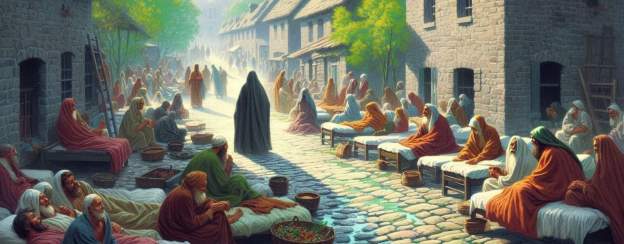
They Were All Healed


Also a multitude gathered from the surrounding cities to Jerusalem, bringing sick people and those who were tormented by unclean spirits, and they were ALL HEALED. Acts 5:26

Tradition says only Jesus could heal everyone, but this is a lie coming from a false teacher. The bible says that Christians do the same. The foundation is Acts 2:31-36. It is a God-centered focus on Jesus ruling at the right hand of the Power. It is not a man centered focus on the apostles; rather, is about Jesus and the authority to use His Name (Acts 3:6,16, 16:18). Peter said, “what I have I give to you, in Jesus Name, walk.” What Peter had, was the Name of Jesus, not the authority of an apostle. We have the same Name of Jesus today. Jesus teaches us in John chapters 14-16 that all Christians who have faith, can use His name to ask and command anything. In fact, this authority goes beyond healing and casting out demons to asking for anything you want.

Another observation is that healing is equated to casting out demons, which lines up with what Peter said in Acts 10:38. This is important because even if there is not a specific authority to cast out demons, yet, the free access and authority to heal includes any demonic oppression on the body and mind. In Isaiah 53 we are told Jesus’ substitutionary atonement includes healing. In this sense, authority over demons is a subcategory of healing. Jesus purchased with this blood our healing, which includes any harassment to our bodies or minds caused by demons.

To say healing is not on the demand of faith is to also say being freed from demonic oppression is not on the demand of faith because demonic oppression is a subcategory under healing.

Jesus did not lie. He said whosoever believes in Him will do His miracles and even greater. This is why see examples in the book of Acts, where everyone got healed, just like Jesus did it. The foundation for this happening was being baptized in the Spirit and faith in Jesus. We have the same foundation today. Jesus is still sitting at the right hand of the Power. We have the same context, the same Jesus, the same Spirit and the same millennial rule of Jesus at the Power’s right hand.

The Will OF GOD is Irrelevant

The bible teaches that God has absolute and direct control over all things. He is the only real cause for all things, and there is no such thing as secondary causes. God is the metaphysical author of sin and evil. God has predestined all things by His own goals and choices, and decrees all reality in a logical order in relation to His goals (supralapsarianism).  There is no such thing as free-will. Man is responsible because he is not free but under God’s sovereign control and command.  Because God absolutely and directly causes all things, He absolutely and directly causes the predestination of the elect and reprobate. Logic and deduction are so easy. As Romans 9 says, God takes from the neutral lump (before good or evil) and by the same power and choice makes some to be evil reprobates and some to be righteous elect.  God has not given up some of His control to man, because free-will does not exist, because the bible never says He made this choice, and because the nature of God insures that there is no difference in how direct and absolute He causes one thing or another in creation. God’s thoughts, power and choice are one and the same. Because He thinks about it and decides on it, it is reality. Therefore, in the ultimate sense, God Will is the only relevant issue.

I say all of this to state a broad and correct doctrine of God’s sovereignty, so that I am not misunderstood in my following comments.

When we pray for healing, miracles or forgiveness the “will of God,” (referring to His causality, not commands), is irrelevant. As Vincent Cheung points out in “Healing: The Will of Man,” to talk about the “will of God” in this context is already a partial defeat, because the bible talks about man’s will, not God’s will.

The bible’s positive doctrine is that healing is about the will of man, not the will of God. This is how the scripture presents the subject. Jesus never asked the Father if it was God’s will to heal a particular person; rather, He always asked if it was the man or woman’s will to be healed.  Jesus then said to his disciples and followers, “you heal the sick.” The will of God (referring to His decrees/causality) was never brought up; only “man’s will,” was brought up. The will of God was simply irrelevant. Jesus, who is more God-centered than you or your favorite pastor, taught us the “will of God,” was irrelevant, and that “man’s will” was the relevant issue.

Some are more accustomed to think about the atonement and forgiveness and so we will start here. The big idea, is that healing (Isaiah 53, Matth 8, James 5, Gal. 3) is as much the gospel and substitutionary atonement as forgiveness is, if not more so.

So here is the question: is the “will of God,” relevant for salvation or conversion? It is not relevant, if I am the one answering it. I am not asking a broad doctrinal question. I am asking it as Jesus would ask a person, “do you want to be healed”? Do you want to be forgiven? I am asking it the way Moses says, “I have presented to you life and death,” now make a choice. I am asking it the way the bible personally addresses me with its promises and commands, telling me that I must respond to it.

The “will of God” is irrelevant for my salvation, because what God decrees and causes is irrelevant in my response to obey the command of God to repent. Paul in Acts 17 commands us to repent of our sins. It is not a choice or suggestion. When I evaluate how I should behave I only use the commands of God to do this, not God’s secret decrees or causality. For example, in Romans 5 Paul says God caused me to be born a sinner, with a sinful heart, because of what Adam did. If I were to use the “will of God,” as a relevant factor in my decision to repent of my sins or not, then I would recognize it was the will of God to decree and cause me to be born a sinner, thus I will choose to stay a sinner until God decrees and causes me to repent.

I will assume most will see the error of this.  It is obvious that God’s Will is irrelevant in my consideration if I should repent of my sins. The relevant issue is God’s command for me to repent.  If a person uses the “will of God” as a relevant issue to exempt them from having to repent of their sins, we would see this as an excuse to be rebellious and unbelieving.

The same is for healing and other various miracles and supernatural experiences.  Healing is provided by the same atonement that provided forgiveness. Both are already accomplished and both are received on the demand of faith. God is sovereign over our faith, but on the demand of faith God always does what He promises. Faith always receives, and God is sovereign over faith. However, even though God is sovereign over faith (God’s Will), we are never told to consider it as relevant knowledge when we choose to believe a promise or not.  When we are in the context of a “should” or “ought” the category is always about God’s command.

In John 15 Jesus uses God’s predestination as an encouragement to ask whatever we want and get it.  Peter does the same thing in Acts 2 about the baptism of the Spirit for power. And so the Will of God is relevant in the topic of valuing God’s encouragement and explanation. Even though God’s Will is used by scripture to encourage our confidence for miracles and answered prayer, yet, when dealing with the topic of the scripture commanding me to repent and commanding me to receive healing and the gospel (James 5:15, John 14,15, Gal.3, Acts 2) the only relevant category is God’s command, not God’s Will.

Thus, when we pray for healing, God’s Will is irrelevant. The Will of God, is a non-issue. To have the Will of God, pop up into your head when praying for healing, is like having the decree of God that made you a sinner(Rom 5), pop into your head as a relevant issue if you should repent or not, and question if God would forgive if you had faith in Jesus.  It is insane and delusional.

The Will of God is irrelevant when considering if God will save you if you repent in faith; it is a non-issue. The Will of God is irrelevant when considering if God will heal you if you command sickness to leave with faith; it is a non-issue.

“Oh, God, please forgive me. I am powerless. You have done nothing yet, but you could do something, Oh powerful and eternal God. You made me a sinner because of Adam’s sin, and so, I don’t know if You have decreed me to be saved or not, and so, If it is your Will, please forgive my sins.”

This insane prayer is how many pray about healing. They are stupid and sinful. The bible never tells us to pray like this. Such a person should not expect to be forgiven of their sin. And if they pray for healing like this, they should not expect to be healed. To pray, while using the Will of God as a relevant issue, will divorce you from being forgiven and healed; It is a prayer of death.

When Peter said, “What I have, I give, in Jesus Name, walk,” the Will of God never came up, because the Will of God is irrelevant. Jesus commanded His followers to heal the sick. This command is the relevant issue, not the Will of God. The Will of God is a non-issue in the context of my healing, or your healing. When you bring in the Will of God as a relevant issue for healing or forgiveness the end results in God’s command being negated. The category of God’s decree and command are different and so should never be used to void each other out, or mixed together.

“Oh God, by Your Will I was made sick, and so I don’t know if I should be healed or not, but please, heal me if it is Your Will.”

 This is a prayer of death. It is a prayer of insanity and disobedience. This prayer uses God’s decree as an excuse to avoid obeying God’s command to be healed.  To use God’s decree to excuse yourself from obeying any of God’s commands such as receiving forgiveness or receiving healing, is stupid and wicked.

Although, there is nothing wrong for a salvation prayer to “ask God into your heart,” yet there are more precise ways to describe it.  Peter in his Pentecost sermon gives direction for a salvation prayer. He instructs the audience to ““Repent and be baptized, in the name of Jesus Christ.” Notice Peter did not instruct them to “ask” God to forgive them; rather, he tells them to repent in Jesus’ Name to be saved. Why? Because Jesus already died and was resurrected. The forgiveness already happened. We are not asking God to crucify His Son again to forgive us, because it already happened.  We are not asking God to do anything in the present tense to forgive us, because Jesus already accomplished it. Because it has been accomplished all we do is repent.  In this context we do not ask or beg. It is when a person has confidence in Jesus’ finished atonement, they repent of their sins in Jesus’ Name. Salvation in this sense is a confession, and not asking and begging. We confess our sins and that is all it takes. Faith is about God letting you know He has already forgiven you, and by repenting you are agreeing with God.  It is foundationally about agreeing and confessing and not asking.

Other gospel benefits such as a healing, and the authority to cast out demons and cast down mountains is the same. They have been accomplished by Jesus’ finished atonement. We do not ask and beg for them, because they have been accomplished by Jesus and given to us. It is irrational to beg for something that already belongs to you.  It was the stripes on Jesus’ back that healed us. And so, it is irrational to ask God to heal us, as if He needs to break out the whip again and start slashing Jesus in the throne room. God accomplished our healing in Jesus’ atonement. Thus, we don’t beg for it, because it is already ours.  As with salvation, we repent as a confession of confidence in Jesus finished atonement, rather than beg and ask forgiveness. The same with healing. It is the Will of Man to command sickness to leave. We confess and agree with God, rather than beg and ask. This is why Jesus tells us to “heal the sick, and cast out demons.” When we command healing and command demons to leave, we are giving a confident confession in the finished atonement of Jesus, which has given us the healing and authority to do such things.

The Spirit tells our spirit about the …..?

 The Spirit tells our spirit about the …..?

“No one can know a person’s thoughts except that person’s own spirit, and no one can know God’s thoughts except God’s own Spirit. And we have received God’s Spirit (not the world’s spirit), so we can know the
wonderful
things
God has
freely given us,”

(1 Corinthians 2:11-12 NLT)

For sake of context, what are some “things” Paul mentions in his letters to the Corinthians about the things God has freely given us? Paul says, Jesus became our sin so that we are freely given God’s righteousness. Paul also says the Holy Spirit freely gives us gifts, such as healings, miracles, prophecy and tongues etc. Paul says that Jesus became our poverty so that God freely gives us money so that in an abundance of wealth we can freely give to the ministry. Paul says God has freely given us Christ’s mind so that we have the Mind of Christ. Paul says God has freely given us all things, even the past, present, future, heaven, eternal life and all reality.

This is why, even though we study theology and doctrine, we also keep focusing on devotions and faith, because the Spirit is relentless in directing our hearts to all the good and free things available to us in Christ. This is why fanboys, become lost in theology and especially of men and tradition, because that is where their hearts are directed; to the things “men” give them.

If your thoughts and mind are not constantly turned to these freely given things by God such as healing, wealth, righteousness, citizenship in heaven, spiritual powers, then what spirit is in you? How can you rationally claim it is God’s Spirit? Not having your spirit moved by God’s Spirit to freely receive such things as health and wealth means you must be an illegitimate child; you are and outsider to the love of the Spirit. But for us who do have God’s Spirit we are overwhelmed with love of God as the Spirit directs our thoughts to all the freely given things for us to receive. And after receiving them, we give in the same free manner that it was given to us.